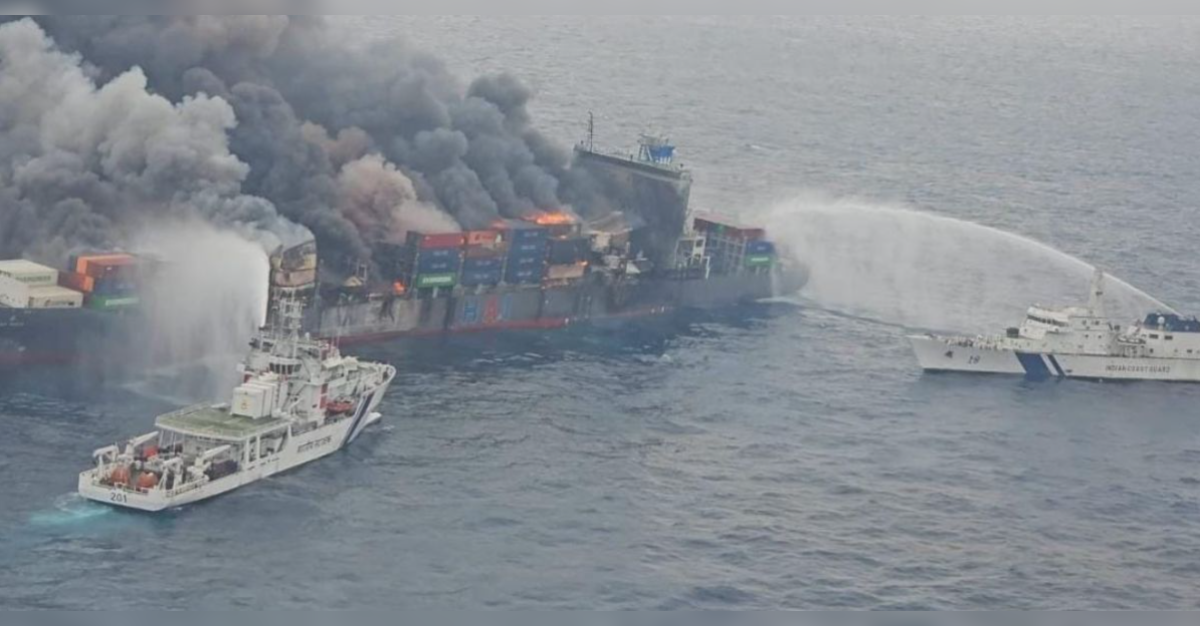
The recent fire aboard the M.V. Wan Hai 503, a Singapore-flagged vessel, off the coast of Kerala, India, presents a multi-faceted risk to regional energy markets and global shipping logistics. What began with an explosion below deck on June 9th has evolved into an ongoing emergency, with significant implications for fuel supply stability, environmental integrity, and the operational resilience of key maritime trade routes. As oil and gas investors assess the broader market landscape, this localized incident demands attention for its potential to trigger cascading effects, particularly in an already finely balanced supply chain for refined products. Our analysis delves into the immediate and forward-looking investment considerations stemming from this volatile situation, leveraging OilMarketCap’s proprietary data to provide unique insights beyond a simple news recap.
Immediate Fuel Supply and Regional Bunkering Risks
The M.V. Wan Hai 503 incident, which began with an explosion on June 9th, has intensified concerns about localized fuel supply. The vessel, currently unmanned and adrift approximately 65 nautical miles from Kozhikode, Kerala, carries a substantial onboard fuel load: an estimated 2,000 tonnes of fuel oil and 240 tonnes of diesel. This considerable volume of hydrocarbons is located adjacent to the active fire zone, creating a high probability of fire escalation and a catastrophic explosion. Should this fuel be compromised or lost, it would represent a notable, albeit localized, disruption to marine fuel availability and bunkering operations in the Indian Ocean region. While not a global crude supply shock, such an event can tighten the availability of specific refined products, potentially impacting regional shipping costs and operational efficiency for other vessels reliant on bunkering in nearby ports. The Indian Coast Guard’s ongoing efforts to combat the blaze, which continued until June 12th, underscore the severity and persistence of this threat. Furthermore, the ship’s reported tilt of 10 to 15 degrees adds complexity to containment and salvage operations, increasing the risk profile for this critical fuel cargo.
Market Sensitivity Amidst Broader Price Volatility
This localized disruption occurs against a backdrop of a sensitive and dynamic global crude market. As of today, Brent crude trades at $95.67, marking a 0.93% increase within a daily range of $91 to $96.89. West Texas Intermediate (WTI) crude stands at $92.33, up 1.15%, fluctuating between $86.96 and $93.3 for the day. While these daily movements reflect broader geopolitical and economic factors, even a regional event like the Kerala ship fire can exacerbate market anxieties, particularly concerning refined product supply. Over the past 14 days, Brent crude has seen a significant decline, falling from $102.22 on March 25th to $93.22 on April 14th – a drop of $9, or 8.8%. This downward trend highlights the market’s underlying volatility and its susceptibility to both supply-side shocks and demand-side uncertainties. For investors asking about a base-case Brent price forecast for the next quarter, understanding these localized disruptions is crucial. While the immediate loss of the M.V. Wan Hai 503’s fuel cargo is small relative to global consumption, it serves as a stark reminder of the fragility of maritime supply lines. Any sustained disruption to regional shipping or the loss of significant refined product volumes could contribute to localized price spikes, especially for marine fuels, and potentially ripple into the broader product markets, including gasoline, which currently trades at $2.96, down 0.34% today.
Forward Outlook: Connecting Local Incidents to Global Catalysts
Investors are keenly focused on the factors shaping the global energy landscape, particularly with an eye on upcoming market catalysts. Many readers are asking about the consensus 2026 Brent forecast and the performance of Chinese ‘teapot’ refineries this quarter. The Kerala incident, while regional, feeds into this broader narrative of supply chain vulnerability. The upcoming OPEC+ meetings, with the Joint Ministerial Monitoring Committee (JMMC) convening on April 18th and the full Ministerial meeting following on April 20th, will be critical. While these discussions will primarily focus on crude production quotas, any sustained pressure on refined product availability or shipping logistics, even from incidents like the M.V. Wan Hai 503 fire, could subtly influence sentiment and underscore the need for market stability. Similarly, the API Weekly Crude Inventory reports on April 21st and 28th, followed by the EIA Weekly Petroleum Status Reports on April 22nd and 29th, will provide fresh insights into inventory levels. A significant loss of refined product, or prolonged shipping diversions due to the incident, could contribute to regional inventory draws and heighten concerns about overall supply resilience. Moreover, the Baker Hughes Rig Count reports on April 17th and 24th offer a forward look at future production capacity. Against this backdrop, the Kerala fire serves as a poignant reminder that while global supply trends are driven by major producers, localized disruptions can still create unforeseen stresses, particularly impacting regional refined product balances and potentially influencing spot prices for key commodities like LNG, which is another area of active investor inquiry.
Environmental Hazards and Long-Term Shipping Implications
Beyond the immediate fuel loss, the M.V. Wan Hai 503 incident poses significant environmental and long-term operational risks. The vessel was carrying a diverse manifest of hazardous substances, including solids capable of spontaneous combustion, flammable liquids and solids, and materials harmful to human health. The Indian National Centre for Ocean Information Services (INCOIS) has already issued advisories warning of a potential oil spill and the danger of drifting containers. Between 10 and 15 containers have reportedly fallen from the ship, with some likely to beach near Thalassery and Kochi within the next 4-5 days. Others may sink to the seabed, posing a prolonged threat to marine ecosystems as their hazardous contents disperse. This environmental catastrophe-in-waiting highlights the broader risks inherent in global maritime trade, particularly for vessels carrying such volatile cargoes. For the investment community, this incident may trigger increased scrutiny on shipping safety protocols, insurance premiums for hazardous cargo routes, and potentially stricter environmental regulations in sensitive regions. While not on the scale of a major canal blockage, the Kerala fire underscores the systemic vulnerabilities in global supply chains, where a single incident can lead to substantial financial liabilities, environmental damage, and operational headaches that reverberate through regional economies and impact the broader investment outlook for shipping and logistics companies.
The ongoing M.V. Wan Hai 503 fire off Kerala is more than just a localized emergency; it represents a tangible risk to regional fuel supply, shipping integrity, and environmental health, with potential ripple effects for the broader energy market. While the immediate impact on global crude prices may be contained, the incident underscores the inherent fragility of maritime supply chains and the constant need for vigilance in a dynamic oil and gas investment landscape. Investors must continue to monitor the situation closely, recognizing that even geographically isolated events can contribute to market volatility, influence regional product balances, and ultimately shape the forward outlook for key energy commodities.


