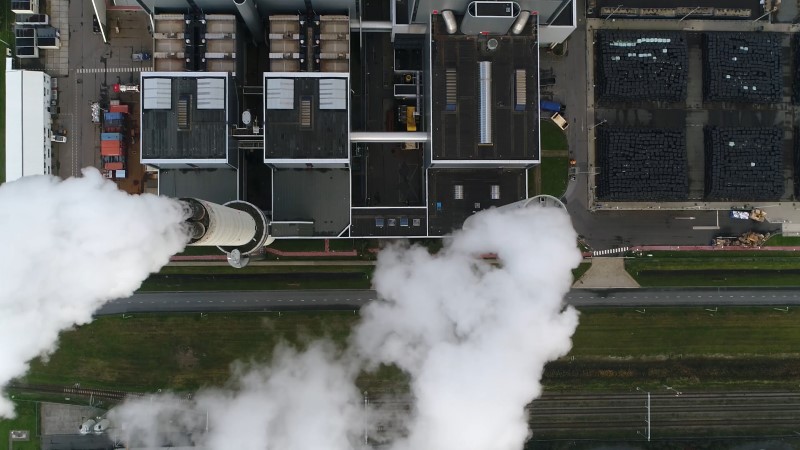
The U.S. Environmental Protection Agency (EPA) has signaled a significant policy shift, proposing to reverse the prior administration’s stringent rules governing CO2 emissions for fossil fuel-based power plants. This move marks a pivotal moment for the domestic oil and gas sector, promising to alleviate regulatory burdens and recalibrate the investment landscape. For energy investors, this isn’t just a political statement; it’s a material development poised to impact operational costs, capital allocation, and ultimately, the profitability of U.S. fossil fuel assets. This analysis delves into the immediate and forward-looking implications of this regulatory recalibration, leveraging proprietary market data and investor insights to provide a comprehensive outlook.
Regulatory Relief: A Direct Boost to O&G Profitability
The proposed rollback of CO2 emission standards directly addresses a major source of expenditure for fossil fuel operators and power generators. Over the past several years, companies have faced mounting pressure and significant capital outlays to comply with increasingly strict environmental mandates. These costs included investments in advanced carbon capture technologies, operational adjustments to reduce emissions, and potential penalties for non-compliance. With the EPA’s new direction, a substantial portion of these anticipated costs is now off the table. This translates into improved cash flow, higher netbacks, and enhanced financial flexibility for companies operating across the oil and gas value chain, from upstream producers supplying natural gas to power plants, to the utilities themselves. For investors, this creates a more attractive risk-reward profile for domestic energy projects, potentially unlocking capital that was previously hesitant to enter the sector due to regulatory uncertainty and high compliance overheads. It also provides a significant competitive advantage for U.S. producers against international counterparts operating under similarly strict or even more stringent frameworks.
Market Dynamics: Navigating the Immediate Price Headwinds Amidst Policy Tailwinds
While the regulatory news offers a long-term tailwind for U.S. oil and gas producers, the immediate market picture presents a more complex narrative. As of today, Brent Crude trades at $90.38 per barrel, reflecting a sharp 9.07% decline within the day, with its range spanning from $86.08 to $98.97. Similarly, WTI Crude is at $82.59, down 9.41%, having traded between $78.97 and $90.34. Gasoline prices have also felt the pressure, currently at $2.93, a 5.18% drop for the day. This immediate downward pressure on crude and refined product prices indicates that broader macroeconomic concerns, global supply-demand imbalances, or profit-taking are currently outweighing the bullish implications of the EPA’s policy shift. In fact, our proprietary data shows Brent has seen a significant downward trend over the past two weeks, dropping from $112.78 on March 30th to $91.87 yesterday, representing an 18.5% erosion. This suggests that while reduced regulatory costs are a positive fundamental for producers, they are not immune to the volatility stemming from global energy market forces. However, these cost savings can provide a crucial buffer for producers, allowing them to maintain profitability even in a lower price environment, or to aggressively ramp up production if prices rebound, positioning them for stronger performance in the medium term.
Investor Focus: Addressing Long-Term Value in a Shifting Landscape
Our proprietary reader intent data reveals a clear focus among investors on the long-term trajectory of crude prices and the fundamental health of energy companies. Questions such as “What do you predict the price of oil per barrel will be by end of 2026?” underscore the strategic nature of current investment considerations. The EPA’s proposed emissions reversal directly contributes to the answer by fundamentally improving the cost structure for U.S. fossil fuel operations. By alleviating compliance costs, this policy makes U.S. oil and gas assets inherently more valuable and attractive for long-term investment. While current market prices are influenced by a multitude of factors, a lower cost of production provides a stronger foundation for sustained profitability, even if crude prices remain range-bound or face future volatility. This improved regulatory environment could also influence capital allocation decisions, potentially diverting investment towards domestic fossil fuel projects that now offer better returns compared to those in jurisdictions with less favorable regulatory frameworks. Investors are keenly watching how this translates into capital expenditure plans and production forecasts from major U.S. operators, as it directly impacts the supply side of the global energy equation.
Upcoming Catalysts: Monitoring Key Events for Market Direction
While the EPA’s policy shift provides a critical long-term framework, investors must remain vigilant to several near-term events that will dictate immediate market direction. The upcoming OPEC+ Joint Ministerial Monitoring Committee (JMMC) and full Ministerial meetings on April 18th and 19th, respectively, are paramount. Investors are eager to understand “What are OPEC+ current production quotas?” and whether the cartel will adjust its output strategy in response to recent price declines. Any decision to cut production further could quickly reverse the current negative price momentum, while maintaining quotas might signal comfort with current levels or a reluctance to cede market share. Domestically, the API Weekly Crude Inventory reports on April 21st and 28th, followed by the EIA Weekly Petroleum Status Reports on April 22nd and 29th, will offer crucial insights into U.S. supply and demand dynamics. Significant inventory builds could signal weakening demand or oversupply, adding downward pressure on prices. Conversely, draws would suggest tightening markets. Furthermore, the Baker Hughes Rig Count on April 24th and May 1st will serve as a bellwether for U.S. drilling activity. With reduced regulatory burdens, a sustained increase in active rigs could signal producers capitalizing on lower costs to boost output, potentially influencing future supply levels and price stability. These events, combined with the new regulatory backdrop, will offer a dynamic picture for energy investors in the coming weeks.
The EPA’s proposed emissions reversal represents a tangible reduction in operational and compliance costs for the U.S. oil and gas sector. While current crude prices face immediate headwinds, this policy provides a robust long-term tailwind for profitability and investment appeal. Investors are advised to integrate this regulatory shift into their valuation models, recognizing its potential to enhance the intrinsic value of domestic energy assets, while simultaneously monitoring critical upcoming market events for tactical positioning.