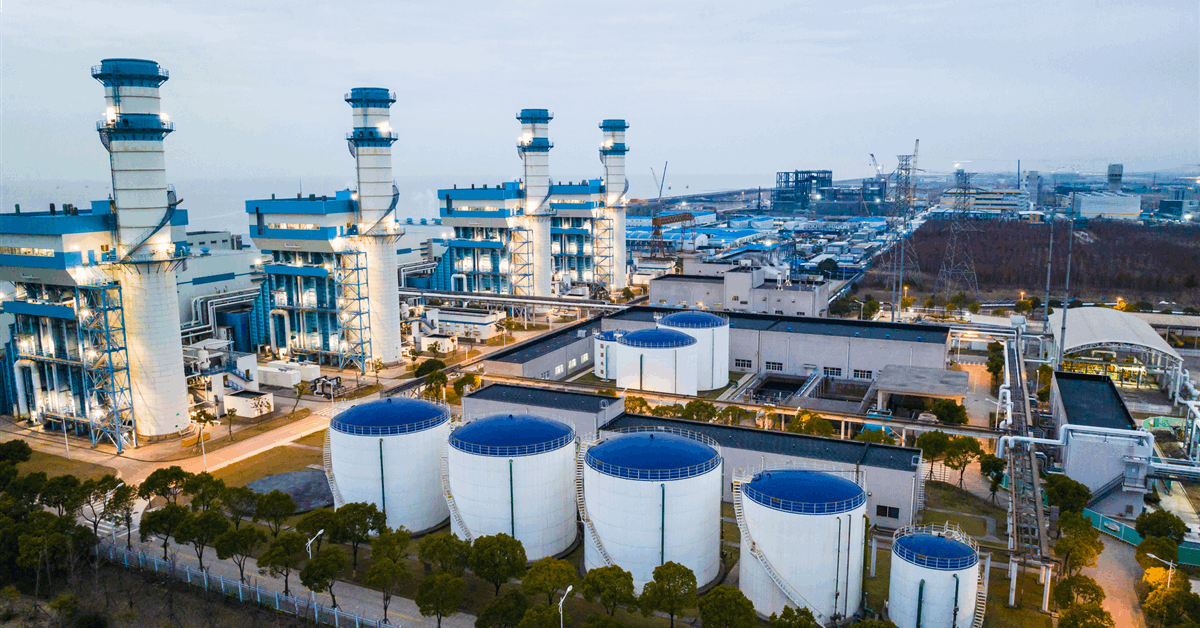
China’s domestic natural gas industry is actively championing a significant expansion of gas-fired power generation, urging Beijing to bolster the number of operational plants utilizing the fuel. This strategic push comes amidst a landscape of decelerating gas consumption, with producers seeking new avenues to invigorate demand.
Industry insiders, intimately involved in energy policy advisories, highlight the power sector as a pivotal growth engine. Currently, electricity generation accounts for approximately 18% of China’s total natural gas usage. The latest industry proposal outlines an ambitious plan: the construction of nearly 70 gigawatts (GW) of new gas-fired capacity by 2030. This represents an almost 50% increase over projected levels for 2025, signaling a substantial commitment to gas-powered electricity if adopted.
Navigating Evolving Energy Policy
This initiative aligns with a critical period for China’s energy planning. The government has commenced gathering comprehensive proposals as it formulates its next national Five-Year Plan, a crucial strategic blueprint scheduled for ratification by the National People’s Congress in March 2026. This overarching economic framework will delineate key targets, meticulously balancing the nation’s imperatives for economic growth, aggressive decarbonization, and robust energy security. The gas industry’s proactive stance aims to secure a more prominent role for natural gas within this forthcoming policy architecture.
The Demand Conundrum
Once a rapidly expanding market, China’s natural gas demand has experienced a notable slowdown over recent years. Several factors contribute to this shift: a deceleration in industrial activity, a formidable surge in renewable energy deployment, and a persistent reliance on indigenous coal resources. Exacerbating the situation, an unseasonably warm winter, coupled with robust inventory levels, has led market analysts to revise down forecasts for China’s liquefied natural gas (LNG) imports in 2025, anticipating a decline compared to the previous year. This complex interplay of market dynamics underscores the urgency behind the industry’s drive for new demand channels.
Strategic Imperative for Domestic Producers
For China’s domestic natural gas drillers, who have increasingly pivoted towards gas as oil consumption also faces headwinds, expanding sales to the power sector presents a vital mechanism to offset weaker growth in other traditional segments. The decade-long ‘coal-to-gas’ transition in the residential sector, driven by rapid urbanization and air quality improvements, has largely concluded. This leaves producers seeking new, large-scale consumers for their output, making the power generation segment an attractive, if challenging, target for sustained growth and profitability.
Gas’s Niche in a Renewables-Dominated Future
China is actively implementing energy market reforms designed to prioritize more cost-effective sources of electricity generation. While natural gas power remains significantly more expensive than solar, with photovoltaic electricity currently trading at less than half the price, gas possesses distinct operational advantages. Its ability to ramp up and down generation quickly and efficiently positions it as a critical flexible power source. This agility is superior to that of baseload coal or nuclear plants, which operate more rigidly. This attribute could secure a larger, albeit specialized, role for natural gas within the evolving power mix, even as clean energy sources ultimately dominate overall capacity and potentially limit the full utilization rates of gas plants. Investors should watch for policy signals that favor flexibility and grid stability.
Persistent Headwinds and Investment Considerations
Despite the industry’s determined advocacy, any substantial buildout of gas-fired capacity faces considerable hurdles that investors must carefully evaluate. Seaborne LNG imports, a significant component of China’s gas supply, remain prohibitively expensive when compared to abundant domestic coal resources or increasingly cost-competitive renewable energy. Domestically, producers contend with the significant technical challenges and elevated expenses associated with tapping harder-to-reach unconventional reserves, such as shale gas and coalbed methane. Furthermore, existing storage constraints limit natural gas’s capacity to effectively manage peak demand periods and seasonal spikes, posing a structural challenge to its expanded role in the power grid. These economic and logistical realities will heavily influence the ultimate scale and pace of any gas-fired power plant expansion, shaping the investment landscape for both domestic and international energy players.