Deere’s $20 Billion U.S. Bet Signals Robust Domestic Fuel Demand
In a significant announcement reverberating through industrial and economic circles, John Deere has committed a staggering $20 billion over the next decade to bolster its U.S. manufacturing footprint. This colossal investment, detailed in a recent company statement, not only underscores a formidable long-term vision for domestic operations but also serves as a potent indicator for future energy consumption and the broader health of the American economy—a critical barometer for oil and gas investors.
The agricultural and heavy equipment giant moved decisively to quash unsubstantiated online rumors suggesting an impending “unprecedented shutdown” or “freeze” of its American production lines. John Deere directly addressed these claims, titling its official update, “Myth Busted: John Deere is NOT Freezing U.S. Manufacturing.” This clarification provides vital stability and confidence, signaling consistent industrial activity that inherently demands substantial energy inputs.
John May, Chairman and CEO of John Deere, articulated the company’s strategic intent with conviction: “We’re making a bold move by investing $20 billion into U.S. manufacturing over the next 10 years. That’s a powerful signal of our long-term commitment to building and growing right here at home.” He further emphasized, “Our commitment to delivering value for our customers includes ongoing investment in advanced products, solutions, and manufacturing capabilities… This underscores our dedication to innovation and growth while staying cost-competitive in a global market.” For the energy sector, such sustained investment from a key industrial player translates directly into predictable and growing demand for diesel, natural gas, and electricity across manufacturing, logistics, and end-user operations.
A Deep-Rooted U.S. Presence Powers Energy Consumption
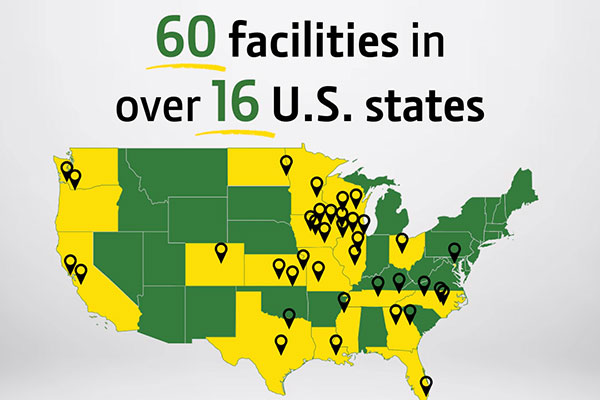
Deere’s commitment is built upon a formidable existing infrastructure. The company currently employs over 30,000 individuals across 60 locations in more than 16 states, boasting a manufacturing legacy in America that dates back to 1837. This vast operational network, spanning factories, distribution centers, and research facilities, represents a significant and ongoing consumer of various energy sources. Each operational facility requires power for machinery, heating, cooling, and lighting, while the transportation of raw materials and finished goods necessitates vast quantities of transportation fuels.
Even in the current year, prior to the full rollout of the $20 billion plan, Deere has injected $100 million into its U.S. factories. These targeted investments include a 120,000-square-foot expansion in Missouri, the establishment of new assembly lines for high-horsepower tractors in Iowa, the development of a new excavator plant in North Carolina, and extensive upgrades to its turf equipment factory in Tennessee. Each of these projects represents an immediate increase in construction activity (consuming diesel for heavy machinery) and, upon completion, a permanent expansion of energy-intensive manufacturing capacity.
Industrial Growth: A Bullish Signal for Fuel Markets
The implications for the oil and gas market are clear. An investment of this magnitude from an industrial bellwether like John Deere portends sustained and increased demand for various energy commodities. The manufacturing processes themselves consume natural gas and electricity, much of which is generated from fossil fuels. Furthermore, the products Deere manufactures—heavy equipment for agriculture and construction—are significant consumers of diesel fuel. More tractors, harvesters, and excavators rolling off assembly lines mean more equipment in the field, working harder, and burning more fuel.
Consider the ripple effects: increased U.S. manufacturing necessitates a robust supply chain, leading to greater demand for trucking and rail transport, both heavily reliant on diesel. The expansion of agricultural output, facilitated by new Deere equipment, directly impacts the energy required for planting, cultivating, and harvesting vast tracts of land. Similarly, an uptick in construction projects, supported by Deere’s heavy machinery, drives demand for excavation, hauling, and site preparation, all of which are highly fuel-intensive activities.
Navigating Past Headwinds and Solidifying Domestic Commitment
This substantial domestic investment also serves to address past criticisms. In 2024, Deere faced scrutiny when some production was shifted to Mexico, drawing a sharp rebuke and a threat from President Trump to impose a 200% tariff on Deere imports if further work moved across the border. The company’s recent declaration unequivocally states it is not moving production out of the country, providing a crucial reassurance for the domestic industrial base and, by extension, the energy sector that serves it.
While specific details regarding which U.S. facilities will receive the bulk of the new $20 billion investment remain undisclosed, the overarching message is one of aggressive growth and unwavering commitment to American soil. This forward-looking strategy positions Deere as a powerful engine for economic activity, and by extension, a significant long-term driver of energy demand across critical sectors of the U.S. economy.
Investor Takeaway: Energy Demand Poised for Growth
For oil and gas investors, John Deere’s $20 billion U.S. manufacturing commitment is a powerful and unambiguous signal. It speaks to robust domestic economic confidence, sustained industrial expansion, and an anticipated increase in demand for transportation fuels, industrial energy, and power generation. As a leader in essential sectors like agriculture and construction, Deere’s strategic moves offer a tangible indicator of future fuel consumption trends, suggesting a bullish outlook for energy demand in the coming decade. Monitoring these large-scale industrial investments provides vital insight into the underlying strength and future trajectory of the energy market.