Walmart’s Drone Surge: A Flight Path for Shifting Fuel Demand?
Walmart’s latest strategic maneuver, a significant expansion of its drone delivery network across five key U.S. states, signals a profound shift in last-mile logistics. This move, propelling the retail giant into new metropolitan markets like Atlanta, Charlotte, Houston, Orlando, and Tampa, extends its reach to millions of additional consumers. While primarily a retail story, for astute oil and gas investors, this aggressive push into electric drone logistics presents a tangible, albeit nascent, indicator of evolving fuel demand patterns that warrant close scrutiny. The question isn’t just about faster shopping; it’s about the energy source powering tomorrow’s deliveries.
The Scale of Disruption in Last-Mile Logistics
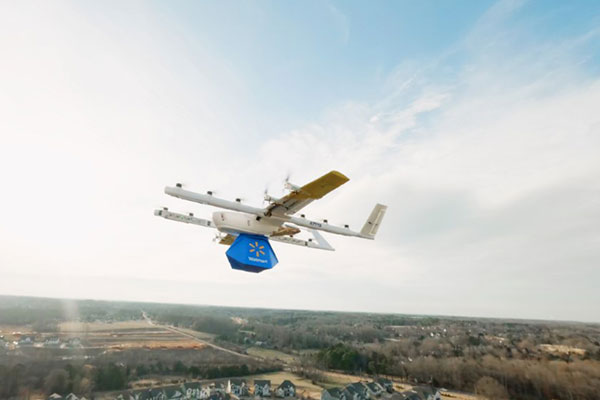
This ambitious rollout cements Walmart’s position as the leading retailer in scalable drone delivery, making it the first to operate across five states: Arkansas, Florida, Georgia, North Carolina, and Texas. The initiative will see drone services launched from 100 Walmart stores, supplementing existing operations in Northwest Arkansas and Dallas-Fort Worth. This infrastructure enables ultra-fast delivery, promising thousands of products – from essential groceries and over-the-counter medications to various household items – arriving on doorsteps in 30 minutes or less. Greg Cathey, Senior Vice President of Walmart U.S. Transformation and Innovation, emphasized the company’s commitment to “redefining retail,” highlighting this expansion as a “significant milestone.” For the energy sector, the sheer scale of this deployment suggests a future where a substantial portion of local delivery miles could be increasingly electrified.
Technological Underpinnings and Energy Implications
Walmart has strategically partnered with Wing, a prominent drone provider, to facilitate this massive undertaking. Wing’s drones operate within stringent FAA guidelines, boasting an operational range of up to six miles from the participating stores. This localized delivery model, powered by electricity, stands in stark contrast to the conventional internal combustion engine (ICE) vehicles that currently dominate the last-mile logistics landscape. Adam Woodworth, CEO of Wing, underscored the reality of “drone delivery at scale,” noting how residents in the Dallas-Fort Worth metroplex have already integrated this service into their daily routines. Since its inception in 2021, Walmart’s drone program has already executed over 150,000 deliveries, transporting everything from fresh produce to pet supplies and even crucial COVID tests. Each of these deliveries, fulfilled by an electric drone, represents a gallon of gasoline or diesel not consumed by a traditional delivery van, signaling a micro-shift in energy demand that could aggregate into macro trends.
Investment Implications for Crude and Refined Products
For the oil and gas industry, Walmart’s aggressive drone strategy carries clear long-term implications, particularly for downstream operators and refined product markets. The expansion into major population centers like Houston, Atlanta, Charlotte, Orlando, and Tampa — all hubs with significant existing last-mile delivery traffic powered by gasoline and diesel — means that a growing fraction of these miles will now be covered by electrically-powered drones. Consider the cumulative effect: 100 stores, each capable of numerous six-mile radius deliveries daily, effectively chipping away at the demand for conventional fuels. While 150,000 deliveries over two years is a modest number in the grand scheme of national fuel consumption, the exponential scaling indicated by this latest expansion suggests an acceleration. As Cathey noted, Walmart is “pushing the boundaries of convenience,” and this convenience is increasingly electrified. The shift is not about eliminating demand entirely but reallocating it. Every drone delivery offsets a potential van delivery, thereby reducing local gasoline and diesel consumption. This trend, if adopted by other major retailers, could collectively exert downward pressure on demand for refined products used in urban and suburban last-mile logistics. Investors in refining capacity and gasoline/diesel distribution networks must factor in this emerging competition from electric logistics.
The Broader Energy Transition Context
Beyond simply reducing liquid fuel demand, this pivot towards drone delivery underscores a broader energy transition within the transportation sector. The electricity powering these drones must come from somewhere. While specific regional grids vary in their energy mix, increased demand for electricity generally benefits natural gas, which often serves as a key baseload and peaker plant fuel, or accelerates investment in renewable energy sources like solar and wind. Thus, while potentially bearish for refined product demand, it could be a subtle bullish signal for natural gas or for companies involved in grid infrastructure and renewable energy generation. The strategic placement of these new drone hubs in high-density areas is also critical. Major metropolitan zones are prime targets for electrification due to shorter travel distances and high delivery volumes. This targeted approach could see localized pockets of reduced gasoline/diesel demand emerge more rapidly than a generalized national trend. Oil and gas investors should monitor not only the scale of drone deployment but also the specific geographic locations, as these can offer early indicators of future market shifts.
Conclusion: Monitoring the Skies for Future Fuel Demand
Walmart’s groundbreaking expansion of its drone delivery network is more than just a retail innovation; it’s a front-row seat to the evolving landscape of energy demand in last-mile logistics. While the immediate impact on global crude oil consumption remains incremental, the trajectory is unmistakable. As electric drone fleets grow and become an entrenched part of consumer habits, the cumulative effect on gasoline and diesel demand, particularly in densely populated urban and suburban corridors, will become increasingly material. Savvy oil and gas investors must recognize these subtle yet powerful currents of change, adjusting long-term outlooks for refined product demand and considering the broader implications for the energy transition. The future of delivery is arriving, and it’s increasingly powered by electrons, not hydrocarbons.