Political Rifts and Ripple Effects on Energy Markets
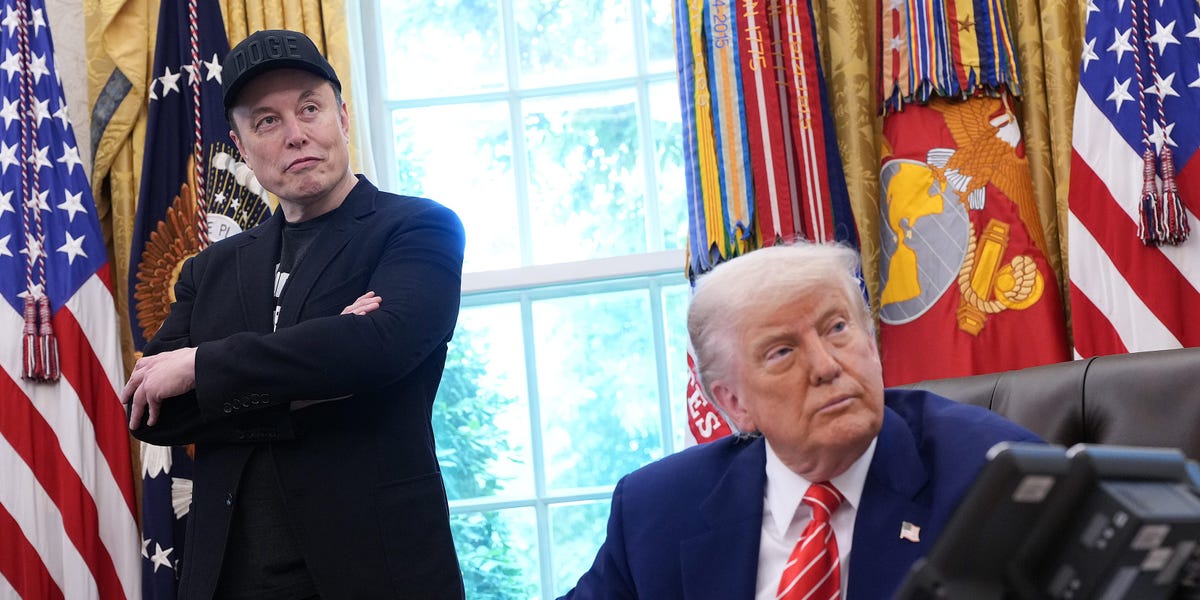
The recent public discord between prominent figures like Elon Musk and Donald Trump, sparked by differing views on significant fiscal policy – what Musk termed the “Debt Slavery Bill” – has sent ripples beyond their immediate spheres of influence. While the initial focus has been on individual net worth shifts, such as Musk’s reported $34 billion decline and Tesla’s over 14% share drop, the underlying implications for broader market sentiment and policy uncertainty are critical for energy investors. High-profile political friction, particularly involving potential government contract cancellations and debates over massive spending bills, injects an element of unpredictability that can influence investor confidence across all sectors, including the inherently volatile oil and gas market. Understanding how these macro-level dynamics translate into tangible impacts on energy prices and investment strategies is paramount for navigating the current landscape.
Market Volatility Amidst Macro Headwinds
The dramatic market reaction to the Musk-Trump fallout underscores a heightened sensitivity to political risk and fiscal policy debates. This sensitivity is occurring against a backdrop of already significant volatility in global energy markets. As of today, Brent crude trades at $90.38 per barrel, marking a substantial 9.07% decline from its opening, with its daily range spanning $86.08 to $98.97. Similarly, WTI crude has fallen by 9.41% to $82.59, moving within a daily range of $78.97 to $90.34. Gasoline prices have also seen a notable drop, trading at $2.93, down 5.18%. This recent downturn is not an isolated event; our proprietary data reveals a pronounced 14-day trend for Brent, which has fallen from $112.78 on March 30th to $91.87 just yesterday, April 17th, representing an 18.5% erosion of value. This pre-existing market weakness suggests that any new source of economic or political uncertainty, such as the public clash over a “Big Ugly Spending Bill,” can exacerbate investor apprehension, leading to deeper price corrections as concerns about future demand growth intensify.
Policy Uncertainty and its Demand-Side Implications
The debate surrounding major government spending bills, regardless of their specific focus, carries significant implications for future economic activity and, consequently, global energy demand. Musk’s strong criticism of the “Big Beautiful Bill” as a “Debt Slavery Bill” and Trump’s retaliatory threat to cancel government contracts highlight a potentially contentious political environment. This kind of fiscal policy uncertainty can directly impact infrastructure projects, industrial activity, and consumer spending – all crucial drivers of oil and gas demand. Investors are keenly focused on understanding the long-term trajectory of energy prices, with our reader intent data showing a consistent interest in questions such as “what do you predict the price of oil per barrel will be by end of 2026?” The answer to such questions is increasingly tied to the stability and direction of fiscal policy and regulatory frameworks. Any perceived shift towards more protectionist policies or reduced government spending, even in seemingly unrelated sectors, can dampen overall economic growth projections, making demand forecasts for crude and refined products more challenging and inherently riskier.
Navigating Supply-Side Decisions Amidst Global Signals
Amidst this backdrop of political friction and market volatility, the global supply management landscape remains a critical determinant for oil prices. Investors are closely monitoring upcoming events for signals on future supply. Our calendar highlights the crucial OPEC+ Joint Ministerial Monitoring Committee (JMMC) meeting scheduled for tomorrow, April 18th, immediately followed by the full OPEC+ Ministerial Meeting on April 19th. These gatherings are particularly significant given the recent downturn in crude prices. Our reader intent data clearly reflects this market focus, with frequent inquiries about “What are OPEC+ current production quotas?” The decisions made at these meetings will directly impact global supply levels and could either stabilize or further disrupt the market. While the Musk-Trump rift is a U.S. domestic political issue, its potential to signal broader economic instability and policy fragmentation could factor into OPEC+’s assessment of global demand strength. If the perception of a weakening global economy gains traction, OPEC+ might feel more pressure to consider production adjustments, influencing the delicate balance between supply and demand.
Investor Focus: Resilience and Risk Management
The high-profile public dispute and its immediate market fallout serve as a potent reminder of the growing influence of political risk on investment portfolios. For oil and gas investors, this translates into a need for robust risk management strategies and a focus on companies with demonstrated resilience. Our reader intent signals a strong interest in understanding individual company performance, with queries like “How well do you think Repsol will end in April 2026?” reflecting a desire to identify firms capable of weathering macroeconomic and political headwinds. The calls from business leaders like Bill Ackman for reconciliation or Mark Cuban’s exploration of a new political center party underscore a broader yearning for stability and predictable governance, which are foundational for long-term capital deployment. In an environment where threats of government contract cancellations can emerge swiftly, investors must scrutinize not only geological and operational fundamentals but also the geopolitical and domestic policy exposure of their energy holdings. Diversification and a deep understanding of political landscapes are no longer optional but essential components of a successful oil and gas investment strategy.


