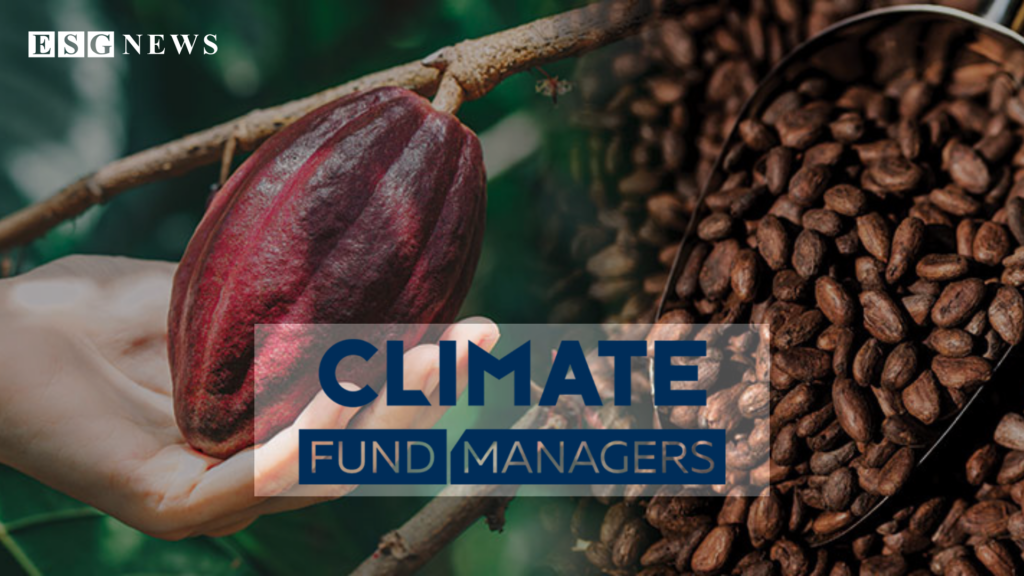
Africa’s energy landscape is undergoing a profound transformation, with a burgeoning focus on diversified, sustainable power generation. While the global investment community often zeroes in on the continent’s vast hydrocarbon reserves, a compelling new narrative is emerging from projects that leverage local resources for clean energy. The Divo Biomass Project in Côte d’Ivoire stands as a prime example, aiming to become the world’s first industrial-scale, grid-connected power plant fueled by cocoa waste. This innovative venture, spearheaded by Climate Fund Managers (CFM) and Société Des Energies Nouvelles (SODEN), represents a significant stride towards energy independence and rural prosperity, offering a unique investment proposition amidst the often-turbulent global energy markets.
Navigating Energy Market Volatility with Strategic Diversification
Investors in the oil and gas sector are acutely aware of the inherent volatility in commodity markets, a reality underscored by recent price movements. As of today, Brent crude trades at $90.38 per barrel, reflecting a sharp decline of 9.07% within the day, with prices fluctuating between $86.08 and $98.97. Similarly, WTI crude sits at $82.59, down 9.41%. This intraday swing is part of a broader trend, with Brent having shed over 18.5% in the past two weeks alone, dropping from $112.78 on March 30th to $91.87 just yesterday. Such dramatic shifts directly impact profitability for explorers, producers, and refiners, pushing investors to constantly re-evaluate their positions. Our proprietary data shows that readers are actively asking about future oil price predictions for the end of 2026, and how specific oil majors like Repsol might perform, signaling a strong demand for insights into managing this instability. In this context, projects like Divo offer a compelling alternative for portfolio diversification. By generating predictable, baseload power from a stable, domestically sourced fuel, Divo insulates investors from the geopolitical risks and supply-demand imbalances that dictate the price of traditional hydrocarbons. This stability provides a counterweight to the inherent unpredictability of the global oil market, appealing to those seeking long-term, de-risked returns.
Divo Biomass: A Blueprint for Sustainable African Energy
The Divo Biomass Project is not merely an energy initiative; it’s a comprehensive development model. With a planned capacity of 76 MW, the plant is designed to convert an impressive 600,000 tonnes of agricultural waste annually, primarily cocoa pod husks and bean shells, into 550 GWh of clean electricity. This output is sufficient to power approximately 1.4 million people, making a substantial contribution to Côte d’Ivoire’s national grid and significantly enhancing energy access. Beyond the megawatts, the environmental impact is profound: the project is expected to avoid 300,000 tonnes of CO₂ equivalent emissions annually for three decades, commencing in 2029. This carbon reduction potential is a key driver for international climate funds and increasingly, ESG-focused private capital. The Public-Private Partnership structure, currently in concession negotiations with the Ivorian government, leverages blended finance, with SODEN already committing over €2 million and CFM’s Climate Investor Two fund providing a $3 million co-development agreement. This model, backed by the EU’s Global Gateway strategy, is crucial for de-risking pioneering infrastructure in frontier markets and signals a growing international commitment to sustainable development in Africa.
Unlocking Multi-faceted Value: Economic and Social Returns
The Divo project extends its impact far beyond kilowatt-hours, creating significant economic and social value for Côte d’Ivoire. Annually, it is projected to generate €6.8 million in local economic activity over its 30-year lifespan. This is largely driven by its unique supply chain: supporting 36,000 smallholder cocoa farmers by providing them with a new income stream from what was previously considered waste material. This direct financial benefit to farmers creates a robust and circular economy, linking agricultural productivity with energy generation. Furthermore, the project is a substantial job creator, anticipating 3,900 roles, including 3,500 during the construction phase and 440 permanent operational positions. Such extensive job creation, especially in rural areas, is a critical factor for sustainable development and social stability, making the project highly attractive to impact investors. With financial close expected in 2026 and up to $35 million in equity from CFM’s Construction Equity Fund to follow, the project demonstrates significant financial backing and investor confidence in its long-term viability and broad-based returns.
Forward Outlook: Stability Amidst a Dynamic Energy Calendar
As we look ahead, the coming weeks present a series of critical events that will undoubtedly shape the traditional oil and gas market, while projects like Divo offer a contrasting narrative of stability. This very weekend, the OPEC+ Joint Ministerial Monitoring Committee (JMMC) and the full Ministerial Meeting are scheduled, with their production quota decisions poised to send ripples across global crude prices. Following this, the market will closely watch the API Weekly Crude Inventory reports on April 21st and 28th, along with the EIA Weekly Petroleum Status Reports on April 22nd and 29th, which provide crucial insights into U.S. supply and demand dynamics. Additionally, the Baker Hughes Rig Count on April 24th and May 1st will indicate future drilling activity. Our investor sentiment data clearly shows that “What are OPEC+ current production quotas?” is a top query, highlighting the acute focus on these events and their immediate impact on oil prices. For investors seeking refuge from these cyclical uncertainties, the Divo project’s long-term Power Purchase Agreements (PPAs) and stable, predictable feedstock supply offer a compelling hedge. It represents a strategic investment in an energy future that is less susceptible to geopolitical machinations and commodity price swings, providing consistent baseload power and tangible community benefits, a clear differentiator in today’s dynamic energy investment landscape.


