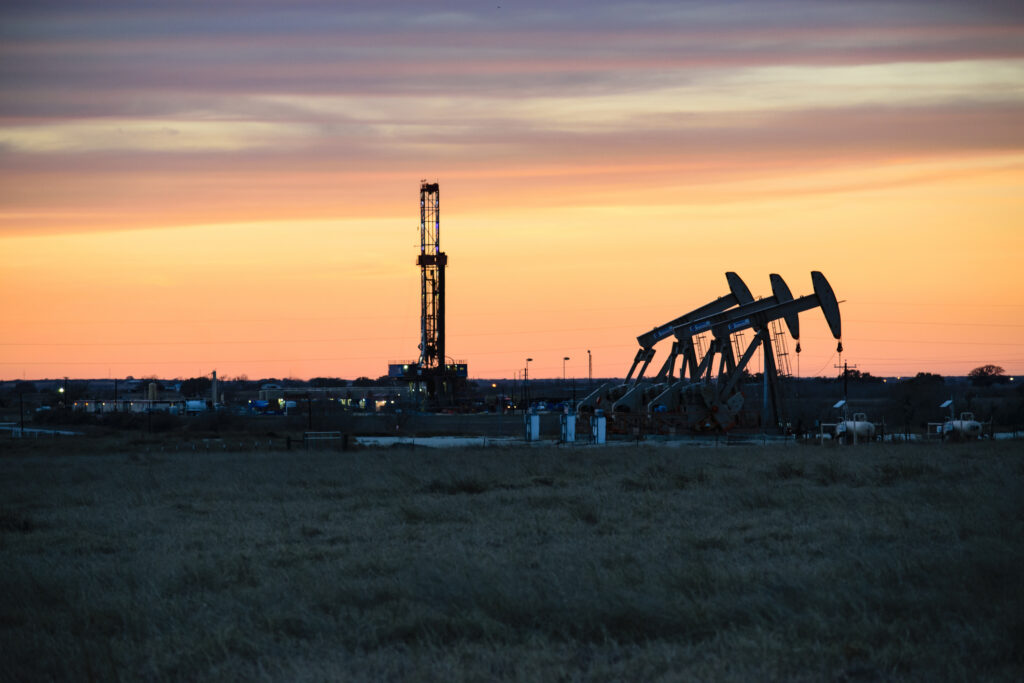
The narrative surrounding the future of US oil production frequently cycles through predictions of an impending, irreversible decline. Yet, as seasoned investors in the energy sector understand, these ‘peak oil’ prophecies have consistently proven premature. The resilience and adaptability of the American oil and gas industry, particularly in powerhouse regions like Texas, continue to defy expectations, driven by innovation, strategic policy, and robust infrastructure. For investors seeking clarity amidst the noise, understanding the underlying dynamics of US supply, coupled with current market signals and upcoming catalysts, is crucial to identifying sustained growth potential.
Debunking the ‘Peak Oil’ Myth: A History of Innovation
For decades, analysts and policymakers have attempted to pinpoint the zenith of US oil production, only to see their forecasts fall short. The concept of “peak oil,” first popularized in the 1950s, correctly identified a period of decline in US output through the latter half of the 20th century. However, what these initial predictions failed to account for was the unparalleled human ingenuity and technological advancement that would redefine the energy landscape. The shale revolution, commencing around 2008, serves as a powerful testament to this, as new drilling techniques like horizontal drilling and hydraulic fracturing unlocked vast reserves previously deemed inaccessible. This seismic shift not only propelled US production to unprecedented highs but also transformed the nation from a significant energy importer to a net exporter. The consistent failure of ‘peak oil’ predictions underscores a critical lesson for investors: oil production is not a static geological constraint but a dynamic interplay of economic incentives, political will, and continuous innovation. Betting against the capacity for technological breakthroughs in the US energy sector has historically been a losing proposition.
The Texas Engine: A Blueprint for Enduring Production
At the heart of America’s energy resurgence lies Texas, a state that epitomizes the factors enabling sustained oil and gas growth. The Permian Basin, a geological marvel within the Lone Star State, stands as one of the world’s most prolific oil fields. Indeed, if Texas were an independent nation, it would rank as the third-largest producer of natural gas and the fourth-largest producer of oil globally. This dominance extends beyond rich geology, encompassing a unique ecosystem of privately-owned land, a pragmatic regulatory environment, and extensive, adaptable oilfield infrastructure. These elements create a fertile ground for rapid response to market shifts and swift adoption of technological advances. The state’s ability to navigate previous periods of market volatility, including the unprecedented challenges of the 2020 pandemic, further illustrates its inherent resilience. For investors, Texas represents a vital anchor for US production stability and future growth, demonstrating that static extrapolations of current trends often miss the disruptive potential of innovation and robust operational frameworks.
Navigating Volatility: Current Market Signals and Investor Outlook
The current market environment underscores the importance of a nuanced understanding of global oil dynamics, even as US domestic potential remains strong. As of today, Brent crude trades at $90.38, marking a significant 9.07% decline within the day, with its price fluctuating between $86.08 and $98.97. Similarly, WTI crude has fallen to $82.59, down 9.41% within a daily range of $78.97 to $90.34. This sharp downturn is part of a broader trend, with Brent having shed $20.91, or 18.5%, from $112.78 on March 30th to $91.87 just yesterday. Gasoline prices have followed suit, currently at $2.93, down 5.18% for the day. This recent volatility has naturally prompted investors to ask critical questions, such as “What do you predict the price of oil per barrel will be by end of 2026?” While precise predictions are challenging, the underlying strength of US production acts as a crucial balancing force. Despite these short-term price adjustments, the efficiency and scale of US operators, particularly in shale plays, mean they can often maintain production and even grow at price points that challenge international competitors. This intrinsic robustness is a key factor for investors to consider when assessing the long-term trajectory of crude prices and the stability of their energy portfolios.
Upcoming Catalysts and the Path Forward for US Production
Looking ahead, several key events on the energy calendar will offer further insights into global supply-demand dynamics and their potential impact on US producers. This weekend, the OPEC+ Joint Ministerial Monitoring Committee (JMMC) convenes on April 18th, followed by the full Ministerial Meeting on April 19th. The outcome of these discussions on production quotas will significantly influence global crude supply and could either exacerbate or alleviate current price pressures. Domestically, investors will be closely monitoring the API Weekly Crude Inventory reports on April 21st and 28th, followed by the EIA Weekly Petroleum Status Reports on April 22nd and 29th. These releases provide critical data on US crude stockpiles and demand, offering a real-time pulse of the market. Furthermore, the Baker Hughes Rig Count, scheduled for April 24th and May 1st, will offer direct evidence of US drilling activity, indicating the industry’s near-term production intentions. For investors, these upcoming events are not just data points; they are potential catalysts that will shape the operating environment for US oil and gas companies. Given the proven adaptability of US producers, any global supply adjustments or shifts in demand signaled by these reports will likely be met with strategic responses, reinforcing the argument that US oil growth potential remains a significant, dynamic force in the global energy equation.