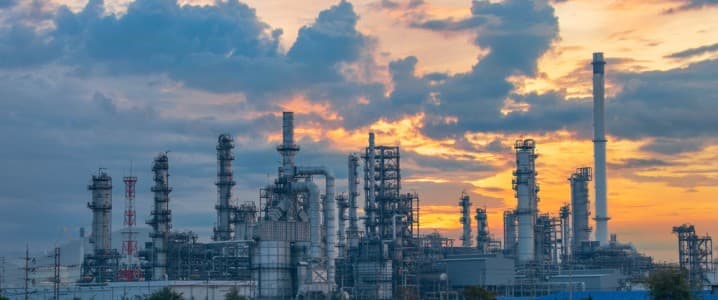
A potentially game-changing innovation from MIT engineers stands ready to reshape the economics of crude oil refining, promising to slash the substantial energy input required for processing by an astounding 90%. This breakthrough, centered on a novel membrane technology, could not only dramatically improve profitability for downstream operators but also significantly reduce the global carbon footprint of fuel production. For investors closely monitoring the energy sector, understanding the profound implications of such an advancement is critical as the industry navigates volatile markets and increasing pressures for efficiency.
The Refining Bottleneck: A 90% Energy Savings Opportunity
Conventional crude oil fractionating, the process of separating crude into valuable products like gasoline, diesel, and heating oil, relies heavily on heat-driven distillation. This method is notoriously energy-intensive, consuming about 1% of global energy usage and contributing approximately 6% of global carbon dioxide emissions. These figures highlight a critical bottleneck in the energy supply chain, where efficiency gains have historically been incremental. The MIT team’s new membrane technology offers a radical departure, filtering crude components based on molecular size rather than boiling point. This fundamental shift eliminates the massive thermal energy requirements of traditional distillation, presenting an opportunity for refiners to cut their energy consumption by up to 90%. Such a reduction in operational expenditure would not only translate into significant margin expansion for refiners but also mark a monumental step towards decarbonizing a crucial segment of the oil and gas industry.
Market Implications Amidst Volatility and Upcoming Catalysts
The potential for a 90% reduction in refining energy costs arrives at a pivotal moment for the oil and gas market. As of today, Brent crude trades at $96.25, reflecting a 1.54% gain on the day, with WTI crude at $92.58, up 1.42%. This daily uptick follows a period of notable volatility, with Brent having declined from $102.22 on March 25th to $93.22 just yesterday, April 14th, representing an 8.8% drop over two weeks. Such price swings underscore the persistent uncertainty faced by refiners, where input costs can fluctuate wildly. A technology that drastically cuts the operating expenditure side of the equation could act as a significant de-risking factor, offering a buffer against crude price volatility and enhancing predictable profitability. Looking ahead, the industry awaits key events that will further shape market sentiment. The upcoming OPEC+ Joint Ministerial Monitoring Committee (JMMC) meeting on April 18th, followed by the Full Ministerial meeting on April 20th, will set the tone for global crude supply. Additionally, the weekly API and EIA inventory reports on April 21st/22nd and April 28th/29th, alongside Baker Hughes Rig Counts on April 17th and 24th, will provide fresh data on supply-demand dynamics. Should this membrane technology prove scalable, its eventual widespread adoption could profoundly influence long-term supply expectations, potentially altering OPEC+’s strategic calculus and the investment decisions of exploration and production companies.
Addressing Investor Concerns: Efficiency, Profitability, and Long-Term Outlook
Savvy investors are constantly seeking clarity on future market direction and the factors that will drive profitability. A common question among our readers this week, for instance, revolves around building a base-case Brent price forecast for the next quarter and understanding the consensus 2026 Brent outlook. The operational efficiency promised by this new refining technology directly impacts these forecasts. A 90% reduction in energy costs would drastically improve refinery margins, making the entire downstream sector more resilient to market fluctuations and potentially leading to higher capital expenditure in upgrading existing facilities or building new, highly efficient ones. Consider the question frequently posed regarding the operational dynamics of Chinese tea-pot refineries this quarter; these smaller, often less technologically advanced, facilities could see their competitive landscape utterly transformed. If this membrane technology can be integrated cost-effectively, it offers a pathway for these players to significantly enhance their efficiency and profitability, potentially altering global refining capacity and product flows. This fundamental shift in cost structure would undoubtedly feed into long-term Brent price forecasts, as the underlying cost of turning crude into finished products becomes substantially lower, influencing supply elasticity and overall market equilibrium.
Scalability and Disruptive Potential: A New Paradigm for Fuel Production
Beyond the impressive energy savings, the practical aspects of this MIT innovation signal its high potential for widespread adoption. The engineers emphasize that the membrane is resistant to the swelling often observed with other oil separation membranes, a critical factor for industrial longevity and performance. Crucially, the thin film membrane can be manufactured using techniques already widely employed in industrial processes, suggesting that scaling up for commercial use could be achieved more rapidly than with entirely novel manufacturing methods. This “whole new way of envisioning a separation process,” separating molecules by shape and size at an atomistic length scale, represents a paradigm shift from traditional thermal methods. For investors, this implies that the competitive landscape in the refining sector could be fundamentally altered. Early adopters of this technology could gain a substantial first-mover advantage, capturing greater market share through superior cost structures and lower environmental footprints. The long-term disruptive potential extends beyond refining, possibly influencing upstream investment decisions as the future demand for crude oil is processed more efficiently and cleanly, aligning with evolving global energy transition goals.


