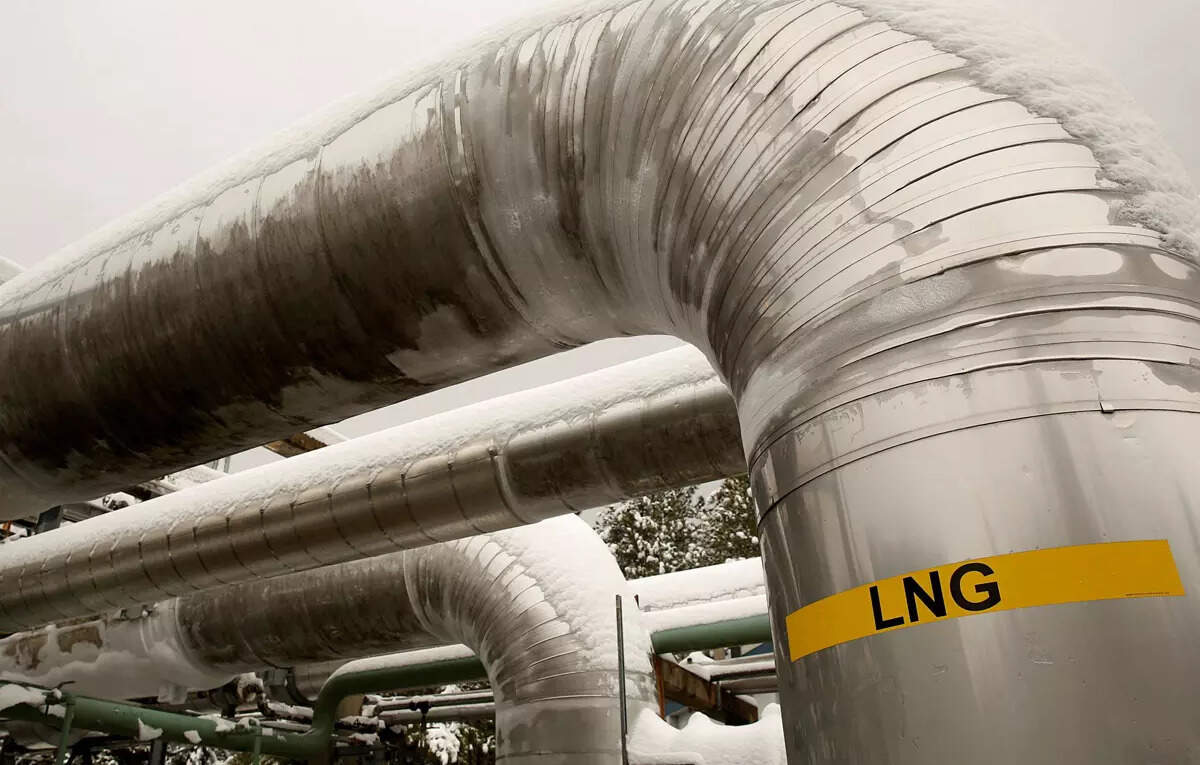
India’s energy landscape is undergoing a significant transformation, driven by robust economic growth and an ambitious push towards a gas-based economy. Against this backdrop, the Petroleum and Natural Gas Regulatory Board (PNGRB) has recently unveiled new regulations governing liquefied natural gas (LNG) terminals, a move designed to foster a more “well-coordinated, transparent, and demand-driven gas market.” For investors eyeing the burgeoning Indian energy sector, these regulations represent a critical development, fundamentally altering the risk-reward calculus for infrastructure development and operation. While the PNGRB champions these rules as essential for optimizing national energy assets, some industry players view them as an overreach, highlighting a crucial tension between regulatory oversight and market-driven capital deployment.
The Regulatory Hand: Shaping India’s Gas Market
The PNGRB’s new framework mandates that any company seeking to establish a new LNG terminal or expand existing capacity must first register with the regulator. This registration hinges on the submission and approval of a detailed feasibility report, a comprehensive business plan, and a robust evacuation strategy. The stated rationale behind this stringent oversight is clear: to address the pervasive issue of underutilized LNG terminals across India. The regulator has voiced concerns that low utilization rates not only strain company financials but also lead to unnecessary tariff burdens on consumers due to underused pipeline infrastructure. Furthermore, the regulations aim to rectify a perceived lack of transparency in terminal charges, including re-gasification, truck loading, and boil-off gas (BOG) charges, which have historically lacked the consistent disclosure seen in natural gas pipelines. For investors, this signifies a shift towards a more standardized and potentially less opaque operating environment, yet it also introduces an additional layer of bureaucratic approval that could impact project timelines and capital deployment strategies. Our proprietary reader intent data reveals a keen interest in “what’s driving Asian LNG spot prices this week?” While global spot prices are certainly a critical factor for India’s import economics, these domestic regulations seek to optimize the *distribution and utilization* of that imported LNG, making the internal market more efficient regardless of international price volatility. Investors will need to weigh the potential for increased market stability against the new compliance hurdles.
Navigating Global Headwinds: Crude Prices and Investment Sentiment
The regulatory changes in India’s gas sector arrive at a moment of considerable flux in the broader global energy markets. As of today, Brent crude trades at $96.28 per barrel, marking a 1.57% increase within the day’s range of $91-$96.89. Similarly, WTI crude stands at $92.86, up 1.73%, within its daily range of $86.96-$93.3. While these daily movements show upward momentum, a look at the recent trend reveals a different story: Brent crude has seen a notable decline over the past 14 days, falling from $102.22 on March 25th to $93.22 by April 14th, representing an 8.8% drop. This broader bearish trend in crude prices, despite today’s bounce, casts a shadow of caution over the entire energy investment landscape. Investors are actively seeking a “base-case Brent price forecast for next quarter,” reflecting a need for clarity amidst volatility. This uncertainty in crude markets, which often acts as a bellwether for the wider energy complex, can influence capital allocation decisions even for gas-specific projects. While India’s domestic gas market benefits from long-term demand growth, the global commodity price environment remains a critical factor in overall investor appetite for energy infrastructure, particularly for projects with significant upfront capital expenditure.
Transparency as a Catalyst for Growth (or Constraint)?
A key pillar of the PNGRB’s new regulations is the mandate for LNG terminal operators to publicly disclose their terminal charges on their websites. This move is intended to inject much-needed transparency into a segment historically criticized for opaque practices. From an investor perspective, this could lead to a more level playing field, fostering genuine competition and enabling potential customers to make more informed decisions. The regulator explicitly stated it does not intend to regulate tariffs, aiming instead for market-driven efficiency through clarity. For new entrants considering investment in Indian LNG infrastructure, this increased transparency could reduce due diligence complexity and risk associated with unknown cost structures. However, existing operators, some of whom opposed the draft regulations, might perceive this as an erosion of competitive advantage derived from proprietary pricing strategies. The ultimate success of this transparency drive will depend on how effectively it balances the need for market clarity with the need to incentivize private capital, especially in a sector that requires substantial, long-term investments. The PNGRB’s hope is that greater visibility will ensure “necessary linkage for existing and proposed terminals,” driving utilization and preventing the creation of isolated, underperforming assets.
Forward Outlook: Upcoming Events and India’s Energy Future
The effectiveness of these new LNG regulations will unfold against a dynamic global energy calendar. Investors are keenly watching upcoming events that could significantly sway market sentiment and influence investment decisions in the coming weeks. Specifically, the OPEC+ Joint Ministerial Monitoring Committee (JMMC) meeting on April 18th, followed by the full OPEC+ Ministerial Meeting on April 20th, will be crucial. Any decisions regarding production levels from these meetings could impact global crude prices, thereby subtly influencing the broader capital flow into energy infrastructure, including India’s gas sector. While these are crude-focused events, they set the tone for the general energy investment climate. For India, the long-term trajectory for natural gas remains strong, driven by industrialization, urbanization, and a commitment to reducing carbon intensity. The PNGRB’s regulations aim to ensure that the infrastructure to support this growth is built and operated efficiently. However, investors will be closely scrutinizing how these new rules impact the financial viability and timelines of future LNG projects. The balance between regulatory certainty and the agility required for large-scale capital deployment will be the defining factor in whether these regulations truly unlock India’s gas market potential or inadvertently create new barriers to entry and expansion. Our analysis suggests that while the PNGRB’s intentions are to streamline and optimize, the market’s response, particularly from international investors, will be highly sensitive to the practical implications on project economics and execution risk.


