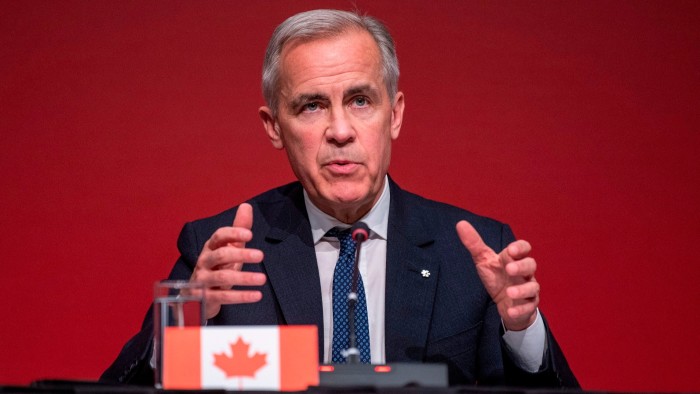
Canada’s new political leadership under Prime Minister Mark Carney is signaling a significant reorientation for the nation’s energy future, marking a strategic pivot that demands close attention from oil and gas investors. Carney, known for his past advocacy on climate risks, is now actively courting Canada’s oil industry, proposing a “grand bargain” to simultaneously boost domestic production, expand energy exports, and drive down emissions through substantial carbon capture investments. This bold agenda aims to fortify Canada’s economic resilience against external pressures, particularly potential trade protectionism from the US, and reposition the country as a leading energy superpower. This shift represents a crucial inflection point for one of the world’s largest oil producers, promising both opportunities and complexities for the investment landscape.
A Strategic Pivot Amidst Geopolitical Headwinds
Prime Minister Carney’s overtures to the Canadian oil and gas sector represent a calculated strategic shift, designed to bolster the national economy in a turbulent global environment. His recent meetings with senior oil executives and provincial leaders signal a departure from the previous government’s more restrictive approach, which had strained relations with the industry. The core of Carney’s proposal lies in supporting new energy exports and enhancing Canada’s position as an “energy superpower,” a campaign refrain that resonated widely. This ambition is explicitly linked to strengthening Canada’s economic standing within the G7, providing a bulwark against external threats such as potential tariffs and protectionist policies from the United States. While Canada remains the predominant foreign oil supplier to the US, Carney’s vision seeks to diversify market access and reduce reliance on a single major partner, a move that could unlock significant long-term value for Canadian producers.
Canada’s Oil & Gas Sector: A New Era of Investment?
The “grand bargain” articulated by Prime Minister Carney offers a tantalizing prospect for the Canadian oil and gas industry: robust support for production growth paired with substantial investments in decarbonization. This includes tentative backing for the construction of new pipelines, a long-standing point of contention that has hindered the sector’s expansion and market access. Furthermore, Carney has endorsed a multibillion-dollar project aimed at capturing carbon from Alberta’s vast oil sands, signaling a commitment to make Canadian energy production more environmentally competitive. This dual approach aims to address both economic growth and climate objectives, potentially unlocking significant capital expenditure in areas like infrastructure and carbon capture utilization and storage (CCUS). For investors, this could translate into renewed confidence and a more predictable regulatory environment for major projects, particularly those focused on increasing efficiency, expanding export capacity, and reducing the carbon intensity of Canadian barrels.
Market Dynamics and Investor Outlook: Navigating Volatility
Prime Minister Carney’s pro-production stance emerges at a dynamic period for global energy markets, a context vital for investor assessment. As of today, Brent crude trades at $96.62 per barrel, marking a 1.93% increase within a daily range of $91-$96.73. WTI crude, the North American benchmark, similarly stands at $92.94, posting an 1.82% gain and trading within a daily range of $86.96-$93.13. This recent upward momentum marks a recovery after Brent experienced an 8.8% decline over the past 14 days, falling from $102.22 to $93.22. Our proprietary data indicates that investors are actively seeking a base-case Brent price forecast for the next quarter and a consensus for 2026, highlighting the prevalent uncertainty regarding future price trajectories. While Canada’s increased production capacity won’t single-handedly dictate global prices, it adds a crucial layer to the supply equation. Investors are keen to understand how this potential supply growth, coupled with emissions reduction efforts, positions Canadian energy assets relative to other global plays, especially given the sector’s history of underperformance due to market access constraints.
Upcoming Catalysts and the Path Forward
The next two weeks are packed with critical market catalysts that will shape the backdrop against which Canada’s energy policy unfolds. The OPEC+ Joint Ministerial Monitoring Committee (JMMC) on April 18th, followed by the full Ministerial Meeting on April 20th, will provide vital signals on global supply management. Any decisions on production quotas will directly influence the broader commodity price environment and could impact the competitive positioning of Canadian exports. Concurrently, the consistent stream of API and EIA weekly crude inventory reports on April 21st/22nd and April 28th/29th, alongside the Baker Hughes Rig Count on April 17th and 24th, will offer granular insights into North American supply and demand dynamics. For Canada, these reports are particularly relevant as they gauge domestic drilling activity and inventory levels, providing a real-time pulse on the very production growth Carney aims to foster. Investors should closely monitor these events, as they will provide essential context for evaluating the efficacy and market impact of Canada’s new energy strategy.
Addressing Internal Dissent and Consolidating a National Vision
While Prime Minister Carney’s outreach has garnered initial approval from key players in Calgary’s oil capital, his ambitious energy strategy is not without its internal challenges. The western provinces, particularly Alberta, have historically expressed strong objections to Ottawa’s regulatory frameworks, especially concerning energy and climate policies. Carney’s electoral victory earlier this year, despite its national mandate, has paradoxically reinvigorated a separatist movement in Alberta, advocating for a local referendum on these issues. The “grand bargain” therefore serves a dual purpose: not only to boost the national economy and secure Canada’s international standing but also to bridge deep-seated regional divides. By offering tangible support for the oil sector’s growth alongside environmental stewardship, Carney aims to consolidate a vision of “one Canadian economy.” The success of this vision hinges on his ability to translate positive rhetoric into concrete policy actions that foster investment, create jobs, and genuinely address the concerns of energy-producing regions, ultimately proving that Canada can build big and bold, together.