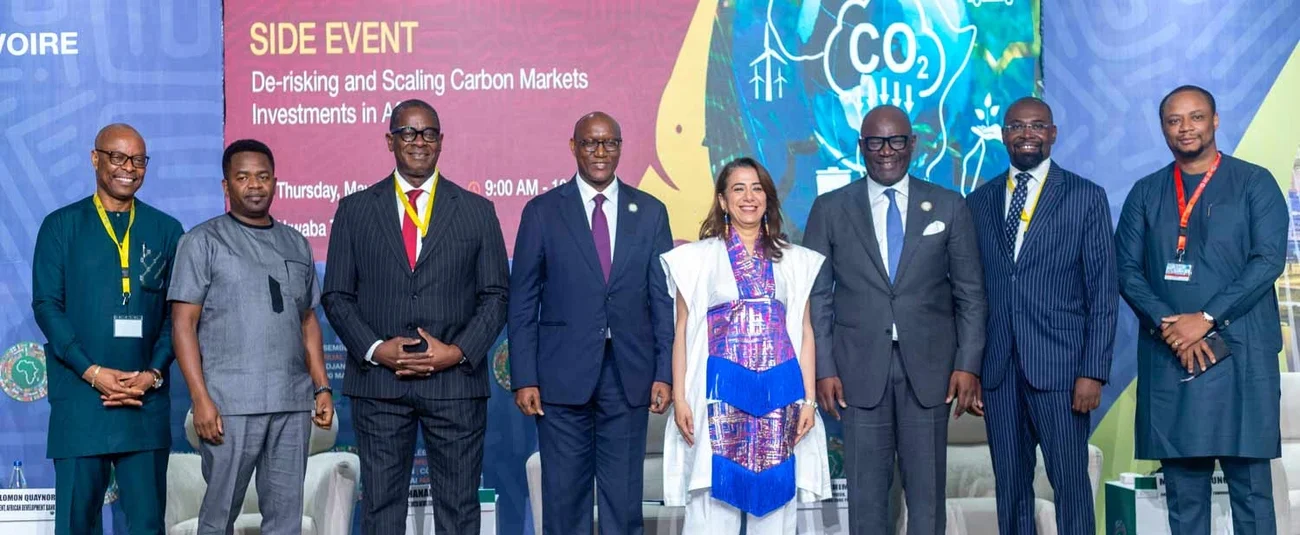
The global energy landscape is in constant flux, but few sectors are demonstrating as much transformative potential as Africa’s burgeoning carbon markets. While traditional oil and gas investments continue to dominate headlines and capital flows, the strategic push to de-risk and scale carbon investments across the African continent presents a compelling new frontier for diversified portfolios. This isn’t merely about environmental stewardship; it’s about unlocking billions in climate finance, fostering local economic growth, and establishing a robust ecosystem that will fundamentally reshape how capital views energy and sustainability in emerging markets. For discerning investors, understanding this evolving dynamic is critical to identifying long-term value and mitigating future risks.
The Strategic Pivot: De-Risking African Carbon Investments
At the heart of this transformation is the Africa Carbon Support Facility (ACSF), a newly unveiled initiative designed to catalyze high-integrity carbon markets. This facility addresses a critical need: bridging the gap between significant carbon sequestration potential and the historical lack of investment due to perceived risks. The ACSF is strategically built on five pillars: de-risking supply, stimulating demand, building essential market infrastructure, strengthening policy ecosystems, and crowding in private capital. This holistic approach signals a serious commitment to creating a predictable and profitable environment for carbon credit generation and trading. By providing targeted financial, policy, and technical support, the ACSF aims to dismantle barriers that have historically deterred large-scale institutional investment, making African carbon projects a more attractive proposition for a diverse range of investors, including those traditionally focused on conventional energy assets.
Market Dynamics and the Carbon-Oil Interplay
The emergence of robust carbon markets in Africa occurs against a backdrop of ongoing volatility in the traditional oil and gas sector. As of today, Brent Crude trades at $96.23, marking a 1.52% increase within a day range of $91 to $96.38. Similarly, WTI Crude stands at $92.61, up 1.46%. While these short-term gains might capture immediate attention, a broader look at market trends reveals a more nuanced picture. Over the past 14 days, Brent has seen an 8.8% decline, moving from $102.22 on March 25th to $93.22 on April 14th. This inherent volatility underscores a fundamental challenge for energy investors: the need for diversification and hedges against price swings. Strong, liquid carbon markets offer a complementary investment avenue, providing a stream of revenue that can be less correlated with the geopolitical and supply-demand forces driving crude prices. For integrated energy companies, investing in carbon credit generation through African projects can provide a natural offset for their operational emissions, while for financial investors, it offers a novel asset class with significant growth potential, directly linking capital to tangible environmental impact and local economic benefit.
Catalyzing Capital: Financial Institutions and Investor Intent
A central theme in scaling African carbon markets is the imperative for financial institutions to take a leading role. This call resonates deeply with signals from our proprietary investor intent data, which shows a consistent focus on forecasting traditional energy prices, with queries like “What is the consensus 2026 Brent forecast?” and “Build a base-case Brent price forecast for next quarter.” While these questions highlight a keen interest in conventional energy returns, they also implicitly suggest a desire for clear, forward-looking insights across the entire energy spectrum. The development of de-risked carbon investment opportunities directly addresses the need for new growth vectors and ESG-compliant capital deployment. Panel discussions involving leading financial institutions have underscored key requirements for unlocking this potential: clear regulatory frameworks, smarter risk-sharing tools, and stronger local capital markets. These are not merely administrative details; they are the foundational elements that will instill investor confidence, allowing capital to flow efficiently into projects that promise both financial returns and tangible benefits for African communities, aligning investment with impact in a powerful way.
Forward Momentum: Upcoming Events and Future Outlook
The convergence of traditional energy market events and the strategic development of new carbon finance mechanisms creates a dynamic environment for investors. While the immediate focus of the coming weeks includes critical industry updates like the Baker Hughes Rig Count on April 17th and 24th, and the API and EIA Weekly Crude Inventory reports on April 21st, 22nd, 28th, and 29th, the most significant forward-looking signals will likely come from the OPEC+ meetings scheduled for April 18th and 20th. Decisions made by OPEC+ regarding production levels directly influence global crude prices, which in turn affect the economic viability of carbon-intensive projects versus investments in decarbonization. A sustained period of higher oil prices, for instance, could provide energy majors with increased capital to invest in their carbon reduction strategies and expand their footprint in carbon credit generation, especially as global emissions targets tighten. Conversely, a push for stronger carbon pricing, enabled by initiatives like the ACSF, could make carbon-intensive operations more expensive, further accelerating the shift of capital towards cleaner energy and carbon sequestration projects. The long-term vision for Africa’s carbon market is to unlock billions in climate finance, ensuring that the benefits, from job creation to environmental resilience, are deeply felt by local communities. This strategic alignment of policy, finance, and community impact positions Africa to become a formidable force in the global climate finance landscape, offering compelling opportunities for investors looking beyond conventional energy plays.


