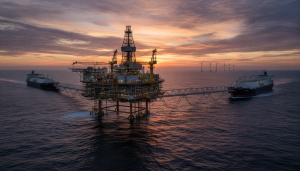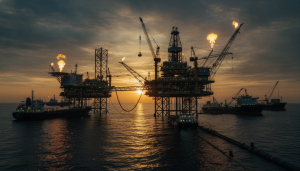
The North Sea, a basin long synonymous with formidable engineering challenges and high operational expenditures, is rapidly becoming a crucible for advanced automation. A recent, significant development from Aker Solutions on Aker BP’s Edvard Grieg platform signals a profound shift, deploying an autonomous drone system for remote inspections. This isn’t merely an incremental improvement; it represents a foundational change in offshore asset management, promising to redefine efficiency, safety, and ultimately, investment value in a crucial energy region. For investors eyeing the future of upstream operations, understanding the implications of this autonomous revolution is paramount.
The Dawn of Autonomous Offshore Operations
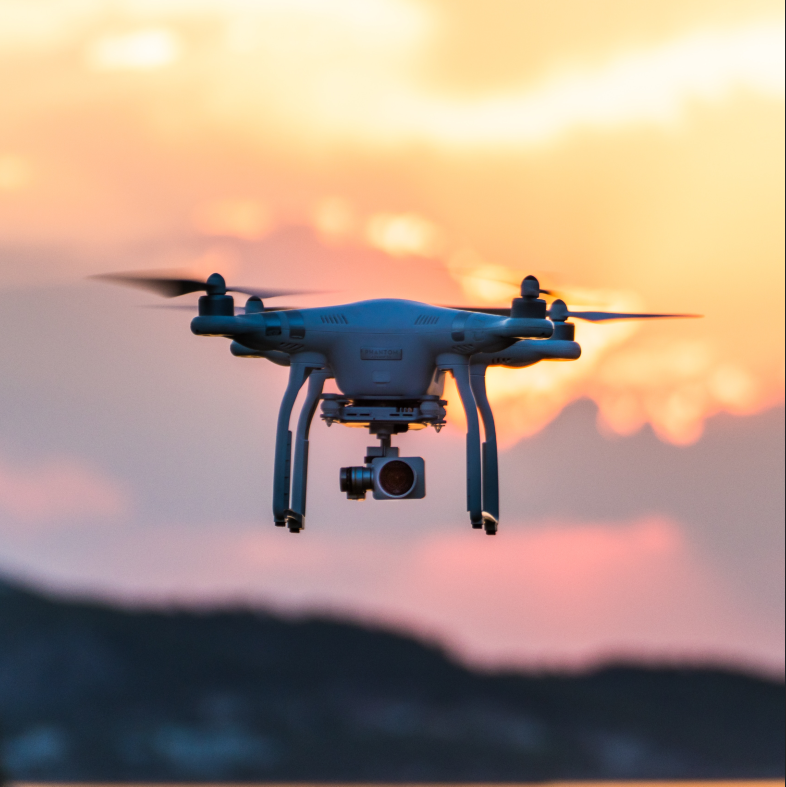
Aker Solutions has achieved a critical milestone by successfully installing a permanently stationed autonomous drone on the Edvard Grieg platform, enabling frequent, remote inspections from its onshore control center in Stavanger. This breakthrough marks the first offshore beyond-visual-line-of-sight (BVLOS) drone operation piloted from shore, a testament to sophisticated technological integration. The system comprises a dedicated drone docking station offshore, robust supporting infrastructure, and advanced software for airspace management, including two-way communication with aviation personnel. Equipped with autonomous navigation and high-resolution sensors, these drones collect precise imagery and data, facilitating a transition from reactive repairs to proactive, predictive maintenance. This strategic pivot aligns directly with Aker BP’s vision, where robotics and autonomous systems are integral to observation, inspection, and task execution, whether on-site or remotely managed from land.
Economic Imperatives in a Shifting Market Landscape
In an environment where market volatility remains a constant, cost efficiency is not just an advantage—it’s a necessity. As of today, Brent Crude trades at $90.38, reflecting a notable 9.07% downturn within the day’s range of $86.08 to $98.97. Similarly, WTI Crude stands at $82.59, down 9.41%. This daily fluctuation adds to a broader trend, with Brent having declined from $112.78 on March 30th to $91.87 on April 17th, a significant 18.5% drop in just two weeks. Such market dynamics underscore the critical importance of operational cost reduction. Aker Solutions estimates that autonomous drones can slash inspection costs by up to 70% and deliver detailed insights within hours, a process that traditionally consumes days with manual methods. This drastic reduction in expenditure, coupled with faster problem detection and preventative maintenance, directly enhances the economic viability of offshore assets. For investors keenly watching oil price forecasts, particularly those asking about the price of oil per barrel by the end of 2026, technologies that de-risk operational budgets and improve asset uptime become invaluable hedges against market uncertainty, bolstering long-term profitability even amidst fluctuating commodity prices.
Strategic Advantages and Investor Value Creation
Beyond immediate cost savings, the deployment of autonomous drones generates substantial strategic advantages that translate into enhanced investor value. The ability to perform more frequent, consistent, and precisely positioned inspections allows for earlier detection of wear, corrosion, and other potential issues. This proactive approach minimizes downtime, extends the operational life of critical infrastructure, and significantly improves safety by reducing human exposure to hazardous offshore environments. The integration of AI-powered analytics with the drone data transforms raw imagery into actionable intelligence, enabling maintenance decisions that are both timely and data-driven. For companies like Aker BP, this fosters greater operational resilience and a more predictable asset performance curve. Investors evaluating oil and gas portfolios should recognize that these technological advancements are not merely operational upgrades; they are fundamental shifts that improve cash flow generation, reduce long-term liabilities, and enhance the overall attractiveness of companies adopting such forward-thinking strategies, making them more competitive in the global energy market.
Navigating Future Markets with Technological Edge
The strategic deployment of autonomous drone technology positions operators to better navigate the dynamic future of the energy market. Several key events on the horizon will shape market sentiment and influence investment decisions. Investors will be closely watching the upcoming OPEC+ Joint Ministerial Monitoring Committee (JMMC) meeting on April 18th, followed by the full Ministerial Meeting on April 19th. These gatherings often result in crucial production quota adjustments, directly impacting global supply and, consequently, crude prices. Questions about current OPEC+ production quotas are top of mind for our readers. Regular updates like the API Weekly Crude Inventory on April 21st and 28th, and the EIA Weekly Petroleum Status Report on April 22nd and 29th, will provide vital insights into demand-side fundamentals. Furthermore, the Baker Hughes Rig Count on April 24th and May 1st will indicate upstream activity trends. In this complex landscape, operators leveraging innovations like autonomous drones gain a distinct competitive edge. Their enhanced efficiency and reduced operational costs allow them to weather potential price dips stemming from OPEC+ decisions or inventory builds, while simultaneously positioning them to capitalize more effectively on upward market trends. This technological foresight ensures a more robust and adaptable business model, offering a compelling proposition for long-term investors.