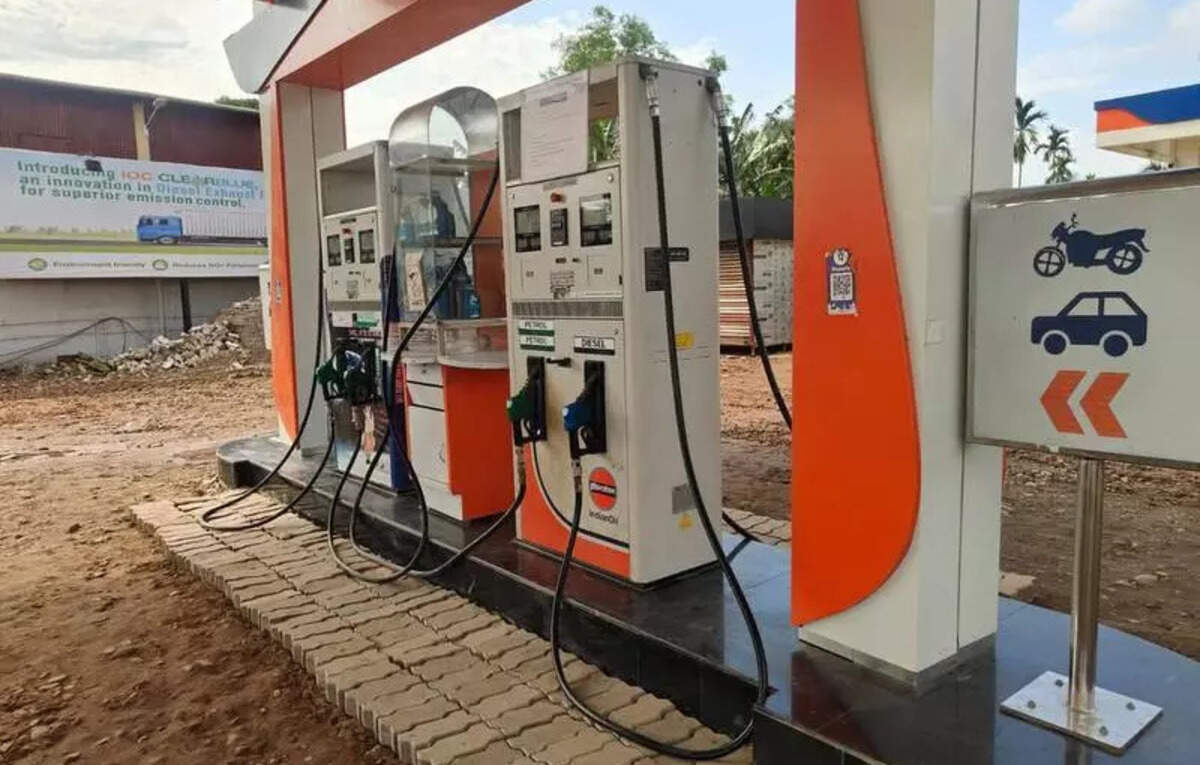
The global oil and gas landscape remains a complex tapestry of supply dynamics, geopolitical tensions, and shifting demand patterns. However, recent data from a major emerging market offers a compelling counter-narrative to some of the prevailing bearish sentiments. May 2025 witnessed a significant surge in fuel consumption across India, with petrol and liquefied petroleum gas (LPG) leading the charge. This robust demand growth, particularly for consumer-facing fuels, presents critical insights for investors navigating a volatile market. Understanding these regional strengths against a backdrop of global price fluctuations and upcoming supply decisions is paramount for strategic positioning in the energy sector.
India’s Accelerating Domestic Fuel Demand
India’s provisional fuel consumption data for May 2025 paints a picture of healthy economic activity and expanding consumer mobility. Petrol consumption recorded a substantial year-on-year increase of 8.77%, reaching 3,767 thousand metric tonnes (TMT), up from 3,463 TMT in the corresponding month last year. This growth is indicative of increased personal vehicle usage and potentially stronger economic activity in urban and semi-urban areas. Even more striking was the performance of LPG, which saw the highest year-on-year growth among key fuels, surging by 13.43% to 2,792 TMT from 2,461 TMT a year prior. This robust expansion in LPG demand underscores its essential role in household consumption and potentially reflects government initiatives to increase access to clean cooking fuel.
While petrol and LPG demonstrated exceptional momentum, other fuels also registered growth. Diesel consumption rose to 8,571 TMT, marking a 1.89% increase from May 2024, suggesting continued activity in the logistics and industrial sectors, albeit at a more moderate pace. Jet fuel (ATF) consumption also climbed by 4.17% to 775 TMT, signaling a steady recovery in air travel. On a cumulative basis for the first two months of FY26 (April–May), the trend remains positive: petrol consumption is up 7.0%, diesel usage increased by 3.1%, ATF consumption rose 4.1%, and LPG usage expanded by a remarkable 10.1%. Critically, comparing May 2025 figures to pre-pandemic levels in May 2019 reveals significant expansion: petrol consumption is up 37.7%, and LPG consumption has soared by 36.8%, demonstrating a sustained, structural shift in demand rather than just a cyclical rebound.
Navigating Global Price Volatility Amidst Local Strength
The strong demand figures from a key growth market like India provide a crucial counterpoint to the broader global market sentiment, which has seen considerable price fluctuations. As of today, Brent Crude trades at $90.38 per barrel, marking a significant daily decline of 9.07% from its open, with a daily range stretching from $86.08 to $98.97. This recent volatility extends a 14-day trend where Brent has fallen by $20.91, or 18.5%, from $112.78 on March 30th to $91.87 on April 17th. Similarly, WTI Crude stands at $82.59, down 9.41% today. Gasoline prices have also seen a downturn, currently at $2.93, a 5.18% decrease today.
Many investors are naturally asking, “What do you predict the price of oil per barrel will be by the end of 2026?” This is a complex question. While global factors like interest rates, geopolitical events, and major economies’ growth trajectories heavily influence crude prices, the underlying demand resilience in populous, developing nations like India acts as a fundamental floor. The current softening in global crude prices might offer some relief to importing nations, potentially stimulating further economic activity and, in turn, greater fuel consumption. However, the disconnect between robust localized demand and broader market anxieties means investors must carefully weigh regional strength against macro headwinds when formulating their long-term oil price outlooks.
Upcoming Catalysts and Forward-Looking Supply Dynamics
The immediate future holds several critical events that could significantly shape the global supply-demand balance and, consequently, crude oil prices. Investors are keenly focused on the upcoming OPEC+ meetings, with the Joint Ministerial Monitoring Committee (JMMC) scheduled for April 18th and the full Ministerial meeting on April 19th. A prevalent investor query revolves around “What are OPEC+ current production quotas?” and whether the cartel will adjust its output strategy in response to recent price declines and demand signals from markets like India. Any decision on production levels will have an immediate impact on supply expectations and could either exacerbate or alleviate the current price volatility.
Beyond OPEC+, weekly inventory data from the U.S. will provide crucial short-term insights. The API Weekly Crude Inventory reports on April 21st and April 28th, followed by the more comprehensive EIA Weekly Petroleum Status Reports on April 22nd and April 29th, are closely watched for shifts in U.S. crude and product stockpiles. These reports can trigger significant intraday price movements. Furthermore, the Baker Hughes Rig Count on April 24th and May 1st will offer a leading indicator of future U.S. oil and gas production activity. A sustained increase in rig counts could signal growing non-OPEC supply, potentially putting downward pressure on prices, while a decline might suggest future supply constraints. These events, combined with the ongoing demand strength in regions like India, will be pivotal in defining the market’s trajectory in the coming weeks and months.
Investment Implications for a Diversified Energy Portfolio
For investment analysts, the strong consumption trends in India, particularly for petrol and LPG, highlight specific areas of opportunity within the energy sector. Companies with significant exposure to Indian refining and marketing, as well as those involved in LPG distribution and infrastructure, are likely to benefit from this sustained demand growth. The robust 10.1% cumulative growth in LPG usage over the first two months of FY26, alongside its impressive 36.8% increase since May 2019, suggests a resilient and growing market for this commodity. Similarly, strong petrol demand supports refining margins for light distillates.
While the global crude price environment remains challenging, the localized strength in a market of India’s scale cannot be overlooked. Investors should consider a diversified approach, balancing exposure to global crude price movements with investments in companies poised to capitalize on specific, high-growth regional demand narratives. This strategy can help mitigate risks associated with broader market volatility while capturing the upside potential from structural demand expansion in key emerging economies. Evaluating companies based on their regional market penetration, refining capabilities, and distribution networks, especially for products like petrol and LPG, becomes more critical than ever in this bifurcated market environment.


