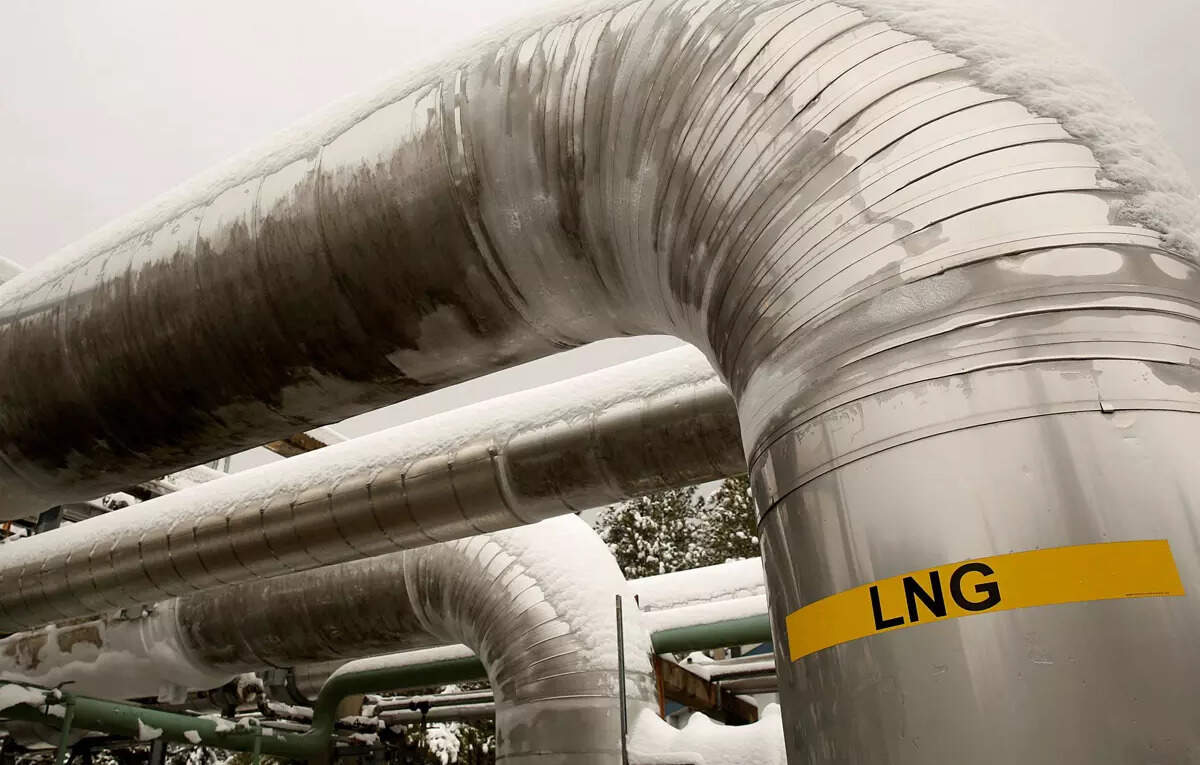
India’s rapid economic expansion and its strategic pivot towards cleaner energy sources have positioned the nation as a formidable player in the global liquefied natural gas (LNG) market. Now ranked as the world’s fourth-largest LNG market in 2024, India presents a compelling investment thesis for global energy firms. This isn’t merely a statistic; it signals a fundamental shift in energy demand and supply dynamics, creating significant opportunities for sophisticated investors. European energy major TotalEnergies, with its substantial five-year investment of nearly USD 5 billion in the country, exemplifies the strategic conviction behind capitalizing on India’s burgeoning energy needs and its robust growth trajectory.
India’s Ascendance as an LNG Powerhouse and Strategic Investments
The strategic importance of India’s energy market cannot be overstated. Its ascension to the fourth position globally in LNG consumption underscores a profound structural change, driven by industrial growth, urbanization, and a national commitment to cleaner fuels. TotalEnergies’ extensive capital deployment in India over the past half-decade highlights the tangible recognition of this potential. These investments are judiciously spread across critical segments of the energy value chain: enhancing natural gas import infrastructure, expanding crucial city gas distribution networks, and developing broader gas transmission capabilities. Furthermore, the company has diversified its portfolio by investing substantially in India’s burgeoning renewable energy sector, specifically in solar and wind projects. This multifaceted approach not only mitigates risk but also positions the firm to capitalize on India’s comprehensive energy transition, providing essential gas supplies while simultaneously supporting the nation’s green energy ambitions.
Securing Supply: The Strategic Imperative of Long-Term LNG Contracts
For investors focused on long-term stability and predictable returns, the nature of supply contracts is paramount. TotalEnergies’ recent agreements, including significant 10-year supply contracts with key Indian entities such as Gujarat State Petroleum Corporation (GSPC) and Indian Oil Corporation Limited (IOCL), are highly indicative of a de-risked and committed market. These decade-long commitments provide a stable revenue outlook for suppliers and, critically, ensure a secure and reliable energy source for India, fostering mutual economic growth and energy security. The anticipated conversion of the existing Memorandum of Understanding with GSPC into a formal Sales and Purchase Framework (SPF) represents an advanced stage of commercial maturation, further solidifying the LNG supply chain and reinforcing stakeholder trust. Such agreements are more than mere transactions; they are foundational partnerships that underpin national energy strategies and serve as a strong signal for attracting further foreign direct investment into India’s rapidly evolving energy landscape.
Navigating the Broader Energy Market: Context for LNG Investors
While India’s LNG narrative is undeniably strong, it exists within the broader context of a dynamic global energy market. The trajectory of crude oil prices, often a leading indicator for overall energy sentiment, provides crucial insights for LNG investors. As of today, April 15, 2026, Brent Crude is trading at $96.13 per barrel, reflecting a 1.41% increase within its daily range of $91 to $96.36. Similarly, WTI Crude has seen an uptick, reaching $92.36, up 1.18%. However, our proprietary data reveals a more nuanced 14-day trend: Brent prices have experienced a notable softening, declining from $102.22 on March 25, 2026, to $93.22 on April 14, 2026 – an 8.8% reduction. This recent downward pressure on crude prices can influence the relative competitiveness of LNG and shapes investor appetite across the entire energy complex. Many of our readers are actively seeking a base-case Brent price forecast for the next quarter and the consensus 2026 Brent outlook. A sustained lower crude price environment could, in certain scenarios, impact the attractiveness of oil-indexed LNG contracts, but it might also free up capital for diversified energy infrastructure investments, including gas. The intricate interplay between crude and gas pricing remains a constant consideration for those evaluating India’s compelling, yet interconnected, energy investment landscape.
Forward Momentum: Upcoming Catalysts and Investor Focus on Asian LNG
The immediate energy calendar presents several critical events that could introduce market volatility and shape investment strategies in the coming weeks. The upcoming OPEC+ Joint Ministerial Monitoring Committee (JMMC) meeting on April 18, followed by the full Ministerial meeting on April 20, are pivotal for global crude supply decisions. Any adjustments to production policy will inevitably send ripples through the broader energy market, potentially influencing the cost dynamics and competitiveness of LNG. Furthermore, the recurring Baker Hughes Rig Count reports (April 17, April 24) and the EIA/API weekly inventory data (April 21/22, April 28/29) offer real-time indicators of supply-side activity and demand health. For investors specifically targeting the gas market, a frequently asked question we are tracking concerns what factors are driving Asian LNG spot prices this week. While India’s long-term contracts offer a degree of insulation from spot market fluctuations, these dynamics are crucial for understanding regional demand elasticity and potential arbitrage opportunities. India’s expanding import capacity positions it to potentially capitalize on favorable spot prices, but also exposes it to volatility, a factor investors must weigh against the stability of long-term agreements. Monitoring these upcoming events is essential for predicting short-to-medium term market movements and refining investment theses in the Indian energy sector.
Policy Support and India’s Enduring Demand Drivers
The proactive engagement of the Indian government with global energy leaders further reinforces the investment case for the nation’s energy sector. Union Commerce Minister Piyush Goyal’s recent discussions with TotalEnergies’ Chairman and CEO, Patrick Pouyanne, during a visit to France, underscored official encouragement for expanding operations within India. Such high-level endorsements signal a supportive policy environment that is highly conducive to foreign direct investment in critical infrastructure and energy projects. This governmental backing, combined with India’s inherent demand drivers—a massive and growing population, accelerating industrialization, and a clear commitment to reducing carbon intensity—paints a compelling picture for sustained LNG market growth. The strategic shift towards gas, coupled with significant investments in renewable energy, positions India as a diverse, resilient, and expanding energy market. For discerning investors, this dual-pronged approach offers robust opportunities across the entire energy value chain, from traditional gas import and distribution to innovative green energy solutions, all underpinned by strong governmental support and robust long-term demand fundamentals.


