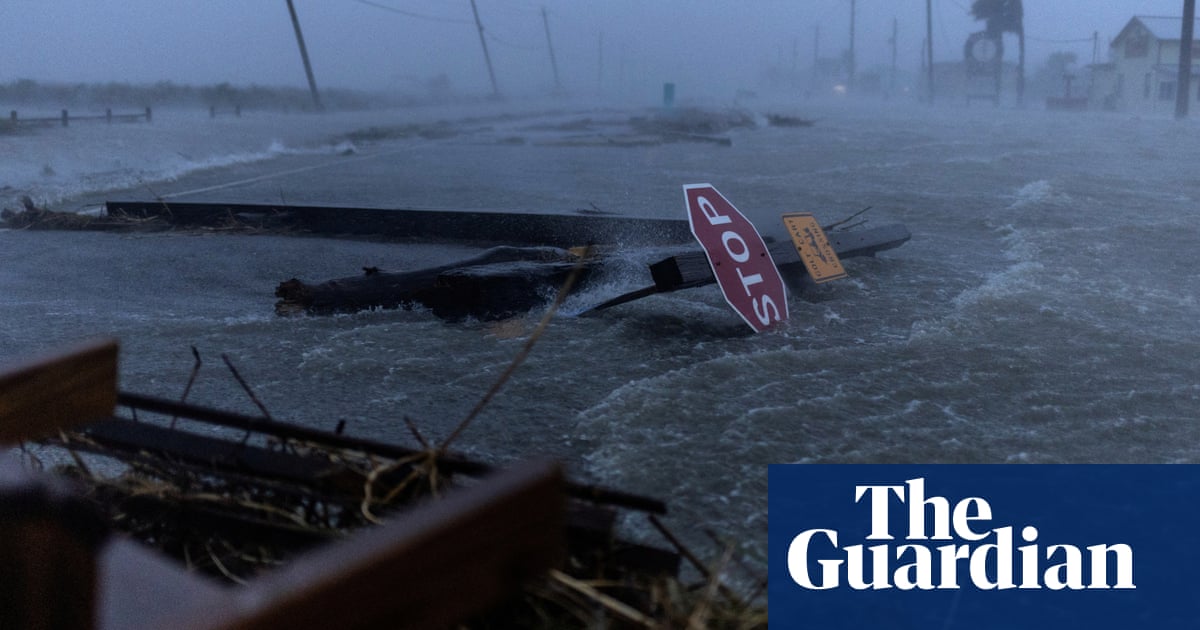
US Weather Staffing Woes Heighten O&G Hurricane Risk
As the U.S. plunges into an active hurricane season, a critical vulnerability has emerged that demands immediate attention from oil and gas investors: a significant understaffing issue within the National Weather Service (NWS) and its vital National Hurricane Center (NHC). This deficiency, particularly acute along the hurricane-prone Gulf of Mexico coast, represents more than just a public safety concern; it introduces an amplified, unquantified risk to the region’s vast energy infrastructure. From offshore platforms and drilling rigs to crucial refineries and intricate pipeline networks, the timely and accurate forecasting of severe weather is paramount for operational continuity, safety, and ultimately, investor returns. The confluence of a predicted active storm season and a compromised early warning system creates a dangerous cocktail of potential disruptions that could ripple through global energy markets.
The Gulf Coast’s Critical Vulnerability
The backbone of the nation’s energy supply, the Gulf of Mexico coast, is facing a perilous forecasting deficit. Proprietary data indicates a lack of meteorologists in 15 regional NWS offices spanning from Texas to Florida, alongside Puerto Rico – territories that bear the brunt of most U.S.-bound hurricanes. Key strategic locations for the energy sector, including Miami, Jacksonville, and Houston, are particularly hard hit, with several offices reportedly lacking at least a third of their required meteorological staff. Compounding this, the National Hurricane Center in Miami, the nerve center for tropical storm tracking, is short five specialists. These staffing gaps are not merely administrative oversights; they translate directly into potential delays or inaccuracies in hurricane warnings, which are vital for implementing evacuation protocols for offshore personnel, securing production facilities, and initiating refinery shutdowns. Industry experts warn that the system is “already overstretched” and at a “snapping point,” with a high probability of “significant consequences” for timely warnings and effective disaster response for areas critical to oil and gas operations.
Market Volatility in the Shadow of Potential Disruption
The current energy market landscape, while exhibiting its own set of pressures, may not fully price in this amplified hurricane risk. As of today, Brent Crude trades at $90.38, reflecting a significant -9.07% decline within the day, having ranged from $86.08 to $98.97. Similarly, WTI Crude has fallen to $82.59, down -9.41% with a day range of $78.97 to $90.34. Gasoline prices have followed suit, standing at $2.93, a -5.18% drop. Zooming out, the 14-day trend for Brent crude shows a substantial decline of $20.91, or -18.5%, from $112.78 on March 30th to $91.87 on April 17th. This downward pressure, driven by various global macroeconomic factors and supply-demand dynamics, creates a potentially misleading sense of market stability. Should a significant hurricane strike the Gulf Coast with reduced warning times due to NWS understaffing, the ensuing production outages, refinery closures, and supply chain disruptions could trigger a rapid and severe reversal in these price trends. Investors must recognize that current market valuations may not adequately account for the increased probability of prolonged operational downtime and physical damage to energy assets in a compromised early-warning environment.
Addressing Investor Concerns Amidst Heightened Uncertainty
Our proprietary reader intent data reveals a consistent investor focus on future market direction, with common queries such as “what do you predict the price of oil per barrel will be by end of 2026?” and specific performance inquiries like “How well do you think Repsol will end in April 2026?” These questions underscore a fundamental desire for predictability in investment outcomes. However, the NWS staffing crisis introduces a significant wild card into these projections. While factors like OPEC+ production quotas—another frequent query from our readers—and global demand typically dominate long-term price forecasts, the enhanced threat of hurricane-induced supply shocks demands a revised risk assessment. For integrated companies with substantial Gulf Coast exposure, like Repsol or its peers, compromised weather intelligence could lead to unforeseen operational interruptions, higher insurance premiums, and increased capital expenditure for resilience measures, directly impacting their bottom line. Savvy investors must therefore integrate this operational risk into their valuation models, moving beyond traditional market indicators to scrutinize the hurricane preparedness strategies and contingency plans of their portfolio companies with renewed intensity.
Navigating Upcoming Events with an Eye on the Storm
The energy market calendar is replete with events that typically drive price action and investor sentiment. In the next 14 days, we anticipate critical updates including the OPEC+ Joint Ministerial Monitoring Committee (JMMC) and Full Ministerial meetings on April 18th and 19th, respectively. These will be closely followed by the API and EIA Weekly Crude Inventory reports on April 21st-22nd and April 28th-29th, and the Baker Hughes Rig Count on April 24th and May 1st. These events usually provide clear signals regarding global supply, demand, and drilling activity. However, this season, the impending hurricane risk, exacerbated by NWS understaffing, casts a long shadow over these scheduled releases. Imagine an EIA report signaling a significant inventory draw, coinciding with a rapidly developing storm in the Gulf that the compromised weather service struggles to accurately track. Such a scenario could trigger an outsized market reaction, as investors grapple with both existing supply dynamics and the immediate threat of widespread production outages. Similarly, while the Baker Hughes Rig Count typically informs future supply, a major storm could force the evacuation or shutdown of numerous rigs, rendering the immediate count less relevant than the potential for sudden, severe supply disruptions. Proactive investors will monitor these scheduled events not in isolation, but through the lens of heightened hurricane vulnerability, understanding that the unexpected could significantly outweigh the anticipated.
The understaffing crisis within the U.S. National Weather Service is more than a bureaucratic problem; it is a tangible threat multiplier for the oil and gas industry along the Gulf Coast. As we navigate an expectedly active hurricane season, the reduced capacity for timely and accurate storm warnings translates directly into elevated operational risks, potential supply shocks, and increased market volatility. While traditional market drivers and scheduled events will continue to shape the energy landscape, discerning investors must now place an unprecedented emphasis on understanding and mitigating the unique risks posed by a compromised weather intelligence system. Proactive due diligence on company-specific hurricane preparedness and a keen awareness of this systemic vulnerability will be crucial for protecting capital and capitalizing on potential market dislocations throughout the coming months.


