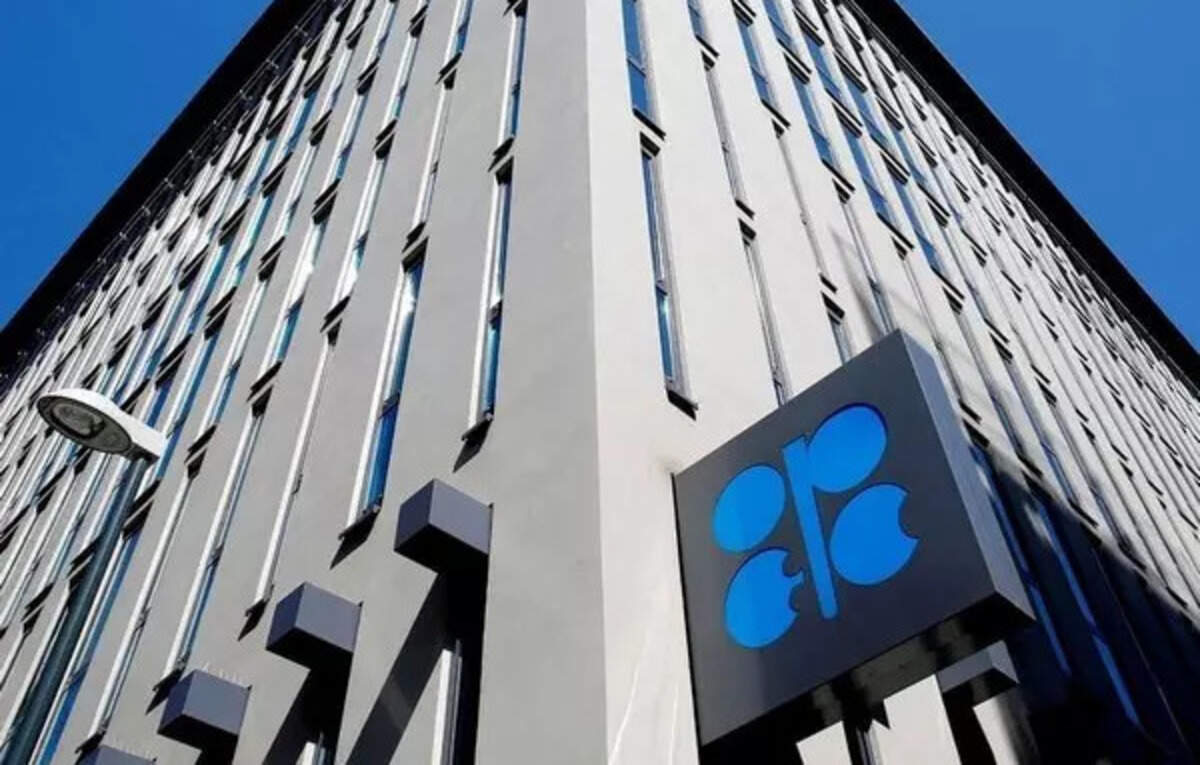
In May 2025, a pivotal virtual meeting of eight key OPEC+ nations charted a course for gradual supply adjustments, agreeing to add 411,000 barrels per day (BPD) to global output starting July 2025. This move, equivalent to three monthly increments, was framed within the context of a healthy market outlook and low oil inventories, and designed as a flexible step in unwinding the larger 2.2 million BPD voluntary production adjustments initiated in April 2025. For astute investors, understanding the long-term implications of these carefully calibrated decisions – particularly as market dynamics evolve – is paramount. Our proprietary data pipelines offer a unique lens through which to assess the current landscape, investor sentiment, and critical upcoming events that will undoubtedly shape the energy sector’s trajectory.
The Delicate Balance: Supply Adjustments Versus Market Reality
The OPEC+ decision to increase production by 411,000 BPD from July 2025 was made with a stated aim of supporting market stability amid what was then perceived as a steady global economic outlook and healthy market fundamentals, underscored by low oil inventories. However, the energy market’s volatility remains a constant. As of today, April 18, 2026, Brent Crude trades at $90.38 per barrel, reflecting a significant 9.07% drop within the day’s range of $86.08 to $98.97. Similarly, WTI Crude stands at $82.59, down 9.41% within its $78.97 to $90.34 daily spread. This sharp downturn is not an isolated event; our data indicates Brent has plummeted from $112.78 on March 30, 2026, to $91.87 by April 17, 2026, marking an 18.5% decline in just over two weeks. Gasoline prices have also followed suit, currently at $2.93, down 5.18% today. This recent market turbulence, nearly a year after the May 2025 decision, casts a fresh perspective on the planned July 2025 increments. While the decision itself was premised on a robust market, today’s reality suggests a more cautious approach might be warranted, highlighting the critical importance of OPEC+’s embedded flexibility clause that allows adjustments to be “paused or reversed subject to evolving market conditions.”
Investor Focus: Quotas, Prices, and 2026 Outlook
One of the most frequent questions echoing from our investor community, as captured by our intent data, revolves around OPEC+’s current production quotas and predictions for crude oil prices by the end of 2026. The 411,000 BPD increase planned for July 2025 is a critical piece of the quota puzzle, representing a gradual return of supply. However, investors are keenly aware that this is part of a larger, flexible strategy. The stated commitment to monthly meetings to review market conditions, conformity, and compensation is a direct response to the need for agility. For investors seeking to forecast oil prices for late 2026, the key lies not just in the announced increments but in the group’s willingness to exercise its option to pause or reverse these adjustments. If the recent downward trend in crude prices persists or deepens, the market will scrutinize every signal from the upcoming meetings for clues on whether the July 2025 increase, or subsequent planned rollbacks, will proceed as scheduled. The collective commitment to fully compensate for any overproduced volume since January 2024 also plays a vital role in managing the total supply picture and influencing price expectations for the remainder of the year.
Navigating Upcoming Catalysts: OPEC+ Meetings and Market Signals
The strategic decisions made by OPEC+ are always subject to ongoing review, and the coming days present crucial opportunities for the group to signal its immediate intentions. Our event calendar highlights the upcoming OPEC+ Joint Ministerial Monitoring Committee (JMMC) meeting on April 18, 2026, followed immediately by the Full Ministerial OPEC+ Meeting on April 19, 2026. These gatherings will be instrumental in assessing the effectiveness of past adjustments and determining the path forward, especially in light of the significant price volatility witnessed over the past fortnight. While the May 2025 decision for July 2025 increases was made with a longer-term view, the agility of the group’s “monthly meetings to review market conditions” mechanism means that the current market environment will be top of the agenda. Investors should pay close attention to any pronouncements or subtle shifts in rhetoric from these upcoming sessions. Will the group reaffirm its commitment to the gradual increases, or will the recent price weakness prompt a reconsideration of the pace or even the direction of future adjustments? The outcome will provide critical guidance for energy sector portfolio managers looking to position themselves ahead of the July 2025 supply additions and beyond.
Conformity and Compensation: Underpinning Long-Term Stability
Beyond the headline production numbers, the long-term stability of the oil market hinges significantly on OPEC+’s internal discipline regarding conformity and compensation. The May 2025 statement explicitly reiterated the collective commitment to achieve full conformity with the Declaration of Cooperation, including the additional voluntary production adjustments monitored by the JMMC. Furthermore, the eight participating countries confirmed their intention to fully compensate for any overproduced volume since January 2024. This commitment is not merely procedural; it is fundamental to the group’s credibility and its ability to influence global oil supply effectively. Slippage in conformity or a failure to compensate for past overproduction could undermine the market’s confidence in OPEC+’s management capabilities, potentially exacerbating price swings. Conversely, strict adherence to these principles reinforces the group’s unified front, providing a more predictable supply environment that fosters greater stability for investors. Monitoring the progress of these compensation efforts will be a key indicator of OPEC+’s resolve in managing the global crude balance, particularly as the 411,000 BPD increase approaches implementation in July 2025.


