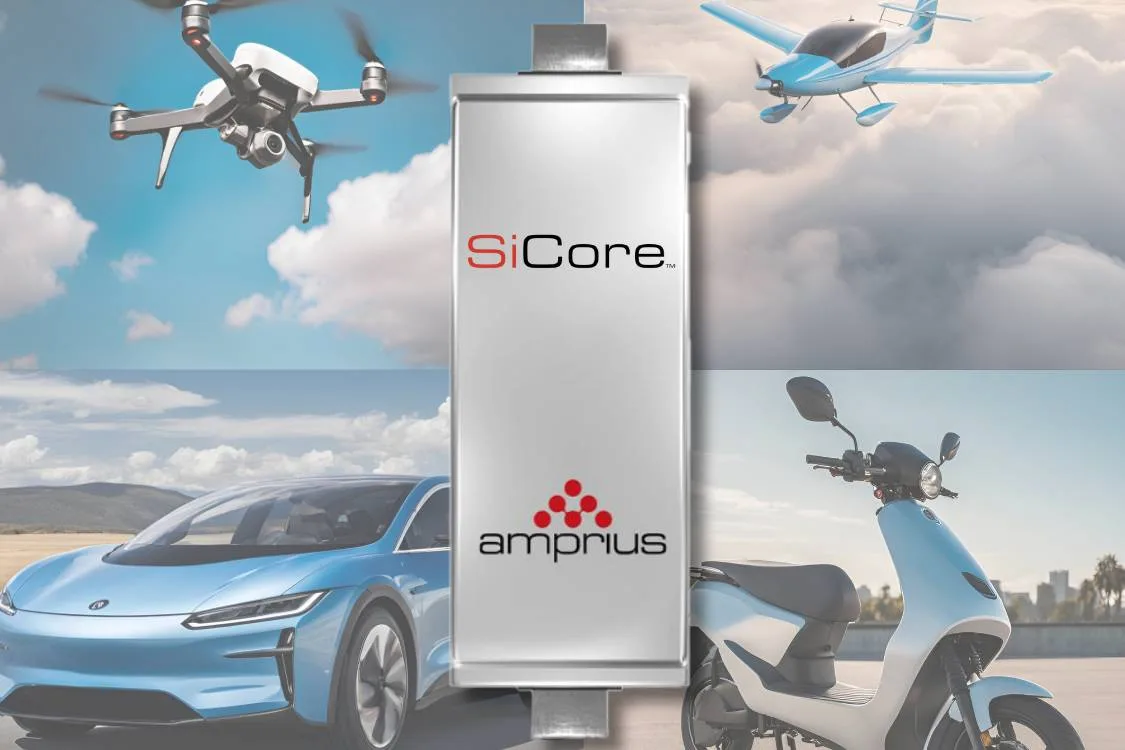
The global energy landscape continues its dynamic evolution, and for astute investors tracking the oil and gas sector, understanding adjacent technological advancements is paramount. One such development comes from Amprius, a Californian innovator at the forefront of silicon anode battery technology, which has just announced a significant contract manufacturing agreement in South Korea. This strategic move is set to dramatically scale production of its high-performance SiCore cells, signaling a pivotal moment in the commercialization of next-generation energy storage solutions.
Amprius Forges Key Manufacturing Alliance in Asia
Amprius has solidified a critical partnership with a prominent, albeit unnamed, battery manufacturing leader in South Korea. This collaboration is designed to leverage the Korean partner’s extensive experience in producing advanced lithium-ion batteries across diverse form factors and cell chemistries. Under the terms of the agreement, the South Korean facility will manufacture Amprius’s proprietary SiCore silicon anode cells, built precisely to the Californian firm’s specifications. This ensures the consistent quality and performance essential for both existing and future battery platforms.
For investors, this deal underscores Amprius’s commitment to transitioning from a developer to a high-volume producer. The company explicitly states this alliance represents a “pivotal step” in scaling its SiCore platform, a clear signal of accelerating commercialization efforts. South Korea, a global hub for battery innovation and manufacturing, offers an ideal ecosystem for such an expansion, providing access to skilled labor, advanced infrastructure, and a robust supply chain network.
SiCore Technology: A Leap in Energy Density for High-Demand Sectors
The SiCore cell technology itself is a game-changer, particularly for applications requiring exceptional energy density and power performance. Amprius initially unveiled its SiCore cell in January, specifically designing it to meet the stringent demands of aerospace and defense sectors. The company has since been actively collaborating with leading customers in these industries to prepare for the commercial deployment of this groundbreaking technology.
The South Korean production line is slated to include a specialized, balanced SiCore cell engineered for high-energy and high-power delivery, targeting advanced drone applications. Beyond drones, the manufactured silicon anode cells will support current and next-generation battery platforms optimized for other high-demand sectors, including electric mobility. This strategic targeting of premium markets highlights the immediate value proposition of Amprius’s technology, commanding higher margins and demonstrating critical performance capabilities before broader market penetration.
Crucially, silicon anode technology offers a significant advantage by reducing reliance on graphite. Traditional lithium-ion batteries heavily depend on graphite for their anodes, a material whose supply chain is predominantly controlled by China, both in synthetic production and the processing of mined graphite. By embracing silicon, Amprius, along with other innovators, is actively working to diversify the critical mineral supply chain, a factor of increasing geopolitical importance for energy security and manufacturing independence – a lesson well understood by the oil and gas industry regarding traditional energy resources.
Aggressive Capacity Expansion and Market Positioning
This new South Korean agreement significantly bolsters Amprius’s manufacturing capabilities. Prior to this deal, the company had already established a global contract manufacturing network boasting an impressive 1.8 gigawatt-hours (GWh) of contracted production capacity. The addition of the South Korean capacity further expands this network, positioning Amprius for substantial volume delivery. This expanded capacity is not merely about production volume; it’s about enabling the company to “compete more effectively across global markets,” a direct indication of its intent to capture significant market share in advanced battery segments.
For investors accustomed to evaluating capital expenditures and production ramp-ups in the oil and gas sector, Amprius’s strategy mirrors a disciplined approach to scaling a critical energy technology. The move to secure high-volume, cost-competitive delivery through a global network mitigates single-point-of-failure risks and enhances market responsiveness. This foresight in supply chain management is increasingly critical in an era of heightened geopolitical tensions and supply chain vulnerabilities across all strategic industries, from semiconductors to energy resources.
Geopolitical Implications and the Future Energy Matrix
The strategic shift away from graphite reliance via silicon anodes carries profound geopolitical implications. China’s near-monopoly on graphite production and processing has raised concerns among Western nations regarding supply chain resilience for electric vehicles and renewable energy storage. Recognizing this vulnerability, the U.S. government took decisive action at the end of 2022, providing funding to three key companies – Amprius Technologies, Group14 Technologies, and Sila Nanotechnologies – to establish domestic factories for silicon anode materials.
This government-backed initiative underscores the national security imperative behind developing alternative battery chemistries and securing critical mineral supply chains. For oil and gas investors, this paradigm shift in resource dependency mirrors historical concerns over crude oil supply routes and strategic reserves. The race to dominate next-generation battery materials is as critical to future energy independence as access to hydrocarbon reserves has been in the past. Investments in companies like Amprius, therefore, represent not just a bet on technological innovation, but also on the strategic re-orientation of global energy resource dependencies.
Investor Outlook: Navigating the Energy Transition
As the world continues its energy transition, the role of advanced energy storage solutions becomes increasingly central. While traditional oil and gas remain foundational to the global energy mix, savvy investors are keenly observing and positioning themselves within the emerging clean energy landscape. Amprius’s aggressive scale-up of its silicon anode technology, backed by strategic partnerships and government support, offers a compelling case study in how innovation is reshaping the future of energy. These developments, while seemingly peripheral to daily crude prices, are fundamental drivers of long-term energy demand profiles, infrastructure requirements, and geopolitical power dynamics.
Understanding the trajectory of companies like Amprius provides critical foresight for oil and gas investors seeking to diversify portfolios, mitigate long-term risks associated with peak oil demand scenarios, and identify new opportunities within the burgeoning energy storage and electric mobility sectors. The strategic maneuvering in advanced battery technology, particularly concerning supply chain security and performance breakthroughs, will ultimately influence the pace and direction of global energy consumption and investment for decades to come.


