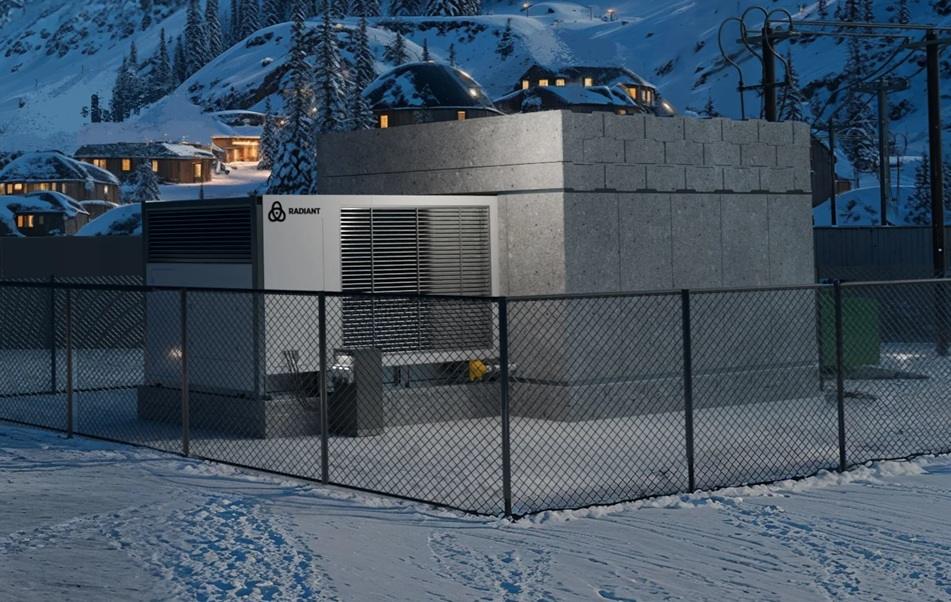
A significant capital injection into the advanced nuclear sector is signaling growing investor confidence in the future of compact, emissions-free power generation. Radiant, a California-based innovator, has successfully secured $165 million in a Series C funding round. This substantial financial backing is earmarked to accelerate the development and ultimate mass production of its groundbreaking nuclear microreactors, a technology poised to redefine distributed energy solutions and challenge the longstanding dominance of diesel generators.
Radiant’s Vision: Powering the Future Beyond Diesel
Established in 2020, Radiant has rapidly emerged as a key player in the energy transition landscape, focusing its efforts on designing a 1-megawatt (MW) nuclear microreactor. This compact power unit is engineered for scalability and mass manufacturability, presenting a compelling, zero-emissions alternative to traditional diesel-fueled generators. The target applications are vast and critical, ranging from providing stable electricity to remote communities, offering resilient power for emergency response operations, to ensuring energy independence for military installations. For investors monitoring the evolving energy matrix, Radiant’s approach represents a direct assault on the carbon footprint and logistical complexities associated with fossil fuel-based power in off-grid or critical infrastructure scenarios.
Strategic Milestones Fuel Investor Enthusiasm
The recent funding announcement arrives on the heels of several pivotal strategic achievements that underscore Radiant’s progress and potential. Notably, the U.S. Department of Energy (DOE) selected Radiant as one of just five companies nationwide to receive high-assay low-enriched uranium (HALEU) fuel. This specialized fuel is crucial for advanced reactor designs, and its provision by the DOE significantly de-risks a critical supply chain component for Radiant. The company has confirmed plans to utilize this HALEU fuel for the inaugural test of its reactor technology next year, slated to take place at the Idaho National Laboratory’s DOME facility. This upcoming test represents a monumental step towards validating the reactor’s design and operational capabilities.
Looking further ahead, Radiant projects its first full reactor test in 2026, with initial customer deployments anticipated to commence in 2028. This clear, aggressive timeline for commercialization provides investors with a concrete roadmap and highlights the rapid pace of innovation within the advanced nuclear space. The freshly secured capital will be instrumental in funding these ongoing development phases and, crucially, in initiating construction efforts for dedicated manufacturing facilities. These planned facilities are designed to support an ambitious production target of up to 50 microreactors annually, demonstrating a clear intent to scale rapidly and meet anticipated market demand.
A Strong Vote of Confidence from Leading Investors
With this latest Series C round, Radiant’s total venture funding now stands at an impressive $225 million, reflecting substantial and sustained investor confidence since its inception. Doug Bernauer, CEO and Founder of Radiant, articulated the significance of this backing, stating, “Bringing some of the sharpest minds in technology investment onto our team represents a powerful endorsement of Radiant – and the conviction that America must continue to lead in nuclear innovation – as we gear up to test the first new reactor design in the U.S. in over five decades.” This statement underscores not only the financial validation but also the strategic intellectual capital brought by the investment partners.
The Series C round was spearheaded by DCVC, a prominent venture capital firm known for its investments in deep technology. The syndicate of participating investors further highlights the broad appeal of Radiant’s vision, including contributions from StepStone, Giant Ventures, Hanwha Asset Management Venture Fund, SGA, Crossbeam Venture Partners, Align Ventures, ARK Venture Fund, Gigascale Capital, HartBeat Ventures, and Pax Ventures. This diverse group of institutional investors, ranging from established VCs to corporate funds, signals a collective belief in the disruptive potential of microreactor technology.
Will Dufton, who leads Growth investments at Giant Ventures, captured the prevailing sentiment, observing, “We are witnessing a new nuclear renaissance unfolding right now. Radiant’s success will unlock the final bottlenecks to progress for the entire nuclear industry.” This perspective resonates deeply with oil and gas investors who recognize the increasing pressures for decarbonization and the search for reliable, scalable alternatives to fossil fuels in various industrial and remote applications. The potential for these microreactors to “uncork bottlenecks” suggests a broader positive impact on energy security and sustainability.
Disrupting the Diesel Market: Implications for Oil & Gas
For an oil and gas market deeply intertwined with global energy supply and demand, Radiant’s advancements are particularly noteworthy. Diesel generators represent a significant segment of demand for refined petroleum products, especially in regions lacking robust grid infrastructure or requiring highly resilient, portable power. The successful deployment and mass production of 1MW nuclear microreactors could fundamentally alter this dynamic. Each microreactor deployed effectively displaces a continuous demand for diesel fuel, thereby impacting the market for distillates. While individual deployments may seem small, a target of 50 units per year suggests a growing fleet capable of significantly reducing diesel consumption in niche, high-value markets. This shift represents both a challenge and an opportunity for energy investors – a challenge to traditional fossil fuel markets, but an opportunity to invest in the next generation of energy infrastructure.
The implications extend beyond mere fuel displacement. Nuclear microreactors offer unparalleled operational endurance without refueling for extended periods, reducing logistical complexities and costs that are inherent to diesel supply chains in remote or hostile environments. This enhanced reliability and reduced carbon footprint appeal to a wide array of customers, from defense sectors aiming for energy independence to commercial enterprises seeking sustainable and resilient power solutions. As the world pushes for decarbonization, technologies like Radiant’s microreactors will increasingly find favor, influencing long-term investment strategies across the entire energy complex.
A Glimpse into the Energy Future
Radiant’s rapid progress, significant funding, and clear commercialization pathway position it as a critical player in the evolving energy landscape. The company’s vision for mass-produced, compact nuclear power is not just about a new energy source; it’s about decentralizing power, enhancing energy resilience, and providing a clean alternative where fossil fuels have historically dominated. For investors keenly watching the intersection of technology, energy, and sustainability, Radiant offers a compelling case study of innovation poised to deliver substantial impact. The coming years, with reactor tests and initial deployments on the horizon, will be crucial in demonstrating the full potential of this “new nuclear renaissance” and its role in shaping a decarbonized, distributed energy future.


