Vietnam’s Port Boom Signals Robust Marine Fuel Demand Surge
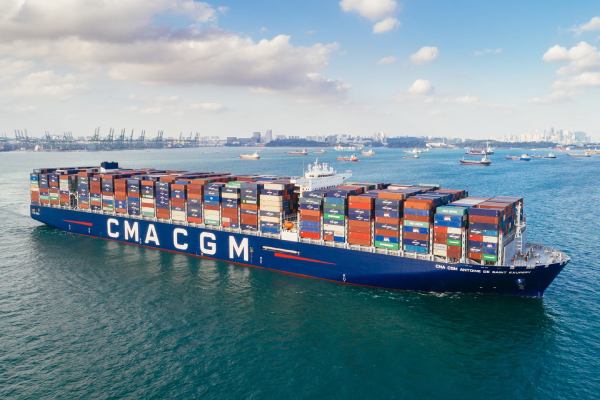
Global shipping giant CMA CGM is making a significant long-term bet on Vietnam’s burgeoning trade economy, injecting a formidable $600 million into a state-of-the-art deep-water terminal in Haiphong. This strategic investment in northern Vietnam, a region rapidly solidifying its role as a critical node in Asian supply chains, carries substantial implications for the marine fuel and broader energy markets.
The monumental project, a joint venture with Saigon Newport Corporation (SNP), will see the design, construction, and eventual operation of a new facility within Haiphong’s Lach Huyen area. Slated for a 2028 opening, this terminal is engineered to handle an impressive 1.9 million Twenty-foot Equivalent Units (TEUs) annually. For energy investors, this capacity expansion is a clear indicator of sustained and increasing demand for bunker fuel, diesel, and other petroleum products essential to power the vessels and ground logistics moving these millions of containers.
Strategic Expansion Amidst Shifting Global Trade Winds
CMA CGM’s move is a direct response to the escalating volume of container traffic flowing through northern Vietnam. The region’s swift industrial and logistics maturation has positioned it as one of Southeast Asia’s fastest-growing economic zones. This growth narrative is particularly compelling for oil and gas investors, as it underpins a structural increase in energy consumption across the entire supply chain, from ocean-going vessels to port operations and inland transportation.
The company explicitly stated that this partnership aims to “secure long-term capacity,” a crucial factor in an increasingly complex global trade environment. This commitment translates directly into predictable, long-term demand for marine fuels. As more manufacturing shifts away from traditional hubs, Vietnam emerges as a beneficiary, and with it, the demand for the energy commodities that facilitate this trade expansion.
This new facility complements CMA CGM’s already extensive presence in southern Vietnam, where it holds stakes in the Gemalink terminal in Cai Mep and the Vietnam International Container Terminal in Ho Chi Minh City. Such a comprehensive national footprint underscores the company’s deep integration into the Vietnamese economy, amplifying its overall energy consumption profile across a wider geographical spread.
Vietnam’s Economic Ascent Fuels Energy Consumption
Vietnam’s ascendance in global trade is a powerful driver for increased energy demand. The nation has become a preferred manufacturing alternative as companies diversify supply chains beyond China. This strategic realignment is evidenced by robust trade figures: in April, Vietnam’s exports to the United States soared by 34%, while imports from China also experienced a significant uptick of over 22%. These percentages represent millions of tons of goods requiring transportation, each journey consuming substantial quantities of fuel.
Such vigorous economic activity inherently necessitates a proportional rise in energy consumption. The ships calling at Vietnamese ports, the cranes loading and unloading containers, the trucks transporting goods inland, and the factories producing them all rely heavily on petroleum products. This makes Vietnam’s economic trajectory a key indicator for investors monitoring global oil demand, particularly in the marine and industrial sectors.
CMA CGM’s Deep Roots and Broad Energy Footprint
CMA CGM’s operational history in Vietnam dates back to 1989, establishing a long-standing commitment to the region. Today, the company operates an impressive 29 weekly shipping services, connecting seven Vietnamese ports to global markets and employing over 550 individuals in the country. This extensive network of services, each requiring regular bunkering, ensures a consistent baseline demand for marine fuels.
Furthermore, the group’s intermodal network, bolstered by its logistics arm, CEVA Logistics, extends the energy demand beyond the port gates. The intricate web of trucking, rail, and other transport solutions necessary to move goods from factories to ports, and vice versa, consumes significant volumes of diesel and other transport fuels. Investors should view this holistic logistics infrastructure as a comprehensive demand generator for downstream petroleum products.
The Future of Fuel: Conventional Dominance with an Eye on Transition
While the immediate and dominant impact of this port expansion will be on conventional marine fuel demand, CMA CGM also offers a glimpse into future energy trends. The company plans to introduce a 100% electric barge in 2026, dedicated to moving Nike products along southern Vietnam’s Dong Nai River between Cai Mep and Binh Duong. This initiative highlights a nascent shift towards decarbonization in specific, localized segments of the logistics chain.
However, for the foreseeable future, the sheer scale of the $600 million Haiphong terminal and Vietnam’s broader trade explosion means that traditional bunker fuels will remain the bedrock of the shipping industry’s energy requirements. The transition to alternative fuels for ocean-going vessels is a long-term endeavor, and current investments in port infrastructure, like the one in Haiphong, are primarily designed to accommodate the existing and projected fleet mix, which is heavily reliant on petroleum. This makes the Haiphong investment a significant bullish signal for marine and industrial fuel demand over the next decade and beyond, offering a compelling narrative for oil and gas investors tracking global energy consumption trends.