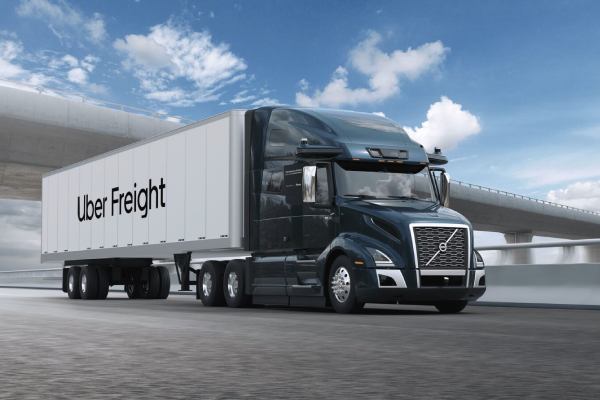
The oil and gas sector, inherently global and capital-intensive, constantly grapples with optimizing its vast and complex supply chains. From the wellhead to the refinery, and ultimately to the consumer, logistics represent a significant, often volatile, component of operational expenditure. Against this backdrop, the emergence of advanced artificial intelligence in freight management is not merely an incremental improvement but a foundational shift with profound implications for investor returns. Uber Freight’s recent push to embed AI at the core of its logistics network, driven by a proprietary large language model trained on nearly $20 billion in freight data, signals a new era where smarter decisions, faster execution, and dramatically reduced costs become the industry standard. For oil and gas investors, understanding this technological inflection point is critical to identifying future leaders and navigating market dynamics.
The AI Advantage: Sharpening the Oil & Gas Supply Chain Edge
Uber Freight is positioning its AI-powered logistics network as a transformative force, moving beyond simple task automation to enable a new level of agility and foresight. The system, leveraging over 30 autonomous agents, manages a comprehensive suite of functions, including procurement, execution, tracking, payments, and analytics. This sophisticated architecture aims to significantly reduce manual workloads, freeing logistics teams to focus on strategic priorities. With plans to fully integrate these agents and its ‘Insights AI’ feature into its transportation management system (TMS) by the end of 2025, the company envisions a “real-time logistics command center.”
For the oil and gas industry, this represents a pivotal development. Transporting crude oil, refined products, natural gas, drilling equipment, and personnel across vast distances and challenging terrains is a logistical behemoth. Costs associated with freight, demurrage, and inefficient routing directly impact operating expenditures and, by extension, netbacks. Early adopters like Colgate-Palmolive are already reporting improved decision-making and network analysis. Applied to the O&G sector, the ability to optimize routes, predict delays, and streamline payment processes in real-time could translate into billions of dollars in savings annually, directly bolstering the bottom line for producers, midstream operators, and refiners alike. The sheer scale of freight data, encompassing $20 billion under management and including 30% of the Fortune 500, suggests a robust training ground for an AI poised to tackle even the most complex energy logistics.
Navigating Volatility: AI Logistics Amidst Shifting Crude Prices
The imperative for cost control in oil and gas is never more apparent than during periods of price volatility. As of today, Brent crude trades at $96.06, reflecting a 1.34% increase from its opening, with a daily range between $91 and $96.26. WTI crude also shows strength at $92.46, up 1.29%, fluctuating between $86.96 and $92.67. Gasoline prices are up slightly at $2.98. However, this immediate uplift follows a notable market correction; Brent crude had trended downward by nearly 9% over the past two weeks, dropping from $102.22 on March 25th to $93.22 on April 14th.
In such an environment, where a $9 swing in crude prices can occur in a fortnight, maintaining robust margins is paramount for investor confidence. This is precisely where AI-driven logistics offers a critical strategic advantage. By reducing transport inefficiencies, minimizing fuel consumption through optimized routing, and proactively mitigating delays, AI solutions can deliver tangible cost savings that insulate profits during price troughs. For a sector that moves immense volumes of product, even a seemingly small percentage reduction in logistics expenses can translate into hundreds of millions in retained capital. This capability allows companies to better absorb market shocks and maintain financial stability, a key differentiator for investors scrutinizing operational resilience.
Forward-Looking Gains: AI’s Role Ahead of Key Energy Events
The coming weeks are packed with events that will shape the near-term trajectory of energy markets, underscoring the timing for logistics innovation. Investors are closely watching the Baker Hughes Rig Count scheduled for April 17th and April 24th, which provides crucial insights into drilling activity and future supply. Furthermore, the global oil supply landscape will be heavily influenced by the OPEC+ JMMC meeting on April 18th and the subsequent Full Ministerial meeting on April 20th. Weekly crude inventory data from API and EIA, due on April 21st/22nd and April 28th/29th respectively, will offer granular views on market balances.
How does AI logistics intersect with these critical events? Consider the Baker Hughes Rig Count: AI-optimized transport of drilling rigs, equipment, and personnel to remote sites can significantly reduce the lead time and cost of bringing new capacity online, directly influencing the responsiveness of supply to market signals. Ahead of OPEC+ meetings, the ability to precisely forecast and manage product distribution becomes even more vital. If OPEC+ maintains or adjusts production cuts, efficient logistics can help maximize the value of available crude by ensuring timely delivery to high-value markets, minimizing storage costs and optimizing supply chain fluidity. Conversely, if supply increases, AI can help companies rapidly adapt their distribution networks to new market conditions, reducing excess inventory and preventing bottlenecks. For inventory reports, AI’s real-time analytics can help companies react faster to changes in stock levels, optimizing the movement of refined products to meet fluctuating regional demand and potentially reducing the impact of high storage costs.
Addressing Investor Queries: AI’s Impact on the Brent Forecast and Beyond
Our proprietary reader intent data highlights a clear focus among investors on future price trends, with persistent inquiries regarding a base-case Brent price forecast for the next quarter and the consensus 2026 Brent forecast. Additionally, questions concerning the operational status of Chinese teapot refineries and the dynamics of Asian LNG spot prices underscore a broader interest in regional demand drivers and global supply chain efficiency.
While AI logistics will not directly dictate the Brent price, its influence on the underlying cost structure of bringing oil and gas to market is undeniable. By significantly reducing transportation and operational costs, AI can improve the profitability thresholds for producers. This means that at a given Brent price point, companies leveraging advanced logistics will realize higher margins, or conversely, can profitably operate at slightly lower crude prices. For investors building financial models and assessing the long-term viability of their energy holdings, incorporating the potential for these substantial logistics cost reductions is paramount for accurate earnings projections, especially when considering the consensus 2026 Brent forecast. For Chinese teapot refineries, AI-driven optimization of crude feedstock delivery can enhance their competitiveness, potentially influencing global demand patterns and freight rates for VLCCs. Similarly, for Asian LNG spot prices, AI can streamline the complex shipping routes and scheduling for LNG tankers, reducing transit times and operational costs, which can directly impact the delivered price of LNG and improve the arbitrage opportunities for traders, ultimately reflecting in regional spot market dynamics. This technological leap represents a tangible competitive advantage, driving efficiency and profitability across the entire energy value chain.