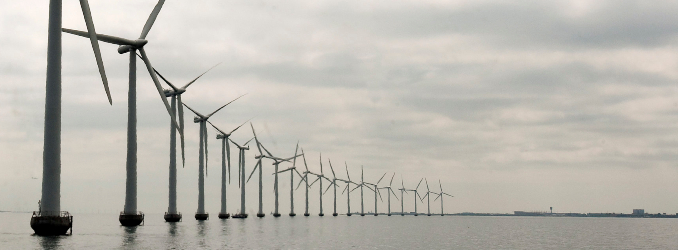
The green light has been given for Equinor’s monumental $5 billion Empire Wind project, a critical offshore wind development poised to power 500,000 homes in New York. This resumption of construction, following extensive dialogue with federal, state, and city officials, marks a significant milestone for Equinor’s ambitious renewable energy strategy and underscores the complex interplay between energy policy, market dynamics, and investor sentiment. For investors tracking the evolving energy landscape, the project’s restart offers a tangible sign of progress in the energy transition, but it also prompts a deeper dive into the economics, broader market implications, and forward-looking catalysts that will shape its ultimate success and impact on Equinor’s valuation.
Navigating Policy Headwinds and Re-evaluating Project Economics
The lifting of the stop-work order on the Empire Wind project is a testament to the persistent advocacy and collaborative efforts across various levels of government and industry. This political will, highlighted by Equinor’s CEO Anders Opedal, was instrumental in derisking a crucial investment for both the company and the broader U.S. renewable energy agenda. However, the temporary halt undoubtedly introduced new variables into the project’s financial equation. Equinor has confirmed it will perform an updated assessment of the project economics in the second quarter. This review will be critical, considering the inflationary pressures on raw materials, supply chain disruptions that have plagued large-scale infrastructure projects, and the rising cost of capital. Investors will be keenly watching for details from this assessment, as it will clarify the revised capital expenditure, projected returns, and any potential impacts on the targeted commercial operation date of 2027. The ability to engage effectively with suppliers and regulatory bodies to mitigate the financial impact of the delay will be a key determinant of the project’s long-term profitability and its contribution to Equinor’s diversified energy portfolio.
The Broader Energy Market Context and Strategic Diversification
While Empire Wind represents a significant step into renewable energy, it operates within a dynamic global energy market still heavily influenced by traditional hydrocarbons. As of today, April 15th, Brent crude trades at $95.57 per barrel, up 0.82% on the day, with WTI crude at $91.65, showing a 0.41% increase. Gasoline prices, a key indicator for consumer demand and refining margins, stand at $2.98. This current market strength provides a backdrop of robust profitability for Equinor’s core oil and gas operations, even as Brent has seen an 8.8% decline over the past 14 days, falling from $102.22 to $93.22. This volatility underscores the strategic rationale for integrated energy companies to diversify their asset base. The National Ocean Industries Association (NOIA) rightly points out the surging power demand driven by AI, data centers, and advanced manufacturing. This demand surge creates a compelling case for an “all-of-the-above” energy strategy, where offshore wind like Empire Wind complements traditional sources to ensure energy security and meet growing electricity needs. For Equinor, the successful execution of Empire Wind demonstrates its commitment to a balanced energy mix, providing a hedge against future fossil fuel price fluctuations and aligning with global decarbonization trends.
Forward Momentum and Upcoming Catalysts for Energy Investors
Looking ahead, the Empire Wind project is targeting offshore installation activities in 2025, with commercial operation anticipated in 2027. This long-term horizon means investors need to consider a range of upcoming market catalysts that could influence the broader energy investment climate. In the immediate future, market participants are keenly awaiting the OPEC+ Joint Ministerial Monitoring Committee (JMMC) meeting on April 18th, followed by the full Ministerial Meeting on April 20th. Any decisions regarding production quotas could significantly impact global crude prices, thereby influencing the capital allocation strategies of major energy players like Equinor between traditional and renewable ventures. Furthermore, the regular Baker Hughes Rig Count reports on April 17th and April 24th, along with the API and EIA weekly inventory reports on April 21st, 22nd, 28th, and 29th, will provide crucial insights into supply-demand dynamics within the oil and gas sector. While these events don’t directly impact Empire Wind’s construction, they shape the overall profitability and cash flow generation of Equinor’s hydrocarbon portfolio, which in turn fuels investments into projects like Empire Wind. The successful progression of Empire Wind through its installation phases and toward its 2027 operational target will be a key internal catalyst for Equinor’s renewable growth narrative, signaling its capability to deliver complex, large-scale green energy infrastructure.
Addressing Investor Sentiment and The Diversified Energy Play
The investment community is currently grappling with a variety of questions regarding the future of energy markets. Many investors are asking for a base-case Brent price forecast for the next quarter, while others seek the consensus 2026 Brent forecast, reflecting a desire to understand the long-term outlook for crude. For a company like Equinor, with significant upstream oil and gas assets alongside its growing renewable portfolio, these forecasts are paramount. A robust oil price environment can provide the necessary capital for continued investment in high-capex renewable projects. Conversely, a sustained downturn could pressure balance sheets and lead to re-prioritization. The Empire Wind project, with its $5 billion valuation and long-term power purchase agreements, offers a degree of revenue stability and diversification that can appeal to investors seeking exposure beyond the inherent volatility of crude markets. The project’s broad supply chain investments across states like New York, Louisiana, Pennsylvania, Texas, and South Carolina also demonstrate its economic footprint, generating jobs and fostering local economies, which can further strengthen investor confidence by securing political and community support, critical for large-scale infrastructure. Equinor’s strategic pivot and execution in offshore wind positions it as a diversified energy play, potentially offering a more resilient investment profile in a world transitioning to lower-carbon energy sources.


