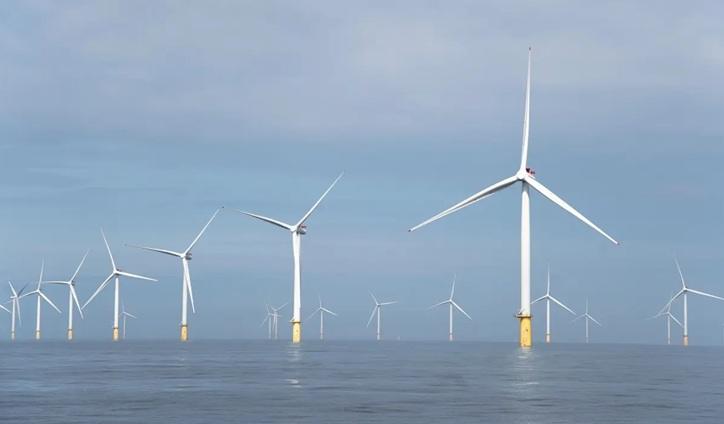
The recent decision by the Trump administration to lift the halt on the Empire Wind offshore project in New York sends a clear, albeit complex, signal to energy investors. What initially appeared to be a significant setback for renewable energy development, facing a prior order from the U.S. Department of the Interior to pause construction, has now been reversed. This move, hailed by New York Governor Kathy Hochul, is not merely a restoration of a green energy initiative but a potent illustration of the intricate political and economic calculus shaping the broader energy transition. For investors, understanding the underlying dynamics of this reversal is critical to navigating an increasingly diversified and often contradictory energy market landscape.
The Pragmatic Compromise Driving Energy Policy
The resumption of the Empire Wind project, anticipated to power 500,000 homes with 810 MW of clean energy and inject an estimated $5 billion in capital investments from Equinor, underscores a crucial pivot in energy policy. While the project, located 24-48 kilometers southeast of Long Island, was already under construction and slated for commercial operation in 2027, its initial stoppage highlighted regulatory risks. Governor Hochul’s comments, thanking President Trump for his willingness to “save the 1,500 good paying union jobs,” reveal the powerful economic leverage that large-scale energy projects hold. More tellingly, Secretary of the Interior Doug Burgum’s subsequent remarks about being “encouraged by Governor Hochul’s comments about her willingness to move forward on critical pipeline capacity” suggest a strategic quid pro quo. This isn’t just about offshore wind; it’s about acknowledging the immediate need for reliable, affordable energy solutions, even if they involve traditional fossil fuels. This pragmatic approach, balancing renewable aspirations with energy security and economic benefits from natural gas, offers a nuanced perspective on future energy infrastructure development across various states.
Crude Volatility Amidst Shifting Energy Priorities
Against the backdrop of these policy shifts, the broader energy markets continue to exhibit significant volatility, underscoring the multifaceted risks and opportunities for investors. As of today, Brent Crude trades at $90.38 per barrel, experiencing a notable daily decline of 9.07%, having traded within a range of $86.08 to $98.97. Similarly, WTI Crude stands at $82.59, down 9.41%, with its daily range spanning $78.97 to $90.34. Gasoline prices have also felt the pressure, currently at $2.93, a 5.18% drop for the day. This recent downturn is part of a larger trend, with Brent having declined by approximately 18.5% over the past 14 days, falling from $112.78 on March 30th to $91.87 yesterday. While regional policy decisions like the Empire Wind reversal don’t directly move global crude prices, they contribute to the overarching narrative of energy supply and demand dynamics. The potential for increased natural gas pipeline capacity in the Northeast, as part of the compromise, could impact regional energy costs and potentially influence demand for other fuels. Investors must weigh these localized developments against global macroeconomic factors and geopolitical events that drive the more immediate fluctuations in hydrocarbon prices.
Balancing Renewable Ambition with Natural Gas Fundamentals
The Empire Wind saga provides a microcosm of the global energy transition: an undeniable push towards renewables often tempered by the persistent necessity of conventional energy sources. Equinor, the Norway-based energy giant awarded the Empire Wind lease in 2017, has already secured over $3 billion in project financing, with total capital investments expected to reach approximately $5 billion. The reversal of the halt de-risks this substantial investment and highlights the significant capital commitment required for large-scale offshore wind projects. However, the accompanying concession on “critical pipeline capacity” for natural gas is equally significant. This directly addresses regional energy security and affordability concerns, particularly for New York and New England consumers who could benefit from “increased access to reliable, affordable, clean American natural gas.” This dual-track strategy suggests that integrated energy companies, those with robust portfolios spanning both renewable development and natural gas infrastructure, may be best positioned to thrive in an environment where policy zigzags between green aspirations and practical energy needs. For investors, this reinforces the importance of evaluating companies not just on their green credentials, but also on their ability to navigate and capitalize on these complex, often contradictory, policy environments.
Upcoming Catalysts and Investor Outlook
As the energy market digests these policy developments, investors are keenly focused on several upcoming events that will provide crucial direction. This weekend, the OPEC+ Joint Ministerial Monitoring Committee (JMMC) meets, followed by the Full Ministerial meeting, where discussions around current production quotas will be paramount. Given the recent significant decline in crude prices, market participants are closely watching for any signals regarding supply adjustments. Our reader intent data highlights this concern, with many investors asking specifically, “What are OPEC+ current production quotas?” and “What do you predict the price of oil per barrel will be by end of 2026?” The outcome of these meetings will undoubtedly influence global crude benchmarks and the profitability outlook for producers like Repsol, which some investors are evaluating for their April 2026 performance. Further insights into supply-demand balances will come from the API Weekly Crude Inventory reports on April 21st and 28th, followed by the EIA Weekly Petroleum Status Reports on April 22nd and 29th. These data points, along with the Baker Hughes Rig Count on April 24th and May 1st, will offer a comprehensive picture of U.S. production activity. The interplay of these global supply-side factors with regional policy shifts, such as the Empire Wind compromise, creates a dynamic landscape where fundamental analysis, coupled with an understanding of political realities, is more critical than ever for informed investment decisions.


