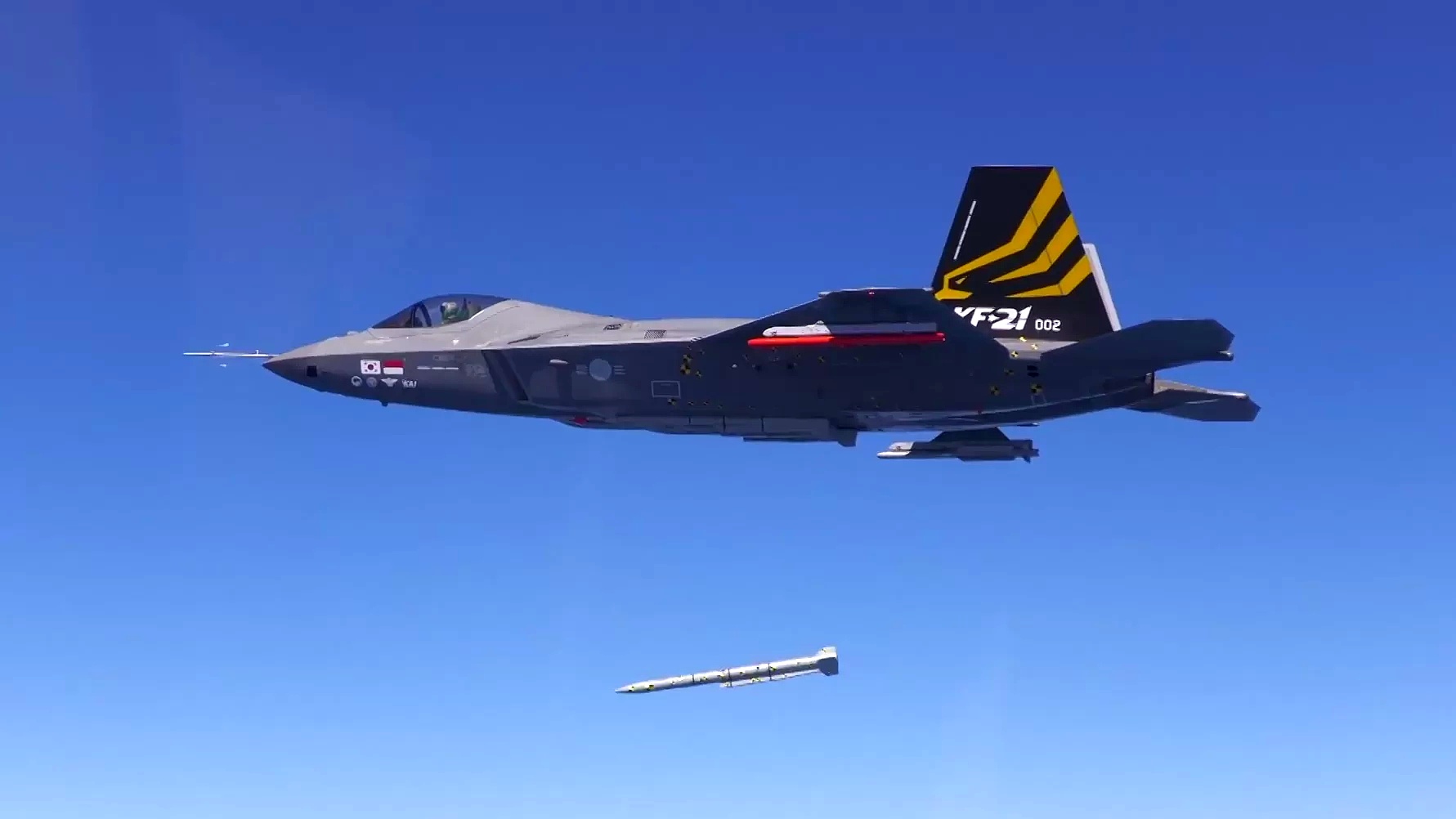
Investors in global energy markets constantly scan the horizon for geopolitical shifts that could impact supply, demand, and pricing. A critical, yet often overlooked, dimension of this risk matrix is emerging from East Asia, specifically concerning South Korea’s aerial defense capabilities. The nation’s current shortfall in long-range air-to-air missile (LRAAM) systems presents a strategic vulnerability that could ripple through global oil and gas markets, influencing everything from shipping insurance premiums to long-term investment strategies.
Lessons from South Asia: The Power of Extended Reach
The evolving landscape of modern aerial combat increasingly highlights the decisive edge offered by long-range missile systems. A stark illustration emerged from a 2025 aerial engagement between India and Pakistan. During this incident, Pakistani fighter jets, though considered less technologically advanced, reportedly downed an Indian Rafale jet. This outcome was attributed to Pakistan’s deployment of long-range beyond-visual-range air-to-air missiles (BVRAAMs), specifically the PL-15, integrated onto their J-10CE aircraft.
This engagement fundamentally underscored a new paradigm: aerial supremacy is no longer solely dictated by superior aircraft platforms but rather by the ability to engage targets from greater distances. The PL-15’s superior range allowed Pakistani pilots to strike Indian jets without entering heavily contested airspace, effectively neutralizing qualitative differences in aircraft technology. For energy investors, this demonstrates how seemingly minor technological disparities in military hardware can dramatically alter regional power balances, creating unexpected geopolitical volatility that directly impacts critical shipping lanes and energy infrastructure.
South Korea’s Current Air Defense Vulnerability
South Korea’s air force (ROKAF) presently relies on the AIM-120 AMRAAM as its primary beyond-visual-range air-to-air missile, which offers an estimated maximum range of approximately 120 kilometers. While the nation has made strides by acquiring the advanced French-made Meteor missile, slated for deployment on the KF-21 Boramae fighter by 2025-2026, this capability is not yet fully operational. Crucially, the Meteor’s initial integration will be exclusive to the KF-21 platform, leaving other frontline aircraft like the F-35 and F-15K dependent on older systems.
This situation contrasts sharply with regional adversaries, notably China, which deploys the PL-15 missile. The PL-15 is capable of engaging targets beyond 200 kilometers, creating a significant range disparity. For South Korean pilots, this difference imposes substantial operational constraints. In a potential confrontation near the Korean Air Defense Identification Zone (KADIZ), ROKAF jets would be compelled to engage from within South Korean territory, rather than projecting power into contested airspace. This strategic deficiency transforms South Korea’s air defense posture from one of proactive deterrence into a more reactive and constrained stance, a scenario that elevates regional instability risks for energy stakeholders.
Falling Behind Key Allies: A Regional Comparison
Adding to the urgency for Seoul, critical allies and partners, including the United States and Japan, are not only making substantial investments in LRAAMs but are also advancing integrated fire control capabilities. Systems like the Naval Integrated Fire Control-Counter Air (NIFC-CA) doctrine allow for seamless target detection by one platform and engagement by another, creating a highly networked defense apparatus. This integrated approach amplifies the effectiveness of long-range missiles and enhances collective security.
South Korea’s lag in both LRAAM deployment and integrated fire control capabilities raises concerns about interoperability and the efficacy of joint operations in a crisis. A fragmented defense posture among allies could complicate responses to regional aggression, potentially prolonging conflicts and exacerbating their impact on global trade and energy flows. For investors, this disparity translates into a higher perceived risk premium for assets and operations within the East Asian maritime domain, a critical conduit for liquefied natural gas (LNG) and crude oil shipments.
Geopolitical Oil Risk and Energy Security Implications
The Korean Peninsula stands at a strategic nexus, bordering major energy consumers and situated alongside vital maritime trade routes. Any perceived weakening of South Korea’s defense capabilities, particularly in air superiority, directly translates into increased geopolitical risk for the global energy complex. South Korea is a major importer of crude oil and LNG, and disruptions to its supply chains would have immediate and profound effects on international commodity prices. Investor confidence in the stability of East Asian shipping lanes, including those passing through the Yellow Sea and East China Sea, is paramount for the uninterrupted flow of energy resources from the Middle East and other producing regions to Northeast Asia.
A perceived air defense gap could encourage aggressive actions, potentially leading to increased militarization of disputed territories or maritime zones. Such scenarios would invariably lead to spikes in shipping insurance costs, rerouting of vessels, and ultimately, higher energy prices. Furthermore, the strategic importance of South Korea as a global manufacturing hub, particularly for petrochemicals and refined products, means that any instability would cascade through global supply chains, impacting industrial output and energy demand patterns worldwide. For oil and gas investors, monitoring Seoul’s defense modernization efforts is no longer merely a military analyst’s concern; it’s a critical component of assessing regional energy security and market stability.
Seoul’s Response and the Investor Outlook
Recognizing these vulnerabilities, South Korea is actively pursuing solutions. Beyond the Meteor missile integration on the KF-21 Boramae, the nation is reportedly developing an indigenous long-range air-to-air missile, potentially with a range exceeding 200 kilometers. These domestic efforts, while promising for long-term self-reliance, face development timelines and integration challenges. The pace at which these capabilities become operational will be a key determinant of regional stability.
For energy investors, these defense initiatives represent crucial steps towards de-risking the East Asian investment landscape. Timely deployment of advanced LRAAMs and integrated fire control systems will bolster South Korea’s deterrent posture, reinforce allied capabilities, and enhance the security of vital shipping channels. A more secure regional environment fosters greater predictability in energy markets, encouraging long-term capital allocation and mitigating volatility. Conversely, delays or setbacks in these defense programs could signal enduring vulnerabilities, prompting investors to factor higher risk premiums into their projections for commodity prices and regional energy projects. The interplay between defense strategy and energy market stability in East Asia demands constant, vigilant analysis from the investor community.