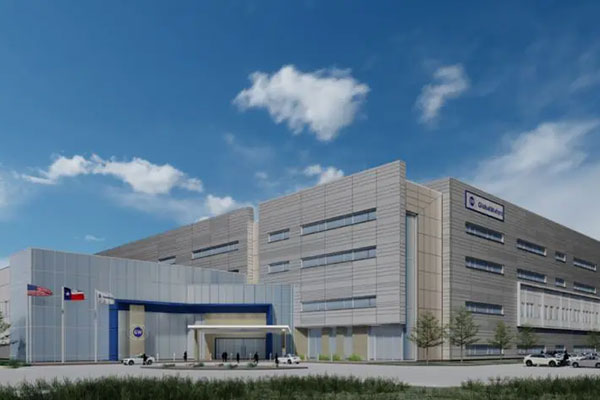
The Lone Star State is cementing its status not just as an energy powerhouse, but also as a burgeoning high-tech manufacturing hub, creating significant ripple effects across the oil and gas sector. A recent announcement by GlobalWafers, detailing a substantial $4 billion expansion of its U.S. silicon wafer production capabilities, underscores this trend. The majority of this colossal investment targets its recently inaugurated facility in Sherman, Texas, with additional support flowing to its St. Peters, Missouri operations. For energy investors, this represents a tangible, long-term increase in industrial demand, particularly for natural gas, electricity, and associated infrastructure in a critical energy-producing region.
Texas: A Hub for Industrial Expansion and Energy Demand
This strategic move, unveiled during the ribbon-cutting ceremony for the Sherman plant, transforms the $3.5 billion project into GlobalWafers’ U.S. flagship and its largest silicon wafer factory globally. The 142-acre campus in Sherman is designed for up to six phases of development, with the first phase already operational and phase two construction imminent. Chairperson Doris Hsu emphasized the strong customer appetite for domestic production, stating, “Our U.S. customers appear to have a very strong demand for U.S.-based production capacity.” This sentiment, coupled with the sheer scale of the investment, signals a robust expansion of industrial load in Texas, directly translating into heightened demand for energy resources.
The decision to expand hinges on crucial factors: profitability of initial phases, securing long-term customer contracts with favorable pricing and prepayments, and continued government support. Meeting these conditions will propel subsequent phases forward, each requiring substantial and reliable energy inputs. As Texas continues to attract such capital-intensive manufacturing, the pressure on its energy grid and the demand for its abundant natural gas resources will only intensify, presenting a compelling investment thesis for upstream and midstream energy companies operating in the region.
The Semiconductor Boom’s Energy Footprint
The Sherman facility stands as the nation’s sole advanced 300mm silicon wafer manufacturing plant and the first constructed in over two decades. These 12-inch wafers are foundational components for a vast array of modern electronics, from smartphones and automotive systems to advanced artificial intelligence hardware. Manufacturing these critical components is an energy-intensive process, demanding constant, high-quality power. The sheer scale of this operation, with plans to ramp up from 180 permanent roles to 650 engineering, technical, and operational staff by 2028, coupled with 1,200 construction jobs, paints a clear picture of escalating energy requirements.
Texas, with its deregulated electricity market and rich natural gas reserves, is uniquely positioned to meet this growing industrial load. Natural gas-fired power generation often serves as the reliable backbone for industrial giants requiring uninterrupted power, complementing the state’s significant, yet intermittent, renewable energy sources. This massive industrial build-out creates a persistent demand floor for natural gas, supporting stable prices and justifying further investment in gas production, processing, and transportation infrastructure across the state. Energy investors should closely monitor the long-term power purchase agreements and infrastructure build-outs that will invariably follow such large-scale industrial commitments.
CHIPS Act and Domestic Energy Security
The federal CHIPS and Science Act plays a pivotal role in de-risking these monumental investments. GlobalWafers anticipates receiving $406 million in federal funding, allocated to both the Sherman and Missouri facilities, the latter operated through its subsidiary MEMC and focused on silicon-on-insulator wafers. While the funds are expected in the first half of the current year, the commitment itself provides a substantial boost to the project’s financial viability. This government backing highlights a national strategic imperative to onshore critical manufacturing, thereby bolstering supply chain resilience and national security.
From an energy perspective, this national policy translates directly into increased domestic energy consumption. As more industries, spurred by federal incentives, establish or expand U.S. operations, the demand for domestically produced oil, natural gas, and refined products will naturally rise. This creates a virtuous cycle: robust domestic energy production supports industrial growth, which in turn reinforces the strategic importance of a secure and ample energy supply. Investors should view CHIPS Act-fueled projects not just as semiconductor plays, but as indirect catalysts for sustained demand in the U.S. energy market.
Investment Implications for Oil & Gas
The GlobalWafers expansion in Texas offers a compelling case study for oil and gas investors. The strategic timing of the announcement, preceding potential tariffs on semiconductor imports, underscores the drive for local supply chain security. As Doris Hsu noted, U.S. customers are proactively seeking domestic sources to mitigate future uncertainties. This pursuit of localized production directly translates to sustained industrial load growth in regions like the Permian Basin and other shale plays, where natural gas is plentiful and infrastructure is relatively robust.
For exploration and production (E&P) companies, this implies a stable and growing domestic market for natural gas, reducing reliance on volatile export markets or seasonal demand fluctuations. Midstream companies stand to benefit from the need for expanded pipeline capacity, processing plants, and storage facilities to deliver gas to new industrial consumers and power generation facilities. Utilities, in turn, will see increased demand for electricity, necessitating investments in generation capacity and grid upgrades. Furthermore, the extensive construction and ongoing operational needs will drive demand for diesel, lubricants, and other petroleum products, ensuring a broad uplift across the energy value chain.
Long-Term Outlook: Industrial Load Growth and Energy Markets
The multi-phase development plan for the Sherman campus, contingent on profitability and customer commitment, signals a long-term horizon for energy demand growth. These are not ephemeral projects but foundational industrial assets designed to operate for decades. Each subsequent phase of expansion will layer on additional energy requirements, creating a predictable and sticky demand profile for energy providers. This sustained industrial load growth in critical energy-producing states like Texas provides a powerful counter-cyclical force against potential volatility in other energy demand sectors.
For investors focused on the oil and gas sector, these developments represent a bullish signal. The confluence of federal policy supporting domestic manufacturing, corporate strategies prioritizing supply chain resilience, and the inherent energy intensity of advanced industrial processes creates a powerful tailwind for U.S. energy producers and infrastructure owners. As the U.S. re-industrializes, the demand for reliable, affordable domestic energy will only grow, solidifying the long-term investment case for the sector. Monitoring such large-scale industrial projects offers valuable insights into the future trajectory of energy markets and the companies poised to capitalize on this transformative trend.