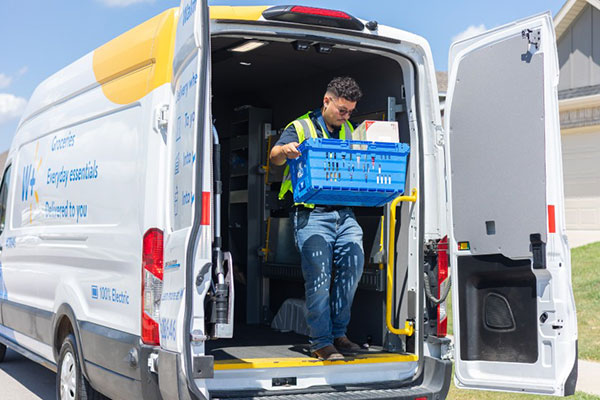
The recent financial disclosures from retail giant Walmart offer a compelling narrative for investors closely monitoring the global energy landscape, particularly the demand trajectory for transportation fuels. The company has announced a significant milestone: its U.S. e-commerce operations achieved profitability for the first time in the first quarter. This achievement, primarily driven by a dramatic acceleration in delivery services and enhanced logistical efficiency, carries substantial implications for diesel consumption and the broader oil and gas sector.
E-commerce Profitability: A New Driver for Diesel Demand
Walmart’s strategic investments in a robust, decentralized fulfillment network are clearly yielding results. CEO Doug McMillon highlighted during the company’s recent earnings call that delivery speed is a critical accelerant for their business. The retailer reported a staggering 91% surge in deliveries completed in under three hours compared to the same period last year, with approximately one-third of all store-fulfilled orders now meeting this expedited timeframe. This aggressive push towards rapid delivery, coupled with a reduction in last-mile operational expenditures, directly underpins the newfound profitability in its digital commerce segment. For energy investors, this operational shift signifies an intensification of last-mile logistics, translating into increased vehicle mileage and, consequently, higher demand for commercial transportation fuels.
Network Density Fuels Last-Mile Efficiency and Consumption
The core of Walmart’s success lies in its focus on network density and optimizing delivery routes. Chief Financial Officer John David Rainey articulated this strategy, emphasizing the economic advantages of delivering multiple packages within a concentrated geographic area rather than isolated drop-offs. This approach allows the company to spread fixed costs across greater delivery volumes, boosting efficiency. Currently, Walmart leverages its extensive store footprint to offer store-fulfilled delivery to an impressive 93% of U.S. households, with plans to expand this coverage to 95% by the close of 2025. Complementing this network are 29 dedicated e-commerce fulfillment centers. The expansion of this infrastructure and the drive for denser delivery routes inherently demand a more active fleet of delivery vehicles, directly impacting diesel and gasoline consumption across the nation.
The Premium on Speed: A Sustained Demand Signal
Walmart’s model demonstrates that consumers are increasingly willing to pay a premium for convenience and speed. The company charges a standard delivery fee of $9.95 for online orders, with an additional $6 for the expedited three-hour service. Rainey noted that this willingness to pay for faster service underscores the enduring relevance of convenience in consumer behavior. From an energy market perspective, this is a crucial indicator: as long as consumers value and pay for rapid delivery, the logistical intensity required to meet that demand will persist. This sustained pressure for quick turnarounds ensures that commercial fleets, predominantly powered by diesel, remain in constant motion, providing a stable baseline for transportation fuel demand.
Impressive Growth Metrics Signal Future Fuel Needs
The overall growth figures for Walmart’s e-commerce segment further underscore the bullish outlook for energy demand. U.S. e-commerce sales advanced by a robust 21% in the first quarter, fueled by double-digit growth in both pickup and delivery services, alongside strong performance in advertising and membership revenues. Globally, the momentum was equally strong, with e-commerce sales climbing 22%, leading to Walmart’s first-ever global e-commerce profitability. These growth rates, despite facing cost headwinds from newly imposed tariffs on imported goods, demonstrate the company’s resilience and capacity to adapt. CEO McMillon conveyed confidence in the business’s ability to strengthen even amidst evolving cost structures. For crude oil and refined product traders, these figures represent a clear signal of expanding economic activity tied directly to the physical movement of goods, portending continued strength for diesel and other transportation fuels.
Investor Takeaway: A Bullish Signal for Transportation Fuels
For investors focused on the oil and gas sector, Walmart’s e-commerce profitability milestone is more than just a retail success story; it’s a powerful indicator of fundamental demand growth for transportation fuels. The retailer’s relentless pursuit of faster, more frequent deliveries, enabled by an expanding and optimized logistical network, directly translates into increased operational hours and mileage for commercial vehicles. This surge in last-mile activity, coupled with consumers’ demonstrated willingness to pay for speed, establishes a robust and sustainable demand driver for diesel. As global supply chains continue to evolve and e-commerce penetration deepens, the energy requirements to power this logistical revolution will only grow, presenting a compelling long-term thesis for investment in companies exposed to the transportation fuel market.