JPMorgan’s Strategic Bet on Enhanced Rock Weathering Signals Maturing Carbon Removal Market
In a significant move underscoring the accelerating institutional interest in climate technology, financial giant J.P. Morgan has announced a new blended finance facility for Mati Carbon, a pioneering startup in enhanced rock weathering (ERW). This strategic investment is poised to propel Mati Carbon’s carbon removal operations onto a global scale, marking a crucial validation for a technology increasingly viewed as vital to achieving net-zero emissions targets. For investors monitoring the evolving landscape of sustainable finance and carbon markets, this development highlights the growing maturity and viability of high-integrity carbon removal solutions.
The Mechanics of a Landmark Investment
J.P. Morgan’s commitment comes in the form of a blended finance facility, a sophisticated investment structure designed to mobilize private capital into projects with perceived higher risk profiles, such as nascent climate mitigation technologies. This innovative approach combines public or philanthropic capital with private funding, effectively de-risking the investment for traditional financial institutions. Crucially, credit support for this facility is provided by the Schmidt Family Foundation, established by former Google CEO Eric Schmidt, demonstrating a powerful alignment between philanthropic backing and mainstream financial engagement in climate solutions.
Kelly Belcher, Head of Climate Tech at J.P. Morgan, articulated the institution’s enthusiasm, stating their pleasure in supporting Mati Carbon’s next growth phase. She emphasized the dual impact of the work: actively decarbonizing the planet while simultaneously fostering local economic growth and building a more sustainable future. This perspective underscores J.P. Morgan’s view of climate tech as not just an environmental imperative but also a significant economic opportunity.
Mati Carbon: A Proven Approach to Permanent Carbon Drawdown
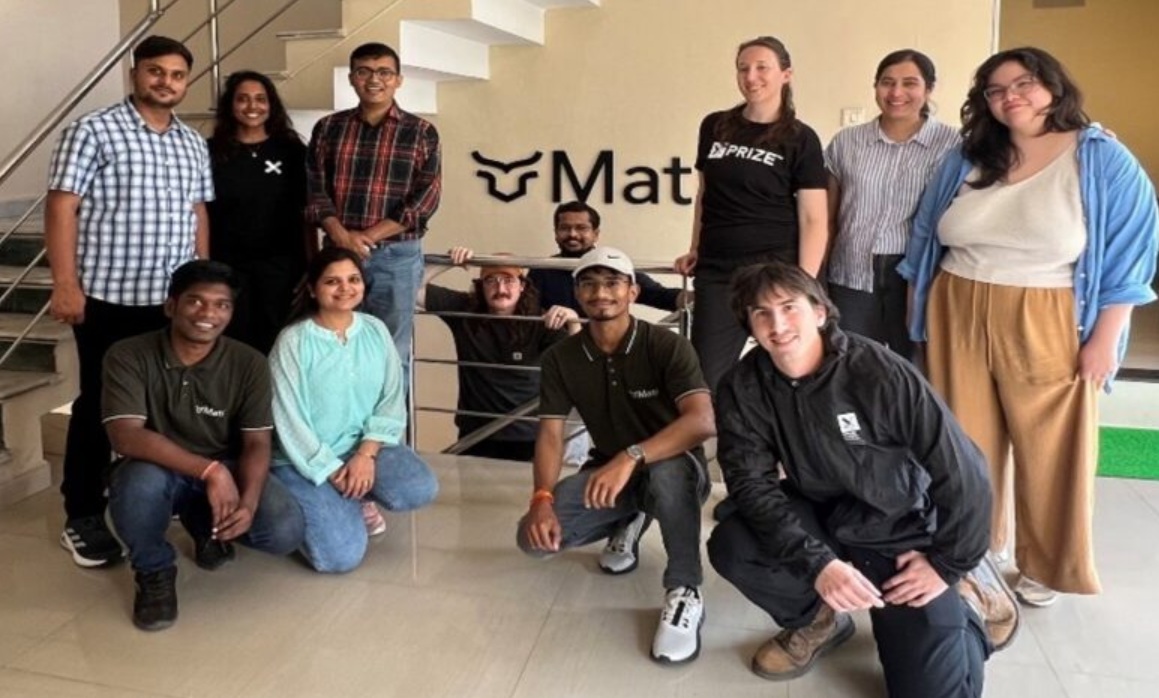
Houston-based Mati Carbon, founded in 2022, specializes in enhanced rock weathering, a natural process supercharged by human intervention. Their methodology involves distributing finely crushed basalt rock across agricultural lands, primarily in India. This accelerates the natural chemical reaction where atmospheric carbon dioxide reacts with silicate minerals, permanently locking away CO2 in solid form within the soil.
The appeal of Mati’s solution extends beyond mere carbon removal. The application of basalt offers a suite of co-benefits for smallholder farmers, including increased income, enhanced crop productivity, and improved soil replenishment. These tangible, immediate benefits for local communities provide a compelling social and economic layer to the environmental impact, making the solution more sustainable and scalable. Mati Carbon has already attracted prominent corporate buyers for its carbon dioxide removal (CDR) credits, counting Shopify and H&M among its clientele – a testament to the market’s demand for verified, high-quality carbon removal.
From XPRIZE Validation to Global Scaling
The J.P. Morgan financing follows Mati Carbon’s prestigious win as the grand prize recipient of the XPRIZE Carbon Removal competition, securing a substantial $50 million award. Funded by Elon Musk and the Musk Foundation, this global competition aimed to catalyze scalable carbon removal solutions capable of reaching gigatonne levels. Mati Carbon emerged victorious from a field of over 1,300 teams representing more than 88 countries, a powerful endorsement of its technological efficacy and scalability potential.
A critical component of Mati’s success, and a key factor in the XPRIZE award, is its robust Monitoring, Reporting, and Verification (MRV) framework. Developed in collaboration with IIT Kanpur and Yale University, this system precisely measures crucial soil properties and quantifies carbon removal, ensuring the integrity and transparency of its carbon credits. For institutional investors and corporations seeking credible offsets, a strong MRV framework is paramount, providing confidence in the environmental claims and the long-term value of the credits.
Ambitious Expansion on the Horizon
With the fresh capital infusion, Mati Carbon is poised for rapid expansion across the Global South. The company plans to significantly scale its technology and operations, particularly in India and Sub-Saharan Africa. The funds are earmarked for deploying ERW solutions in new geographical regions, establishing world-class, high-tech regional laboratory facilities to support localized research and development, and forging strategic partnerships to accelerate the global adoption of ERW.
Mati Carbon’s immediate targets are ambitious, aiming to partner with 30,000 smallholder farmers by the end of 2025 across key regions including India, Tanzania, and Zambia. Shantanu Agarwal, Founder and CEO of Mati Carbon, hailed the development as transformative for climate technology and adaptation financing. He expressed confidence that J.P. Morgan’s backing would enable a significant expansion of ERW’s impact and reach, proving that high-integrity carbon removal can be both financially viable and profoundly impactful. This vision aligns perfectly with investor appetite for solutions that deliver both financial returns and measurable environmental and social benefits.
Investment Implications for the Energy Transition
This investment by J.P. Morgan is more than just a financial transaction; it’s a strong signal to the broader financial markets and the oil and gas industry. As the global energy transition accelerates, permanent carbon removal technologies like ERW are becoming indispensable components of decarbonization strategies, complementing emission reduction efforts. For investors, this creates new opportunities in a burgeoning market for carbon removal credits, distinct from traditional, often less permanent, carbon offsets.
The blended finance model, with robust philanthropic or public backing, is likely to become a more prevalent mechanism for deploying capital into high-growth, high-impact climate tech ventures. This de-risking strategy could unlock billions in private funding for innovative solutions, making them attractive propositions even for more conservative institutional portfolios. As the demand for high-quality, verifiable carbon removal grows from corporations striving for net-zero and nations meeting Paris Agreement targets, companies like Mati Carbon, validated and backed by major financial players, are set to become increasingly valuable assets in the portfolio of the future. This move by J.P. Morgan solidifies enhanced rock weathering’s position as a serious contender in the race to a carbon-neutral future, offering a compelling case for further investment and market development.


