Oil Prices Plunge as Trump Hints at Breakthrough in Iran Nuclear Talks
Global crude benchmarks experienced a sharp downturn on Thursday, reacting swiftly to remarks from then-President Donald Trump suggesting significant progress in indirect negotiations aimed at curtailing Iran’s nuclear ambitions. The prospect of a diplomatic resolution, potentially paving the way for increased Iranian oil exports, sent a clear signal to energy markets, prompting a rapid shedding of the geopolitical risk premium that often underpins oil valuations.
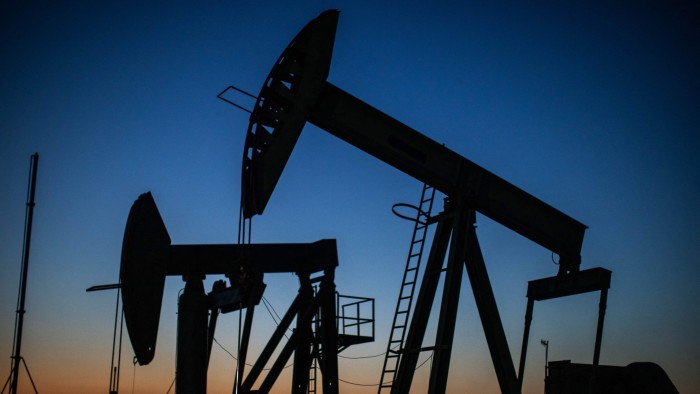
The international benchmark, Brent crude, saw its price slide by a notable 3.7 percent, settling at $63.64 per barrel. Concurrently, West Texas Intermediate (WTI), the key indicator for U.S. crude prices, registered an even steeper decline, falling 4.1 percent to trade at $60.57 a barrel. This immediate market reaction underscores the profound sensitivity of oil prices to any perceived shift in the geopolitical landscape, particularly concerning major oil-producing nations like Iran.
The White House’s Diplomatic Overture
The catalyst for this market volatility emerged from Doha, Qatar, where President Trump, during a leg of his Gulf tour, informed the White House press pool that Washington was engaged in “very serious negotiations with Iran for long-term peace.” His assertion that “We’re getting close to maybe doing a deal” — made without further specific details — was enough to trigger the market sell-off. These comments followed a fourth round of high-level discussions held on Sunday between U.S. envoy Steve Witkoff and Iranian Foreign Minister Abbas Araghchi, preceding the president’s regional visit.
Despite the optimistic tone from the U.S. side, Iran’s Foreign Ministry characterized the negotiations as “difficult but useful,” a more measured assessment reflecting the deeply entrenched mistrust and complex issues at stake. Experts widely concur that forging an agreement acceptable to both Washington and Tehran represents a monumental diplomatic challenge, given the adversarial history between the two nations and the substantial advancements Iran has made in its nuclear program.
Navigating Red Lines: U.S. Demands vs. Iran’s Stance
The core of the diplomatic impasse revolves around fundamentally divergent expectations. U.S. officials have conveyed varied signals regarding their ultimate demands, yet envoy Witkoff, in recent public statements, reiterated the Trump administration’s firm insistence on the complete dismantlement of Tehran’s nuclear infrastructure. Speaking to Breitbart on Friday, Witkoff explicitly stated that Iran would need to dismantle its three primary nuclear facilities, cautioning that a lack of progress in the Sunday talks would lead to their termination and necessitate a “different route” for the U.S.
This uncompromising U.S. position directly clashes with Iran’s steadfast red line. Tehran maintains its inherent right to enrich uranium domestically, citing its status as a signatory to the nuclear non-proliferation treaty. This fundamental disagreement forms a formidable barrier to any comprehensive resolution. President Trump, while expressing a desire for a diplomatic solution, has simultaneously maintained a “maximum pressure campaign” against Iran, including the re-imposition of stringent economic sanctions and even threats of military intervention should diplomacy falter.
Following a prior round of talks in Oman, Iranian Foreign Minister Araghchi unequivocally stated that there would be “no compromise over” Iran’s right to enrich uranium. While acknowledging the “possibility that we will agree to some limitations regarding the dimensions, amount and level [of enrichment] for a period to build confidence,” he stressed that “the issue of enrichment is non-negotiable, as is the removal of sanctions.” These remarks suggest Iran might be open to a framework resembling the 2015 accord, which, after more than two years of negotiation, significantly restricted its nuclear activities—including a cap on uranium enrichment purity at 3.67 percent—in exchange for sanctions relief.
Investor Implications: Geopolitical Risk and Future Supply
For oil and gas investors, these developments carry significant weight. A successful nuclear deal with Iran could potentially unlock substantial volumes of Iranian crude onto the global market, easing supply constraints and exerting downward pressure on prices. Conversely, a breakdown in talks, especially if followed by heightened U.S. military posturing or further sanctions, would inject considerable uncertainty and likely reignite the geopolitical risk premium, pushing prices higher. The market’s immediate response to Trump’s comments highlights its inherent sensitivity to the prospect of a more stable, or conversely, more volatile, Middle East.
The current environment demands careful monitoring of diplomatic signals and their potential impact on global oil supply and demand dynamics. While the short-term reaction was a price dip, the path to a lasting agreement remains fraught with challenges. Investors should remain cognizant that the rhetoric surrounding these complex negotiations can often trigger swift, albeit sometimes temporary, market shifts. The long-term trajectory of oil prices will heavily depend on whether these “serious negotiations” ultimately translate into a concrete, verifiable deal that brings Iranian crude back into the global fold, or if the deeply entrenched disagreements lead to an escalation of tensions.
The energy sector thrives on predictability, and the ongoing dialogue with Iran injects a layer of unpredictability. The market will be closely scrutinizing every statement and every round of talks, as the stakes for global energy supply and, consequently, investor returns, are exceptionally high. The coming weeks and months will be crucial in determining whether the recent optimism translates into tangible outcomes that reshape the global oil market landscape.