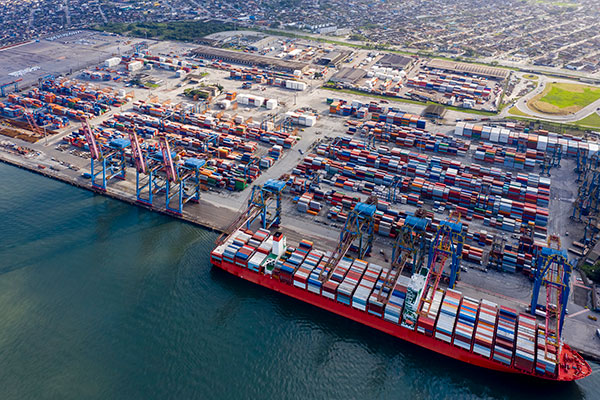
The global oil and gas market is a complex tapestry of geopolitical shifts, economic indicators, and supply chain dynamics. This week, a significant development in global trade offers a compelling signal that could influence investor outlooks on crude demand. Hapag-Lloyd, a titan in container shipping, reports a dramatic surge in bookings, particularly on the crucial China-U.S. trade lanes. This uptick, driven by a recently brokered tariff truce, injects a dose of optimism into a market that has seen recent volatility. For oil and gas investors, understanding the implications of this shipping boom, alongside ongoing Red Sea disruptions and upcoming energy events, is paramount to navigating the evolving landscape.
Global Trade Resurgence: A Demand Catalyst
The shipping sector, often a bellwether for global economic health, is flashing a strong green signal. Hapag-Lloyd’s CEO noted a “huge surge of volume” in recent days, with bookings between China and the U.S. climbing by more than 50% in recent weeks. This “pretty significant” increase follows a 90-day trade truce between the two economic powerhouses. On Monday, the U.S. dramatically reduced tariffs on Chinese imports from 145% to 30%, while China reciprocated by cutting retaliatory duties from 125% to 10%. This policy shift has effectively thawed trade that had largely stalled since early April, directly translating into tangible demand for shipping services.
For the oil and gas industry, this surge is a direct positive. Increased shipping activity means higher demand for bunker fuel, a key product for refiners. Furthermore, a revitalization of trade between the world’s two largest economies implies a rebound in manufacturing and consumer activity, both of which are significant drivers of industrial energy consumption and transportation fuel demand. While other global trade lanes remain steady, the magnitude of the China-U.S. rebound is substantial enough to warrant close attention from energy investors, suggesting a potential bottoming out or even an increase in industrial output that will require more crude and refined products.
Market Dynamics and Investor Queries Amidst Shifting Signals
Despite the bullish signal from the shipping sector, crude oil prices have experienced recent headwinds. As of today, Brent crude trades at $90.38 per barrel, reflecting a 9.07% decline, with its daily range spanning $86.08 to $98.97. Similarly, WTI crude stands at $82.59, down 9.41% today, moving between $78.97 and $90.34. This recent dip comes after a significant 14-day trend where Brent crude fell from $112.78 on March 30 to $91.87 on April 17, a substantial loss of $20.91 or 18.5%.
This divergence naturally raises questions among investors, many of whom are asking about the predicted price of oil per barrel by the end of 2026. The shipping surge, indicating robust economic activity, provides a compelling counter-narrative to the recent price weakness. While broader macroeconomic concerns or inventory builds might explain the short-term price movements, the underlying physical demand evidenced by booming trade volumes could establish a stronger floor for crude prices and fuel a potential rebound in the medium term. Investors should view this shipping data as a forward-looking indicator of real economic activity that often precedes shifts in energy demand forecasts, potentially influencing future price trajectories more positively than current spot prices suggest.
Red Sea Disruptions: A Persistent Factor for Bunker Demand
While the tariff truce offers a positive demand signal, the ongoing security situation in the Red Sea continues to impact global shipping routes and, consequently, bunker fuel demand. Since late 2023, Houthi rebel attacks have forced many shipping companies, including Hapag-Lloyd, to reroute vessels around Africa. This significantly longer journey translates directly into increased bunker fuel consumption per trip. Even with recent political statements suggesting a cessation of attacks, Hapag-Lloyd’s CEO remains cautious, emphasizing the need for sustained safety and visibility before considering a return to the Suez Canal. The company plans a slow re-entry, taking 60 to 90 days once conditions are deemed secure, to avoid port congestion.
This prolonged rerouting means that for at least the next two to three months, the elevated demand for marine fuels due to longer transit times will persist. For refiners and oil producers, this represents a consistent, albeit geographically shifted, demand driver. While the Red Sea situation adds to supply chain inefficiencies and higher freight rates, creating inflationary pressures, its direct impact on bunker fuel demand is unequivocally positive for the energy sector. Investors should factor in this sustained demand for marine fuels when evaluating refining margins and overall crude consumption forecasts throughout the second quarter of 2026.
Forward Outlook: Upcoming Events to Shape the Narrative
The insights from the shipping sector provide a valuable backdrop as the oil and gas market heads into a critical period of scheduled events. Investors are keenly watching the upcoming OPEC+ meetings, with the Joint Ministerial Monitoring Committee (JMMC) convening on April 18 and the Full Ministerial meeting on April 19. Many of our readers are asking about OPEC+’s current production quotas and how these might evolve. The robust shipping demand could influence OPEC+’s calculus; a strengthening demand outlook might provide them more flexibility, or conversely, reinforce their commitment to current cuts if they perceive underlying market fragility. Any decision on production levels will have immediate repercussions for global supply and prices.
Beyond OPEC+, the market will closely scrutinize weekly inventory data. The API Weekly Crude Inventory reports on April 21 and 28, followed by the EIA Weekly Petroleum Status Reports on April 22 and 29, will provide crucial insights into whether the increased economic activity observed in shipping translates into draws in U.S. crude and product stockpiles. Significant draws could confirm strengthening demand and offer upward price momentum. Furthermore, the Baker Hughes Rig Count on April 24 and May 1 will signal future production trends from North American producers. Collectively, these upcoming events, viewed through the lens of robust shipping demand, will be instrumental in shaping the market’s trajectory and offering fresh catalysts for oil and gas investment decisions.