Southeast Asian City’s EV Fleet Signals Emerging Headwinds for Oil Demand
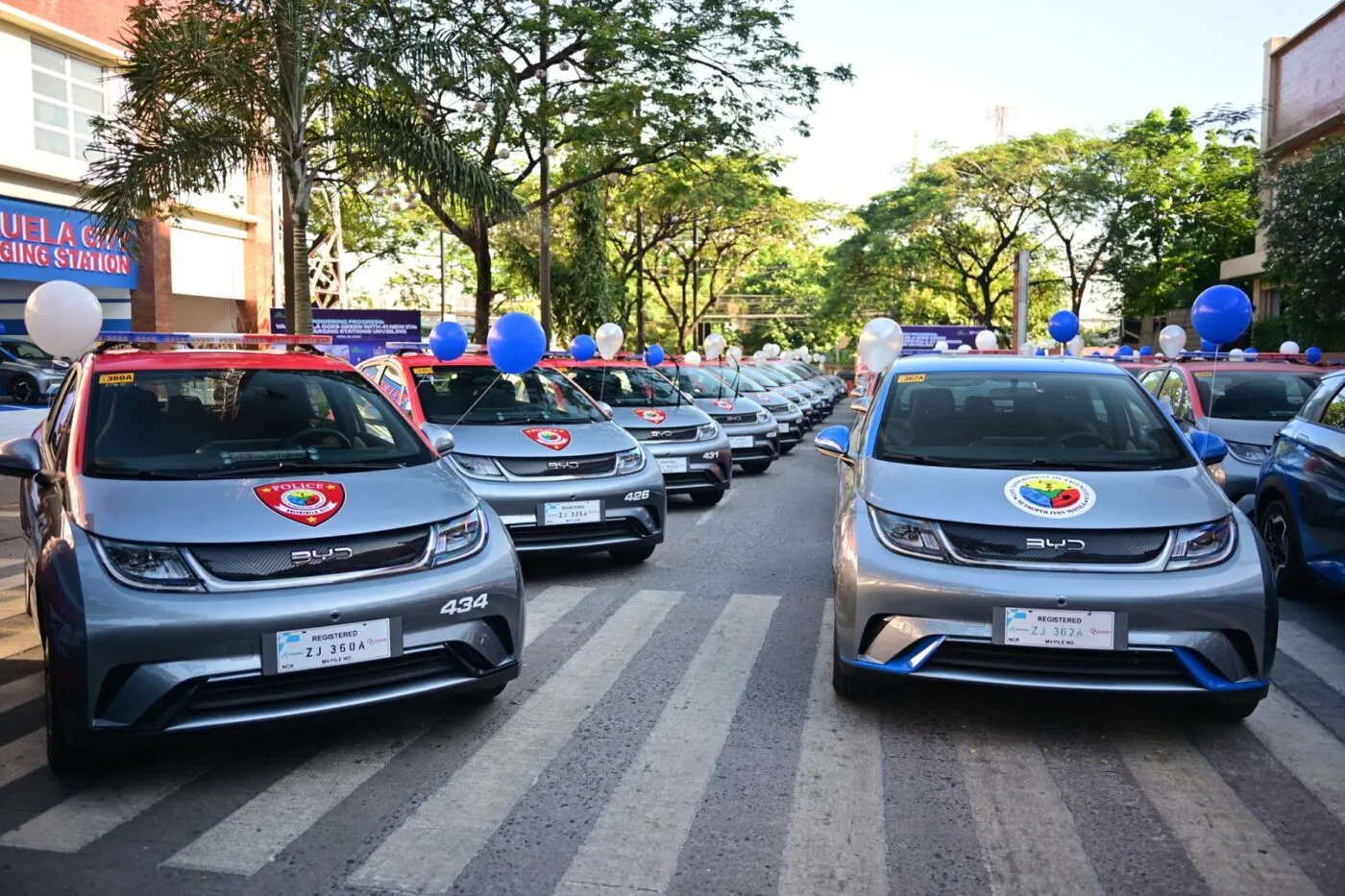
In a clear demonstration of accelerating global energy transition trends, Valenzuela City, a dynamic urban center within the Philippines’ bustling National Capital Region, has embarked on a significant fleet electrification initiative. The acquisition of 41 BYD Dolphin electric vehicles (EVs) primarily for its municipal police force represents a tangible shift away from fossil fuels, offering a localized yet potent signal regarding future petroleum product demand in Southeast Asia and beyond. For astute investors monitoring the oil and gas sector, such developments underscore an evolving landscape that demands close attention.
This strategic procurement positions Valenzuela as home to the Philippines’ largest electric police fleet, a move orchestrated through ACMobility, the official distributor of BYD vehicles in the archipelago. The city plans to integrate 35 of these compact electric hatchbacks into its daily patrol and law enforcement operations. Additionally, five units will serve various government office functions, with one designated as a critical first responder vehicle. This multi-faceted deployment highlights the versatility and growing reliability of EVs for essential public services, directly challenging the traditional dominance of internal combustion engine (ICE) vehicles in these high-utilization roles.
Strategic Investment in Green Mobility Undermines Fuel Consumption
The “Go Green Valenzuela” program, under which this EV expansion falls, is more than just an environmental statement; it’s a calculated financial decision. Valenzuela City invested 75,768,000 Philippine pesos, equivalent to approximately 1.2 million euros, into this project. This substantial outlay is justified by the program’s core objectives: to embrace eco-friendly solutions that also deliver significant cost efficiencies in public service operations. For oil and gas investors, this translates directly into reduced demand for gasoline and diesel fuel by the municipal government, representing a long-term erosion of a historically stable customer segment.
The financial rationale is compelling. While initial EV acquisition costs can be higher, the operational savings derived from lower “fuel” (electricity) expenses and reduced maintenance requirements present a powerful incentive for public and private fleets alike. As more municipalities and corporations worldwide adopt similar strategies, the cumulative effect on global refined product demand could become increasingly pronounced, warranting a reassessment of long-term demand growth projections for gasoline and diesel.
Building the Backbone: Charging Infrastructure Takes Root
The success and scalability of any EV initiative hinge critically on the accompanying charging infrastructure. Valenzuela is proactively addressing this, with Greenstrum, ACMobility’s EV charging solutions subsidiary, spearheading the deployment. The city has already seen the installation of 15 units of 7 kW AC chargers across 12 strategic locations. This foundational network ensures that the new police fleet, and potentially future private EV owners, have reliable access to charging points, mitigating range anxiety and operational downtime.
Looking ahead, ACMobility has articulated plans to expand public charging access throughout the city, beginning with a more powerful 60 kW DC fast-charging unit at the Alert Station, a central hub for emergency response and disaster management. This commitment to higher-speed charging further enhances the operational viability of EVs, allowing for quicker turnaround times. Crucially, these public chargers will be accessible via the Evro EV charge point aggregator smartphone application, demonstrating a forward-thinking approach to user convenience and integration. This growth in charging infrastructure is a key indicator for investors, as it removes a major barrier to EV adoption and accelerates the displacement of fossil fuel vehicles.
Policy and Pragmatism: A Mayor’s Vision for a Sustainable Future
Mayor Wes Gatchalian’s enthusiastic commentary on Valenzuela’s clean mobility developments underscores the strong political will driving this transition. He articulated a clear ambition for Valenzuela to become the Philippines’ pioneering local government unit (LGU) with both the largest electric vehicle fleet and the most extensive network of government and public charging stations. The strategic placement of these stations along major arteries like NLEX, MacArthur, and Mindanao Avenue further emphasizes a vision for seamless integration into the broader urban and regional transport network.
Such governmental leadership is often a potent catalyst for market transformation. When public entities lead by example, investing in and demonstrating the viability of new technologies, it often encourages private sector adoption. For oil and gas investors, this signals a potential acceleration of EV adoption rates in emerging economies, where policymakers are increasingly prioritizing both environmental sustainability and energy independence.
The BYD Dolphin: Performance and Practicality for Public Service
The choice of the BYD Dolphin for Valenzuela’s fleet is notable, offering a concrete example of the capabilities now inherent in modern EVs. Each of the 41 units is equipped with a 44.9 kWh LFP battery pack. This battery supports charging at up to 6.6 kW via AC and 60 kW via DC, allowing for flexible and relatively rapid replenishment of charge. Powering the front wheels is a permanent magnet synchronous motor delivering 70 kW of power and 180 Nm of torque. In this configuration, the electric hatchback achieves a top speed of 130 kph and boasts an NEDC-rated range of 405 km.
These specifications are critical for investor analysis. A 405 km range is highly practical for urban police patrols and general government use, minimizing the need for frequent recharging. The 60 kW DC fast-charging capability ensures that vehicles can be quickly returned to service, maintaining operational efficiency. This combination of range, charging speed, and performance directly addresses the operational demands that previously locked such fleets into fossil fuel dependency, further cementing the case for EV displacement of gasoline and diesel.
The Broader Ripple: What This Means for Oil & Gas Investors
While Valenzuela City’s initiative might seem localized, its implications for the broader oil and gas market are profound and indicative of a global trend. The electrification of public fleets, especially in rapidly developing regions like Southeast Asia, represents a direct and measurable erosion of demand for refined petroleum products. Police vehicles, typically operating for extended hours and covering significant distances, are substantial consumers of gasoline and diesel. Replacing even a modest fleet of 41 vehicles with EVs translates into a reduction in daily fuel consumption that, when aggregated across thousands of municipalities worldwide, becomes a material headwind for oil demand growth.
For investors primarily focused on upstream exploration and production, these micro-trends signal a potential flattening or even decline in long-term demand forecasts, impacting pricing and project viability. Downstream operators, including refiners and fuel retailers, face an even more immediate challenge. Reduced gasoline and diesel sales directly affect throughput volumes and profit margins. Companies with significant exposure to retail fuel networks in urban centers, particularly those in markets adopting similar “Go Green” policies, must actively diversify or adapt their business models.
Moreover, the emphasis on “cost-efficient solutions” by municipalities globally highlights a powerful economic driver for EV adoption that transcends environmental concerns alone. As battery costs continue to fall and charging infrastructure expands, the total cost of ownership (TCO) for EVs becomes increasingly attractive, not just for public fleets but for commercial entities and private consumers. This accelerating TCO advantage will continue to put pressure on gasoline and diesel demand, demanding a strategic re-evaluation from oil and gas portfolio managers.
The Valenzuela case serves as a stark reminder that the energy transition is not merely a Western phenomenon but a global, geographically diverse movement. As emerging economies like the Philippines prioritize sustainable urban development and energy efficiency, the cumulative impact on global oil consumption will continue to be a critical factor for investors to monitor and integrate into their long-term strategies. The future of oil demand will increasingly be shaped by thousands of such local decisions, each contributing to a broader shift away from fossil fuels.