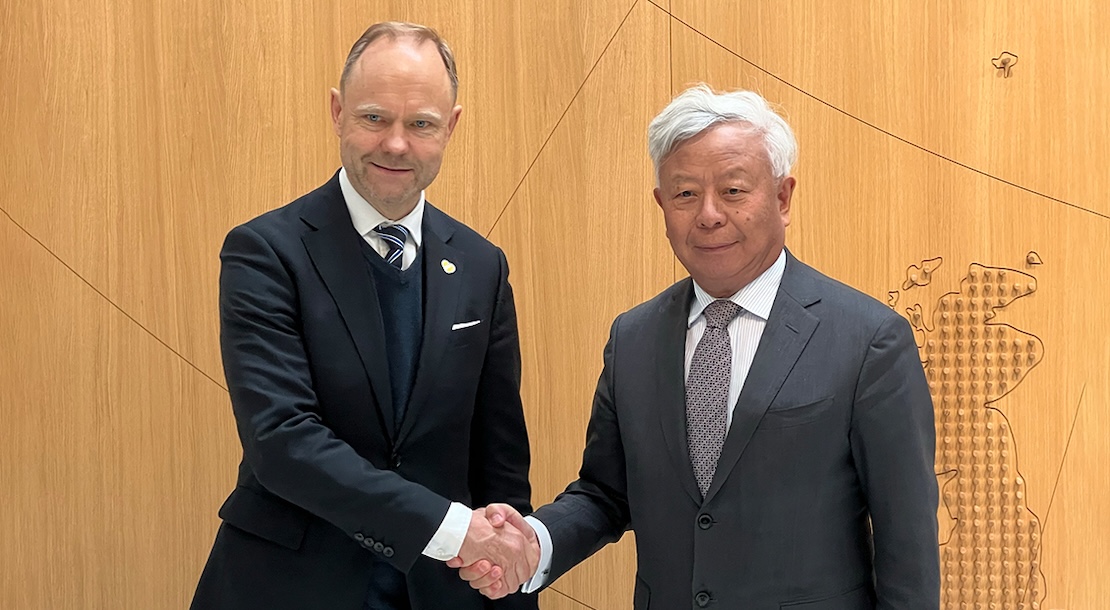
In a significant move poised to reshape the landscape of global infrastructure finance, the Asian Infrastructure Investment Bank (AIIB) and the Nordic Investment Bank (NIB) have formally forged a strategic alliance. This partnership aims to dramatically scale up capital deployment into sustainable infrastructure and green development initiatives worldwide, signaling a clear direction for international investment in the coming decades.
The memorandum of understanding (MoU), inked by AIIB President Jin Liqun and NIB President and CEO André Küüsvek, establishes a robust framework for institutional cooperation. This collaboration spans critical operational, investment, and policy dimensions, promising a streamlined approach to identifying, financing, and executing projects that align with a low-carbon future. For investors scrutinizing the evolving energy and infrastructure markets, this alliance represents a powerful new conduit for capital into environmentally focused ventures.
Strategic Alignment for a Low-Carbon Future
The impetus behind this strategic partnership is clear: accelerate the global transition towards sustainable development and tackle pressing environmental challenges. AIIB President Jin Liqun emphasized this shared vision, stating that the formalization of this collaboration marks a pivotal step forward. He highlighted the collective ambition to expand access to sustainable infrastructure financing, foster inclusive economic growth, and expedite the shift to a decarbonized global economy. This commitment from two influential multilateral financial institutions signals a strong endorsement of green assets as a primary investment class.
For investors accustomed to traditional energy markets, this alliance underscores the increasing flow of institutional capital into alternative energy and infrastructure. It suggests that financial products and opportunities linked to climate mitigation, renewable energy, and sustainable urban development will likely see enhanced backing and reduced risk profiles due to the combined expertise and financial muscle of AIIB and NIB.
Operational Synergy and Knowledge Exchange
Beyond direct financial contributions, the MoU outlines a comprehensive strategy for operational synergy. The banks will collaborate on identifying joint investment opportunities, effectively pooling resources and expertise to de-risk complex projects and enhance their attractiveness to broader investor pools. This operational alignment extends to sharing best practices across crucial organizational functions, including corporate governance, information technology, legal frameworks, and human resources. Such collaboration promises to create more efficient and transparent investment vehicles, critical for attracting long-term private sector capital.
A particularly noteworthy aspect for forward-looking investors is the commitment to joint research and knowledge exchange. The partnership will prioritize studies in critical areas such as climate change mitigation and clean technology. This focus suggests a pipeline of innovative projects and technologies that could benefit from early-stage institutional support, potentially leading to significant growth opportunities for companies operating in these sectors. For an oil and gas sector undergoing transition, understanding these technological advancements and the capital flows behind them is crucial for strategic diversification and competitive positioning.
Expanding Global Reach and Mandates
NIB President and CEO André Küüsvek elaborated on the long-term institutional cooperation envisioned. While NIB’s core mandate traditionally focuses on projects enhancing productivity and environmental benefits within the Nordic and Baltic regions, the bank has a proven track record of engaging beyond these geographical confines. This collaboration with AIIB significantly reinforces NIB’s commitment to broader global engagement in infrastructure financing and sustainable economic growth, effectively expanding its influence and reach.
Conversely, AIIB, with its multilateral reach across Asia and beyond, gains access to NIB’s specialized expertise in sustainable development and green finance, honed over decades in highly developed economies. This confluence of multilateral scope and regional specialization creates a formidable partnership capable of deploying capital effectively across diverse markets, from emerging economies in Asia to more mature markets in the Nordics. The alliance, therefore, doesn’t just increase capital; it enhances the strategic deployment of that capital.
Investment Implications for Energy Markets
For investors tracking the intricate dynamics of oil and gas markets, this partnership carries significant implications. The substantial capital earmarked for sustainable infrastructure and green development signifies a continuing shift in global investment priorities. While traditional energy sources remain vital, the increasing flow of institutional funds into alternatives signals a long-term rebalancing of portfolios towards lower-carbon assets.
This trend is not merely about divestment from fossil fuels but also about the emergence of new, lucrative investment categories. Companies within the oil and gas sector that are actively diversifying into renewables, carbon capture, hydrogen, or other clean technologies could find new avenues for financing and strategic partnerships through initiatives supported by institutions like AIIB and NIB. Furthermore, the emphasis on robust governance and best practices within this partnership can serve as a benchmark for all infrastructure investments, including those related to the energy sector.
It’s worth noting that the AIIB has a history of strategic collaborations, including a partnership with Saudi Arabia to develop a sustainable infrastructure investment program. Such alliances demonstrate AIIB’s proactive role in mobilizing capital across diverse regions for green initiatives. This latest MoU with NIB further solidifies AIIB’s position as a leading force in global sustainable finance, offering a clear signal to market participants about the direction of future capital flows.
Navigating the Future of Capital Deployment
In conclusion, the strategic alliance between the Asian Infrastructure Investment Bank and the Nordic Investment Bank represents more than just a collaboration between two financial entities; it’s a powerful statement about the future trajectory of global capital deployment. For investors, particularly those with a stake in energy and infrastructure, this partnership highlights the growing importance of environmental, social, and governance (ESG) factors in investment decisions. It underscores the financial imperative to understand and engage with the opportunities presented by the accelerating shift towards a low-carbon economy.
Monitoring the joint projects, research outcomes, and policy frameworks emanating from this partnership will be crucial for identifying emerging investment trends and assessing the risks and opportunities across traditional and green energy sectors. This alliance is set to play a pivotal role in shaping the financial architecture necessary to achieve global sustainability goals, driving capital into assets that promise long-term returns alongside environmental benefits.


