New York’s Green Budget: Over $1 Billion Pledged, Cap-and-Invest Program Shelved – What It Means for O&G
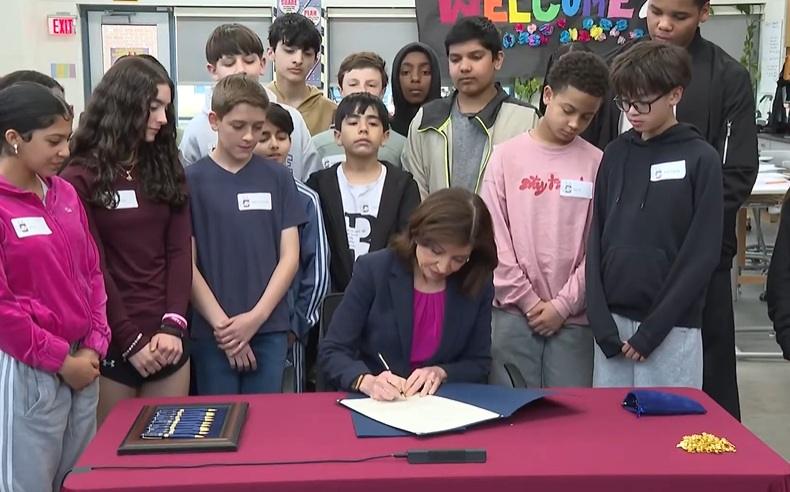
New York Governor Kathy Hochul recently enacted the state’s 2025-2026 budget, earmarking more than $1 billion for climate change initiatives and propelling the state’s ambitious green agenda. While the budget directs significant capital towards decarbonizing buildings and electrifying transportation, a critical development for the oil and gas sector is the notable omission of the controversial “cap-and-invest” program, at least for the immediate future. This decision offers a temporary reprieve for energy producers and fuel distributors operating within the Empire State, though the long-term trajectory of New York’s energy policy remains firmly pointed towards a low-carbon future.
The approved budget represents a substantial commitment to transforming New York’s energy landscape. Investors in the energy sector must closely examine these allocations, as they signal concrete areas of growth in renewable infrastructure and demand shifts away from traditional fossil fuels. The state is channeling $450 million towards reducing emissions from buildings, a sector historically reliant on natural gas and heating oil. These funds will support energy-efficient retrofits and the deployment of clean heating technologies, such as heat pumps, directly impacting demand for conventional heating fuels. Furthermore, an additional $200 million is allocated to advance thermal energy networks, a move that further underscores the state’s intent to diversify heating sources and reduce reliance on direct fossil fuel combustion.
Transportation, another cornerstone of fossil fuel demand, also receives significant attention. The budget dedicates $250 million to accelerating the adoption of electric vehicles (EVs). This includes funding for electric school buses, expanding fast-charging station infrastructure, and bolstering the NYSERDA rebate program for EV charging station installations. For oil and gas investors, this translates into a sustained, state-backed push to erode gasoline and diesel consumption over time. While the transition will be gradual, the consistent capital deployment indicates a clear long-term trend. Moreover, the budget allocates $200 million for renewable energy expansion and grid modernization, reinforcing New York’s commitment to clean power generation and robust infrastructure to support intermittent sources, potentially impacting gas-fired power plant utilization in the future.
Cap-and-Invest: Averted, But Not Forgotten
Perhaps the most significant development for the traditional energy sector is the budget’s silence on the “cap-and-invest” program. Governor Hochul initially unveiled this initiative in 2023, proposing a system that would compel large greenhouse gas emitters and fuel distributors in New York to purchase allowances for their emissions. The program was projected to generate over $1 billion annually, with proceeds intended to fund further emissions reduction initiatives and support communities facing rising energy costs. The core mechanism involved an economy-wide emissions cap, designed to decrease each year in alignment with the state’s Climate Act.
For oil and gas companies, this program represented a substantial new financial burden and a significant regulatory hurdle. It would have directly increased operating costs and compressed margins for entities involved in the distribution and combustion of fossil fuels across the state. However, the governor hinted at a potential delay in January, and in March, the New York Department of Environmental Conservation (DEC) proposed reporting regulations that would only require emitters to provide disclosures under the cap-and-invest framework until 2027. This suggests a strategic pause, providing a temporary reprieve for the industry from an immediate, potentially multi-billion dollar compliance obligation. While the program’s implementation is delayed, its underlying intent and framework remain a specter over New York’s energy future, requiring continuous monitoring from market participants.
Investment Implications for Oil and Gas
The latest budget decisions present a nuanced picture for oil and gas investors. The absence of the cap-and-invest program provides a short-term boost to the financial outlook for fuel distributors and large industrial emitters in New York, deferring significant compliance costs. This temporary regulatory stability allows companies to continue current operations without the immediate pressure of an allowance market. However, it is crucial not to misinterpret this delay as a reversal of New York’s long-term climate goals. The state’s substantial investments in building electrification, EV infrastructure, and renewable energy clearly signal an ongoing commitment to reducing fossil fuel consumption.
For investors, this means capital allocation decisions must account for a sustained decline in demand for traditional fuels within New York. Companies with significant exposure to residential and commercial heating oil or natural gas distribution in the state should anticipate a gradual erosion of their market share as heat pump adoption and thermal networks expand. Similarly, gasoline and diesel consumption face headwinds from the accelerating EV transition. Strategic planning should focus on diversifying portfolios, exploring opportunities in renewable natural gas, hydrogen, or carbon capture, and optimizing existing assets for efficiency and lower emissions to remain competitive in an evolving energy market. While the cap-and-invest program’s delay offers a window, the underlying policy direction dictates a need for proactive adaptation and innovation across the oil and gas value chain.
Governor Hochul summarized the budget’s intent by stating, “We have secured a record $1 billion to build a greener, more sustainable New York,” underscoring the state’s unwavering commitment. For oil and gas financial journalists and investors, this commitment translates into a clear signal: New York’s energy transition is proceeding, albeit with tactical adjustments. Vigilance regarding future regulatory proposals, particularly the eventual re-emergence of carbon pricing mechanisms, remains paramount for navigating the state’s dynamic energy landscape.


