New York’s $1 Billion Climate Gambit Signals Deep Erosion of O&G Demand
New York State has unveiled a groundbreaking $1 billion Sustainable Future Program, embedded within its FY 2026 Enacted Budget, marking the most ambitious environmental and agricultural agenda in the state’s history. This colossal investment is not merely an environmental initiative; it represents a direct, strategic pivot away from fossil fuel dependency, signaling a significant headwind for oil and gas demand within the state’s borders. For investors monitoring the energy transition, this package underscores a concrete, state-led effort to diminish reliance on traditional hydrocarbons across key sectors.
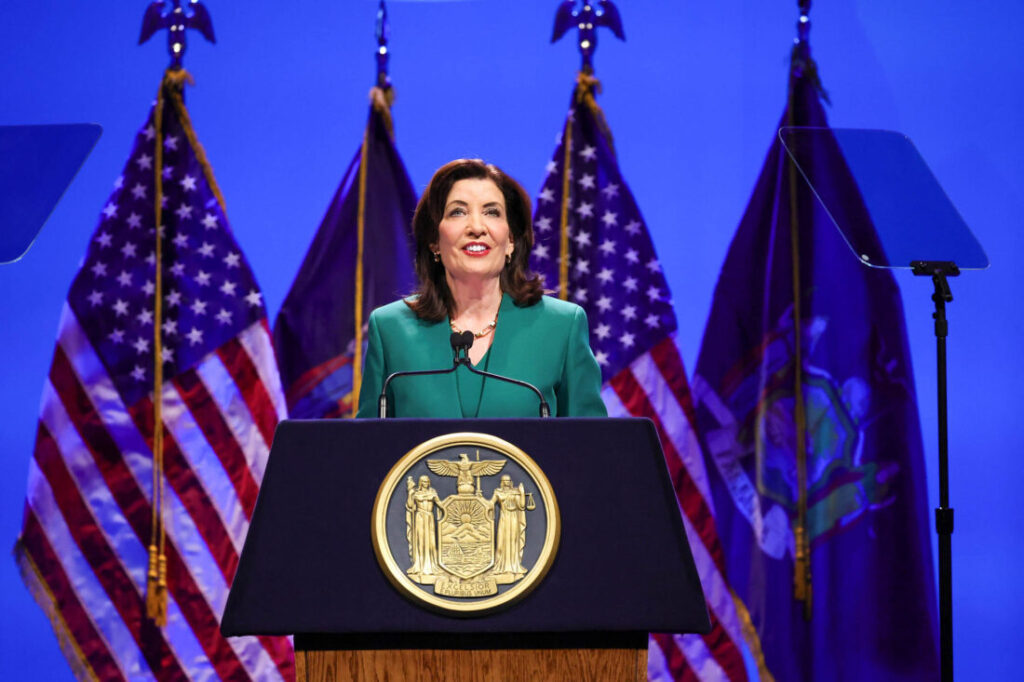
Governor Kathy Hochul emphasized the scale of this commitment, stating, “We have secured a record $1 billion to build a greener, more sustainable New York.” This funding aims to systematically decarbonize the state’s economy, impacting everything from building heating to transportation and energy generation. Oil and gas firms, as well as their investors with exposure to the New York market, must take note of these substantial capital allocations that directly target their market share.
Decarbonizing the Built Environment: A Direct Hit on Natural Gas
A significant portion of the Sustainable Future Program, over $450 million, is earmarked for initiatives focused on reducing building emissions. This includes substantial investments in clean heating technologies and comprehensive energy retrofits for existing structures. The implications for natural gas consumption are undeniable. As buildings shift towards electric heating solutions and improve their energy efficiency, demand for natural gas, a primary heating fuel in the region, is poised for a structural decline. This allocation represents a clear policy signal for gas utilities and producers: New York is actively subsidizing alternatives to your product.
Furthermore, an additional $200 million is allocated to expand renewable energy projects and establish thermal energy networks, particularly within public institutions. This investment directly aims to displace fossil fuel-derived electricity and heating sources, accelerating the transition to lower-carbon alternatives. For power generation companies relying on natural gas or fuel oil, this segment of the budget signifies a shrinking market for their traditional offerings within the state’s public sector.
Accelerating the EV Transition: Fueling Away from Hydrocarbons
The transportation sector, a cornerstone of refined product demand, is also a prime target for decarbonization under this new budget. Over $250 million has been committed to bolster the electric vehicle (EV) ecosystem. This includes funding for electric school buses, a push that will gradually phase out diesel consumption in school fleets, and a significant expansion of EV charging stations across the state. The Charge Ready NY program, a key component, will further incentivize the build-out of critical charging infrastructure.
For investors in gasoline and diesel markets, these measures portend a long-term erosion of demand. New York’s aggressive stance on EV adoption, backed by substantial financial commitments, positions the state as a leader in transitioning away from internal combustion engine vehicles. This represents a tangible threat to fuel retailers and refiners with significant operations or supply chains tied to the Empire State.
Strategic Agricultural & Environmental Investments: A Broader Green Shift
Beyond direct energy initiatives, New York’s budget includes a robust $425 million Environmental Protection Fund. While not directly targeting O&G demand, this fund dedicates $90 million to sustainable farming practices and farmland protection. Governor Hochul emphasized the importance of supporting New York farmers, with specific allocations including $10 million for Dairy Modernization Grants, and an additional $20 million for improved farmworker housing, offering increased loan flexibility. Furthermore, $5 million will expand statewide meat processing capacity, and support will be provided for school meal kitchens utilizing local farm produce and small-scale processors.
These investments in agricultural resilience and local food supply chains, while seemingly tangential, are part of a broader sustainability agenda. They reflect a state-level commitment to environmental stewardship that reinforces the overarching goal of reducing ecological footprints, which implicitly supports reduced reliance on fossil-fuel-intensive supply chains. This comprehensive approach signals a deep-seated philosophical shift in state governance away from traditional industrial models.
Further demonstrating this comprehensive commitment, the budget reauthorizes a $1.25 billion Superfund program over the next decade, focusing on hazardous waste clean-ups, particularly in disadvantaged communities. An additional $500 million is allocated for critical clean water infrastructure upgrades, addressing aging systems, lead line replacements, and ensuring water quality. These significant capital deployments, while not directly impacting O&G demand, illustrate the vast sums being diverted towards environmental restoration and public health, resources that might otherwise flow into traditional economic development or energy infrastructure projects.
The Investor’s Outlook: Navigating New York’s Energy Transformation
For oil and gas investors, New York’s $1 billion Sustainable Future Program is a clear indicator of sustained, government-backed demand destruction. The state is actively legislating and funding its way out of fossil fuel dependency. Companies operating in or supplying energy to New York must assess the long-term viability of their assets and market strategies.
This initiative highlights several critical investment considerations: regulatory risk is escalating, as New York demonstrates a willingness to deploy significant capital to accelerate the energy transition. Demand for natural gas in buildings and for refined products in transportation will face increasing pressure. Furthermore, the state’s comprehensive approach, extending to agriculture and environmental remediation, underscores a holistic commitment to a “green” economy, where traditional fossil fuel investments may increasingly be viewed as misaligned with state policy.
Investors should carefully evaluate their exposure to New York’s energy market, considering the potential for reduced asset utilization and the need for strategic adaptation or divestment in the face of these formidable state-backed decarbonization efforts. The Empire State’s financial commitment signals a future where traditional oil and gas will play a significantly diminished role in its energy matrix.


