Lyten’s latest strategic move into the national security sector, dedicating production capacity for its advanced lithium-sulfur (Li-S) batteries to U.S. defense applications, represents a significant development for investors tracking the intersection of energy technology and geopolitical strategy. This initiative is not merely about launching a new product; it signals a profound shift towards securing critical defense infrastructure with domestically sourced and manufactured energy solutions. For investors, this translates into a compelling narrative of reduced supply chain risk, technological superiority, and insulation from the volatility often associated with traditional energy commodities. As global powers increasingly lean on unmanned and autonomous systems, the demand for high-endurance, reliable, and secure power sources will only escalate, positioning Lyten’s Li-S technology as a pivotal player in this evolving landscape.
Strategic Independence in a Geopolitical Chess Game
The core of Lyten’s national security initiative lies in its ability to offer a truly U.S.-sourced and manufactured energy storage system, effectively bypassing reliance on foreign and potentially adversarial supply chains. This addresses two critical modernization imperatives for the Department of Defense: bolstering supply chain security and enabling more capable unmanned aerial vehicle (UAV) platforms. The current global energy and materials landscape is fraught with geopolitical tensions, making the domestic production of essential components a strategic necessity. Lyten’s Li-S batteries are notably free from nickel, manganese, cobalt, and graphite – minerals whose supply chains are largely dominated by Chinese interests. This makes them an immediately compliant and attractive solution under the National Defense Appropriations Act (NDAA), offering defense contractors a pathway to secure, high-performance battery power without inherent geopolitical risk. This strategic decoupling from foreign mineral dependencies presents a robust, long-term growth driver, as national security budgets increasingly prioritize resilient domestic infrastructure over cost efficiencies gained from potentially unstable international markets.
The Lithium-Sulfur Advantage: Powering Future Defense
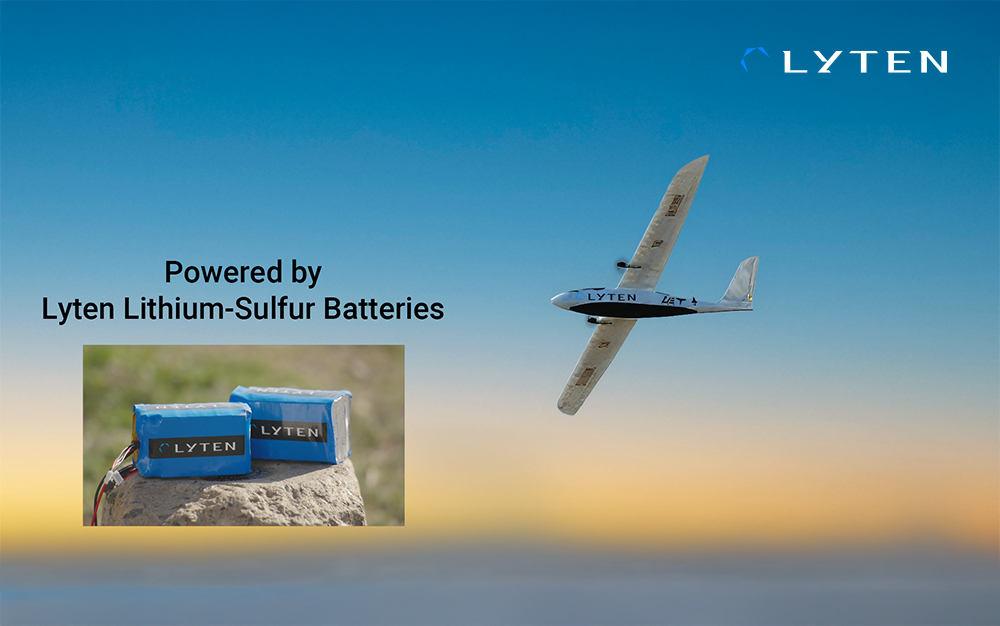
Lyten’s lithium-sulfur technology delivers a distinct performance advantage critical for modern defense applications. With higher energy density compared to conventional lithium-ion batteries, Li-S enables significantly longer flights, heavier payloads, and extended operational ranges for UAVs and satellites. The recent demonstration flight showcased an 8.5-foot wingspan drone, built by Titan Dynamics and powered by Lyten’s Li-S battery pack, achieving over three hours of flight time at speeds up to 86 mph during complex maneuvers. This real-world validation underscores the immediate capabilities of the technology. More impressively, Lyten has already signaled its next drone battery release is targeting an ambitious eight hours of flight time on the same platform, indicating a rapid developmental trajectory. Beyond drones, the inherent lightweight propulsion benefits of Li-S batteries are poised to revolutionize other sectors, including satellites, electric vehicles (EVs), and micromobility, creating a broad addressable market that extends well beyond the initial defense focus. Investors should note this multi-sector potential as a key differentiator for long-term value creation.
Navigating Energy Market Volatility and Investor Focus
While Lyten’s focus is on advanced battery technology, its strategic importance is magnified by the broader context of global energy markets. As of today, Brent crude trades at $95.27, up 0.51% for the day, while WTI sits at $91.19, a slight dip of 0.1%. This comes after a 14-day trend saw Brent decline by nearly 9% from $102.22 on March 25th to $93.22 on April 14th, illustrating the inherent volatility that defines traditional energy markets. Our proprietary reader intent data reveals a strong focus on forecasting, with investors actively asking about a base-case Brent price for the next quarter and consensus 2026 forecasts. This perpetual demand for oil price clarity underscores the strategic advantage of technologies like Lyten’s, which aim to decouple critical defense capabilities from such global energy market fluctuations. For defense planners, relying on a secure, domestically produced energy source offers predictability and operational stability that volatile commodity markets simply cannot provide. This creates a compelling investment thesis for Lyten, as it provides a hedge against the very energy insecurity that preoccupies many investors in the broader oil and gas sector.
Forward-Looking Opportunities and Investment Outlook
Lyten is actively taking orders for its latest lithium-sulfur drone batteries and has an existing contract with the Defense Innovation Unit, signaling established traction within the defense ecosystem. The ongoing push for domestic sourcing, coupled with the performance advantages of Li-S technology, positions Lyten for significant growth in the coming years. Looking ahead, the next 14 days are packed with traditional energy market catalysts, including the Baker Hughes Rig Count reports (April 17th and 24th), API and EIA weekly inventory data (April 21st/22nd and 28th/29th), and crucial OPEC+ meetings (JMMC on April 18th, Full Ministerial on April 20th). While these events directly influence crude prices, they also indirectly highlight the ongoing global scramble for energy security. Lyten’s domestic Li-S battery production positions the U.S. to mitigate future supply shocks in critical defense technologies, making it a compelling long-term play for investors seeking insulation from commodity price swings and geopolitical risks. As the transition to unmanned systems accelerates and the imperative for secure supply chains intensifies, Lyten’s advanced material solutions stand out as a key enabler for future national security capabilities and a robust investment in the evolving energy landscape.