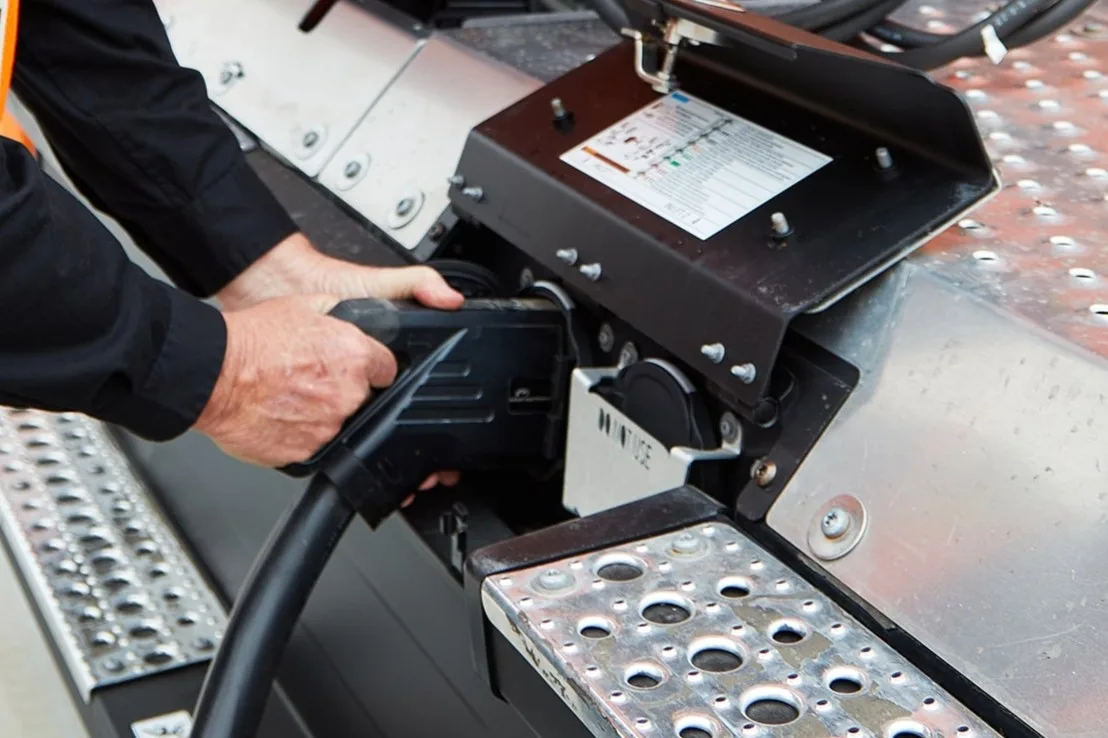
In a move signaling California’s determined push towards decarbonizing its heavy-duty transportation sector, Skycharger has secured a substantial $10 million award from the California Energy Commission (CEC). This funding will catalyze the construction of two critical public charging hubs for electric trucks, strategically positioned along the vital Interstate 5 corridor in Southern California. For investors closely tracking the evolving energy landscape, this development underscores the accelerating pace of electrification, presenting both challenges and opportunities across traditional and emerging energy markets.
California’s Ambitious EV Truck Infrastructure Takes Shape
The two forthcoming charging facilities, slated for Kettleman City and Lebec, California, represent a significant step in establishing the necessary backbone for electric commercial fleet operations. Each location is designed for high-capacity throughput, capable of simultaneously charging 64 electric trucks. With charging rates set at a minimum of 200 kW, these hubs aim to provide efficient energy replenishment, addressing a key concern for fleet operators transitioning from rapid diesel refueling to electric charging cycles. This infrastructure development is not merely about plugging in; it’s about creating an ecosystem that can support the uptime and operational demands of commercial logistics.
Beyond the charging capacity, Skycharger is integrating substantial on-site energy generation and storage solutions to bolster grid resilience and operational independence. Each hub will feature 5.1 MW of solar power generation, coupled with an impressive 8 MWh of battery energy storage. This combination is critical, designed to mitigate grid impact during peak demand and ensure reliable service, even when the broader grid faces stress. For oil and gas investors, this signifies the increasing decentralization of energy supply and the multifaceted approach required to power the future of transportation, moving beyond a singular reliance on liquid fuels.
Strategic Locations and Regulatory Tailwinds
The choice of Kettleman City and Lebec along the I-5 corridor is strategically paramount. This route is a major artery for commercial traffic connecting Northern and Southern California, as well as broader West Coast logistics. Establishing robust charging infrastructure at these key waypoints is essential for enabling long-haul electric truck operations, directly challenging the historical dominance of diesel fuel in this critical sector. The CEC’s $10 million commitment highlights the state’s proactive role in de-risking and accelerating the deployment of such infrastructure, a clear signal to both technology providers and fleet operators about California’s unwavering direction.
This initiative builds upon Skycharger’s prior experience in developing large-scale EV charging solutions. The company was previously tasked by the Port of San Diego to construct a 70-port electric truck charging hub, a project that similarly incorporates 1.75 MW of solar power and a 5 MWh battery energy storage system. These earlier successes demonstrate a growing capability to execute complex, high-capacity charging projects, providing a blueprint for the expansion required to meet California’s ambitious electrification targets.
The Investor Perspective: Shifting Demand and New Economics
Andy Karetsky, President of Skycharger, articulated the vision behind these developments, stating, “Electric trucks mean cleaner air, less noise, lower operating costs, and abundant benefits for workers and communities wherever trucks travel and charge. The future is still electric.” This statement, while focused on environmental and operational benefits, carries profound financial implications. Lower operating costs for fleet owners, driven by cheaper electricity relative to diesel and reduced maintenance, could accelerate the adoption curve for electric vehicles, directly impacting demand projections for refined petroleum products.
For investors in the oil and gas sector, particularly those with exposure to refining and transportation fuels, these developments serve as a tangible indicator of an evolving market dynamic. While the transition will be gradual and complex, the establishment of dedicated, large-scale electric truck charging networks, supported by significant government funding, signals a long-term erosion of demand in specific segments. The creation of over 90 “high road” jobs linked to the CEC-supported sites also points to the emergence of a new industrial base around electric vehicle infrastructure, diverting capital and labor from traditional energy sectors.
Regulatory Mandates Driving the Transition
Skycharger’s efforts are not isolated; they are an integral component of California’s comprehensive regulatory framework, specifically the Advanced Clean Fleets regulation. This landmark policy mandates a phased transition to zero-emission trucks, creating a powerful regulatory pull for fleet electrification. Such mandates provide market certainty for infrastructure developers and technology providers, ensuring a demand pipeline for electric trucks and their supporting infrastructure. For oil and and gas companies, understanding these regulatory pressures is crucial for strategic planning, including evaluating investment in cleaner fuel alternatives, carbon capture, or diversifying into new energy ventures.
The timeline for these projects provides a clear horizon for market observers. Groundbreaking for the new facilities is anticipated in 2025, with operations projected to commence by early 2026. This relatively swift timeline from funding to operational status demonstrates the urgency with which California is pursuing its clean transportation goals. Investors should note that while the scale of this particular investment is $10 million, the broader capital required to electrify the entire heavy-duty fleet in California, let alone the nation, will run into the hundreds of billions, indicating a massive long-term investment opportunity for infrastructure and technology companies, and a significant long-term threat to traditional fuel suppliers.
Outlook: Navigating the Energy Transition
The construction of these electric truck charging hubs in California is more than just an infrastructure project; it is a clear manifestation of the ongoing energy transition impacting every facet of the economy, including the bedrock of the oil and gas industry. While crude oil and natural gas will continue to play pivotal roles in the global energy mix for decades, developments like these underscore the persistent and state-backed efforts to carve out significant market share for alternative energy sources in key demand sectors like heavy-duty transportation. Astute oil and gas investors must carefully monitor these trends, evaluating their portfolio exposure to traditional fuels against the backdrop of an accelerating shift towards electrification and renewable energy integration. The future of transportation is indeed undergoing a profound transformation, and understanding its trajectory is paramount for navigating the evolving investment landscape.