The United Kingdom’s energy future finds itself at a pivotal juncture, marked by escalating political debate and shifting public sentiment that could significantly reshape the investment landscape for the oil, gas, and renewable energy sectors. As the nation grapples with its ambitious Net Zero targets, a growing chorus of voices, both populist and pragmatic, is questioning the current trajectory, introducing an element of policy uncertainty that investors must closely monitor.
Recent electoral outcomes and high-profile political interventions underscore a national conversation increasingly focused on the economic implications and perceived fairness of climate policies. This evolving dialogue suggests a potential recalibration of the UK’s decarbonization strategy, with profound implications for long-term capital allocation in energy infrastructure and production.
Evolving Political Narratives on Decarbonization
The discourse surrounding the UK’s Net Zero commitment has broadened significantly, moving beyond traditional environmental advocacy to encompass economic equity and national sovereignty. A key voice in this emerging narrative is Zack Polanski, the Green Party’s deputy leader, who has articulated a perspective that frames current climate policies as inherently elitist. Polanski contends that the burden of tackling the climate crisis disproportionately falls upon the most vulnerable segments of society, arguing this is a failure of government policy rather than individual responsibility. His proposed solution involves substantial government intervention and a robust anti-poverty agenda, funded by increased taxation on the wealthy to finance the transition to a low-carbon economy, environmental remediation, and nature restoration. This “ecopopulist” stance, while advocating for green goals, challenges the implementation methods, resonating with a public increasingly concerned about living costs.
This sentiment is not isolated. Across the political spectrum, particularly on the right, the Net Zero agenda has become a significant point of contention. Reform UK, a right-wing populist party, achieved notable gains in recent local elections, indicating a growing public appetite for its critical stance on climate policies. Richard Tice, the party’s energy spokesperson, frequently dismisses decarbonization efforts as “net stupid zero,” a phrase indicative of the strong opposition. Furthermore, party leader Nigel Farage has publicly warned local council officials involved in climate change initiatives to seek alternative employment, underscoring the party’s intent to dismantle current climate policy frameworks should they gain influence. These developments signal a potential shift in the political consensus that has, until recently, underpinned the UK’s Net Zero strategy, injecting a new layer of political risk for investors in the energy transition.
Labour’s Internal Tug-of-War on Energy Policy
Amidst this shifting political landscape, the Labour Party, widely anticipated to form the next government, finds itself navigating complex internal dynamics concerning its energy policy. Just weeks prior to the local elections, Labour leader Keir Starmer convened a significant energy security summit at Lancaster House on April 24th, hosting leaders and high-ranking ministers from 60 nations. In a speech intended to be a foundational statement of his party’s future government, Starmer emphatically declared, “We will make energy a source not of vulnerability, but of strength. Energy security is national security.” He championed “homegrown clean energy” as the sole pathway to reclaiming control over the national energy system, ensuring security, and achieving long-term reductions in consumer bills. This clear endorsement of an accelerated clean energy transition was a visible show of support for his Shadow Energy Secretary, Ed Miliband, who had reportedly faced internal party criticisms and relentless opposition from right-wing media against Net Zero initiatives.
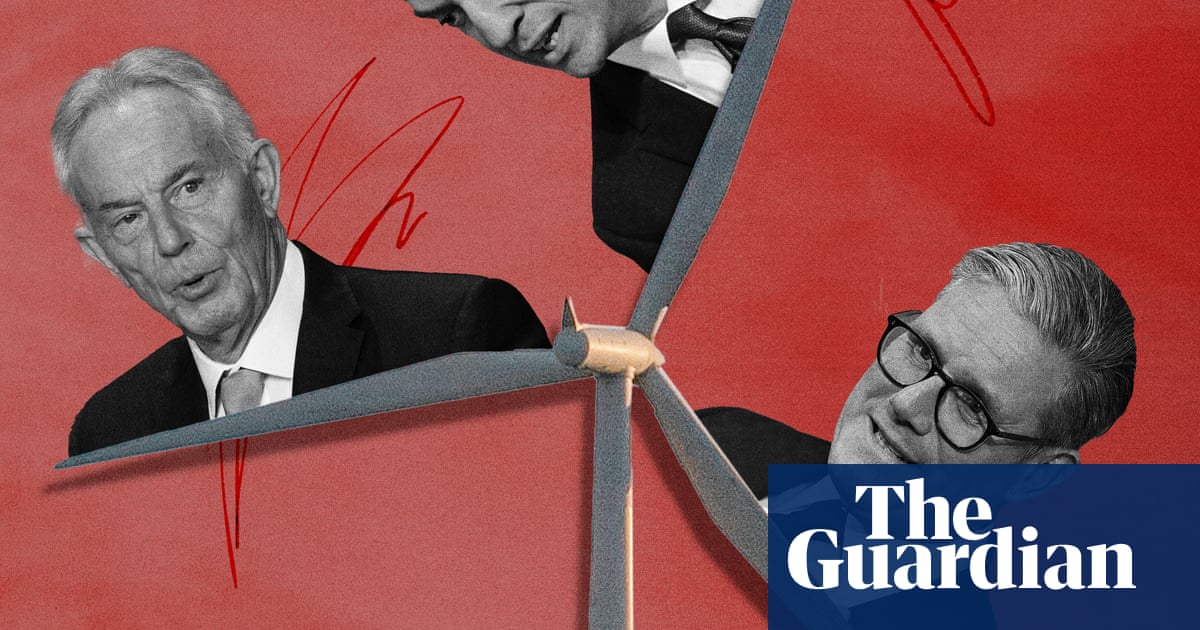
However, the unity projected by Starmer was quickly challenged by an unexpected intervention from his trusted advisor and former Prime Minister, Tony Blair. While Starmer was engaging international dignitaries, Blair was reportedly finalizing his own significant commentary. The following week, Blair’s contribution emerged in the foreword to a report advocating for increased investment in nuclear power and carbon capture and storage (CCS). His remarks suggested a pragmatic caution, noting that “Voters feel they’re being asked to make sacrifices” when it comes to climate policies. This observation from such an influential figure, particularly one advising the current Labour leadership, highlights a recognition of public fatigue with potentially costly or restrictive environmental measures. Blair’s emphasis on nuclear and CCS implicitly suggests a technology-agnostic approach to decarbonization, prioritizing reliable, scalable solutions alongside renewables, and potentially signaling a more tempered pace for the energy transition than Miliband’s more aggressive stance. This internal divergence within Labour introduces a degree of unpredictability regarding the specifics of future energy legislation and support mechanisms.
Investment Implications for the Energy Sector
For investors in the UK energy market, these political developments create a complex risk-reward profile. The growing populist resistance to current Net Zero policies, coupled with internal party debates within Labour, suggests that the future regulatory and fiscal environment for energy projects may be less certain than previously assumed. A potential Labour government might face pressure to adopt a more nuanced or even slower approach to decarbonization, balancing ambitious climate targets with concerns over energy security, economic competitiveness, and the cost of living.
Such a shift could have varied impacts. For traditional oil and gas companies operating in the UK North Sea, a more pragmatic approach might imply a longer runway for existing assets or even a reconsideration of new licensing rounds, especially if energy security remains a paramount concern. Conversely, firms heavily invested in intermittent renewable energy projects might find themselves facing a more stringent focus on grid stability and backup capacity, potentially increasing the demand for gas-fired power generation or advanced storage solutions. The renewed emphasis on nuclear power and carbon capture and storage, particularly from figures like Tony Blair, signals potential for significant public and private investment in these capital-intensive technologies. Investors in these areas could see enhanced government support, grants, or favorable regulatory frameworks, making them attractive long-term plays.
Furthermore, the “tax the rich” rhetoric from figures like Zack Polanski, while not directly from Labour’s mainstream, could influence the broader fiscal debate. Any move towards increased corporate taxation or windfall levies on profitable energy companies, particularly those in the oil and gas sector, would directly impact investment returns and capital expenditure decisions. Clarity on such fiscal policies will be crucial for maintaining investor confidence.
Navigating the UK Energy Investment Climate
The UK energy market is clearly at an inflection point. The interplay between ambitious climate goals, the urgent need for energy security, public economic concerns, and evolving political narratives will define the investment landscape for years to come. While the commitment to decarbonization remains a core principle across much of the political spectrum, the “how” and “how fast” are now very much open for debate.
Investors must closely monitor policy developments from the anticipated Labour government, paying particular attention to the specifics of their energy strategy, the pace of renewable deployment, support for nuclear and CCS, and any changes to the fiscal regime for energy companies. The ability of the next government to provide a stable, predictable policy environment will be paramount for attracting the substantial capital required to transform the UK’s energy matrix and achieve its climate objectives while safeguarding national energy security.


