The ambitious roadmap for electric vehicle (EV) battery production in Europe has hit another significant roadblock, as Novo Energy, the battery manufacturing arm of Volvo Cars, announced a drastic 50% reduction in its workforce. This move, following an earlier 30% cut, signals severe economic challenges and prevailing market headwinds impacting the capital-intensive EV supply chain, a development with notable implications for the sustained demand profile of traditional oil and gas assets.
Novo Energy’s CEO, Adrian Clarke, cited the current economic climate and market conditions as making it “impossible to maintain operations at the current scale,” despite extensive efforts to secure its business and identify a suitable new technology partner. This latest round of layoffs will see an additional 150 jobs eliminated, compounding the earlier dismissals and reflecting a deepening crisis in the nascent European battery ecosystem.
European Battery Ambitions Derailed by Market Realities
The venture, initially a 2021 collaboration between Volvo Cars and Sweden’s Northvolt, aimed to establish a dedicated battery factory in Gothenburg, Sweden. Northvolt, once hailed as Europe’s most promising contender in the battery manufacturing race, filed for bankruptcy in March. This collapse proved to be a critical blow to Novo Energy’s operational stability and strategic direction, forcing Volvo Cars to acquire Northvolt’s 50% stake for a mere token sum in February, effectively becoming the sole owner of a struggling enterprise.
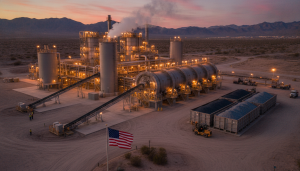
The factory itself, while nearing completion, remains a shell of its intended purpose. Volvo Cars’ new CEO, Hakan Samuelsson, confirmed in April that no battery production equipment has been installed. This leaves a significant capital investment unutilized and highlights the profound uncertainty surrounding the project’s future. Samuelsson has openly reiterated the necessity for a new technology partner and has even suggested the possibility of sharing the plant with other brands within the Geely automotive group, signaling a pragmatic, albeit scaled-back, vision.
Adding to the cautious outlook, Volvo Cars’ CFO indicated in April that the automaker does not foresee any major investments in the near term. This financial conservatism from a major automotive player underscores a broader industry sentiment, where the rapid pace of EV transition is being re-evaluated against economic realities and market saturation concerns. Novo Energy intends to continue limited operations to finalize the initial construction phase, while actively exploring various scenarios that could eventually allow a resumption of large-scale activities, though the path forward remains highly uncertain.
Broader EV Market Headwinds and Their O&G Implications
Novo Energy’s predicament is not an isolated incident but rather a microcosm of wider challenges confronting the global EV market. Investors in the oil and gas sector should pay close attention to these signals, as they directly influence the trajectory of energy demand and the long-term outlook for hydrocarbons.
Firstly, the enthusiasm for rapid EV adoption is encountering significant friction. Reports from various markets indicate a deceleration in EV sales growth, leading to inventory build-ups for manufacturers. Consumer hesitancy, driven by factors such as higher upfront costs, concerns over charging infrastructure availability, and perceived range anxiety, is proving more persistent than initially projected. This softening demand directly impacts the viability of new, capital-intensive battery manufacturing facilities like Novo Energy’s.
Secondly, the economics of battery production are proving formidable. Setting up gigafactories requires colossal capital expenditure, often running into billions of dollars. The bankruptcy of Northvolt, a venture that attracted substantial public and private investment, starkly illustrates the inherent risks. Furthermore, the global supply chain for critical minerals, essential for battery manufacturing, remains volatile and subject to geopolitical pressures, adding layers of cost and uncertainty.
Thirdly, profitability remains an elusive goal for many players in the EV ecosystem. While established automakers are leveraging existing infrastructure, dedicated EV startups and battery manufacturers often operate on razor-thin margins, or at a loss, as they strive to achieve scale and compete on price. The current high-interest-rate environment further exacerbates these financial pressures, making it more expensive to secure the necessary funding for expansion and operations.
Sustaining Demand: A Boon for Oil and Gas Investors
For investors focused on the oil and gas sector, these developments in the EV market offer a nuanced, and potentially positive, outlook. A slowdown in the anticipated pace of EV adoption translates directly into a more extended timeline for peak oil demand. If fewer internal combustion engine vehicles are replaced by EVs at the previously forecast rate, the demand for crude oil and refined products for transportation will remain robust for longer.
This extended demand horizon provides greater stability for oil and gas investments. Companies with strong balance sheets, efficient operations, and high-quality reserve bases are well-positioned to continue generating substantial cash flows. Furthermore, the energy transition is not solely about electrification; it also encompasses a sustained reliance on natural gas for power generation, industrial processes, and as a bridge fuel, particularly in regions where renewable energy penetration is still developing.
The challenges faced by companies like Novo Energy underscore the immense capital requirements and technological hurdles involved in fundamentally reshaping the global energy landscape. While the long-term trajectory towards decarbonization remains, the path is clearly proving to be more complex, cost-intensive, and protracted than many initially envisioned. This reality reinforces the critical role of conventional energy sources in ensuring global energy security and economic stability for the foreseeable future.
Savvy oil and gas investors should view these market signals as confirmation of the enduring relevance and investment appeal of the traditional energy sector. The narrative of an immediate and swift transition is giving way to a more pragmatic understanding, one that acknowledges the sustained necessity for reliable, affordable hydrocarbon-based energy while the alternative energy infrastructure gradually matures.