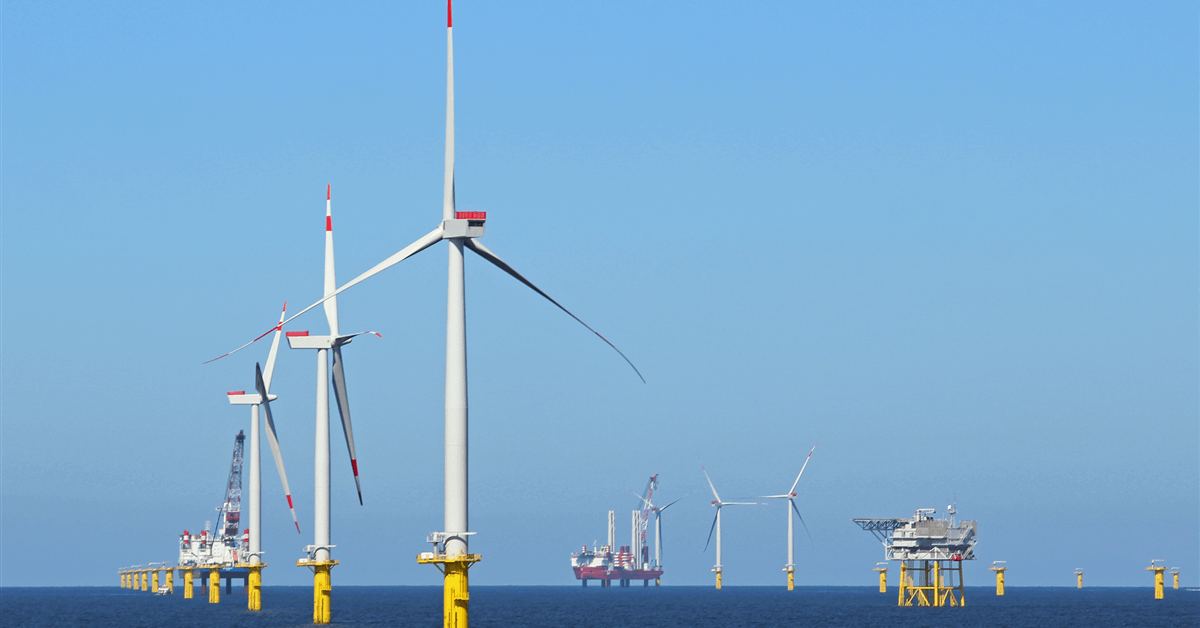
The recent approval of the 1.5-gigawatt (GW) Mona Offshore Wind Farm in the Irish Sea marks a significant milestone in the United Kingdom’s ambitious clean energy agenda and offers a compelling case study for oil and gas investors navigating the global energy transition. Developed by BP PLC and Energie Baden-Wuerttemberg AG, this project, poised to become the largest wind farm in the Irish Sea, underscores the accelerating shift in capital allocation within major energy companies. For seasoned investors, Mona’s green light signals not just an environmental commitment, but a strategic long-term play that demands attention, particularly when viewed against the backdrop of fluctuating crude markets and a packed calendar of industry-shaping events.
The UK’s Green Ambition and Major Oil’s Strategic Pivot
The UK government’s endorsement of the Mona project aligns directly with its aggressive targets to achieve clean power by 2030 and net-zero emissions by 2050. Energy Secretary Ed Miliband emphasized the commitment to “backing the builders not the blockers,” highlighting a political environment increasingly favorable to large-scale renewable infrastructure. Mona, with its potential to power over a million homes, contributes substantially to the 5 GW of offshore wind and solar projects approved by the current administration in its first year. For investors, BP’s involvement is particularly telling. A traditional oil and gas giant, BP’s significant stake in Mona exemplifies the strategic diversification underway across the integrated majors. These companies are leveraging their vast capital, engineering expertise, and project management capabilities, honed in the upstream oil sector, to build a formidable presence in renewables. The project’s indicative timeline, with a final investment decision (FID) expected in 2026-27 and commercial operations slated for 2028-29, illustrates the long-term investment horizon required for such ventures, contrasting sharply with the often-shorter cycles of conventional oil and gas developments.
Navigating Volatile Crude Markets Amidst the Energy Transition
While the Mona project sets a long-term course for renewable energy, the immediate landscape for oil and gas investors remains firmly rooted in traditional commodity markets. As of today, Brent crude trades at $94.8 per barrel, experiencing a marginal uptick, while WTI crude sits at $90.87, down approximately 0.45% within the day’s trading range. Gasoline prices, a key indicator of consumer demand, have seen a 1.01% increase, reaching $3.00. This snapshot, while reflecting a degree of stability today, follows a notable period of volatility. Over the past two weeks, Brent crude experienced an almost 9% decline, falling from $102.22 on March 25th to $93.22 on April 14th. This persistent price fluctuation presents a complex challenge for companies like BP, which must balance the substantial cash flow generated from their conventional oil and gas operations with significant capital expenditures required for large-scale renewable projects like Mona. Investors are constantly weighing the immediate returns from a strong crude market against the long-term, potentially lower-margin, but more stable, returns from renewable energy assets. The strategic allocation of capital between these two energy paradigms is a critical determinant of future shareholder value.
Upcoming Events Shaping Short-Term Market Dynamics
In stark contrast to the multi-year development timeline of the Mona offshore wind farm, the immediate future of the oil and gas market will be heavily influenced by a series of critical events unfolding over the next two weeks. Investors are keenly anticipating the **OPEC+ Joint Ministerial Monitoring Committee (JMMC) meeting on April 18th**, followed by the **Full Ministerial Meeting on April 20th**. These gatherings are pivotal, as member nations will assess global supply-demand dynamics and potentially adjust production quotas, a decision that could significantly impact crude prices, especially given the recent dip in Brent. Closer to home for North American production, the **Baker Hughes Rig Count reports on April 17th and April 24th** will provide fresh insights into drilling activity and potential supply trends. Furthermore, the weekly rhythm of inventory data, with the **API Weekly Crude Inventory on April 21st and April 28th**, preceding the more comprehensive **EIA Weekly Petroleum Status Report on April 22nd and April 29th**, will offer critical real-time data on U.S. crude stocks, refinery utilization, and product demand. These upcoming events create short-term trading opportunities and risks that demand constant monitoring, illustrating the dynamic nature of the oil market even as the broader energy industry pivots towards projects like Mona.
Investor Sentiment: Balancing Short-Term Returns with Long-Term Transformation
Our proprietary reader intent data reveals a clear focus among investors on understanding immediate market drivers, with frequent queries about building a “base-case Brent price forecast for next quarter” and seeking the “consensus 2026 Brent forecast.” These questions highlight the persistent demand for clarity on the short-to-medium-term outlook for traditional commodity prices, essential for portfolio positioning and risk management. However, the approval of Mona underscores a broader, equally important narrative: the increasing allocation of capital towards the energy transition. For investors, the challenge is dual-faceted: optimizing exposure to the current commodity cycle while strategically identifying and investing in the growth opportunities presented by renewables. The Mona project, with its projected support for thousands of jobs during construction and maintenance, contributing to the UK’s goal of 100,000 offshore wind jobs by 2030, also addresses environmental, social, and governance (ESG) considerations, which are increasingly influencing investment decisions. BP’s commitment to such a large-scale renewable project, despite ongoing volatility in its core oil and gas business, signals a strategic imperative to diversify and secure a foothold in the future energy landscape, offering a compelling long-term thesis for those looking beyond the immediate crude price forecasts.


